
IT-Fornebu Oslo, Architect, Norwegian Business Development News, Design, Images
IT-Fornebu building : Oslo
Information Technology Building in Norway – design by a-lab architects
24 Nov 2009
IT-Fornebu Portal building
Design: a-lab, architects
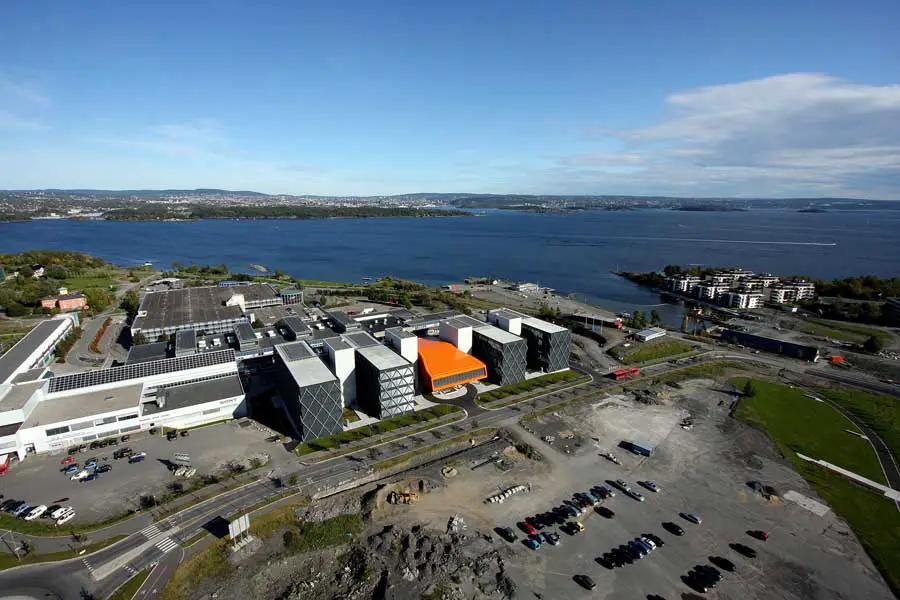
The building is located in Fornebu, the former Oslo Airport, Norway. The new Portal building is an extension to the old Airport Terminal building housing the Business and incubation centre for information technology companies; IT-Fornebu.
The Fornebu area is experiencing a surge in development, transforming a previously Airport into a new city-wide destination for business. The IT-Fornebu Portal building consists of approximately 28000 m2, was developed by the IT-Fornebu Eiendom and designed by A-lab architects.
a-lab was commissioned to develop the building, after winning the competition in 2004.

History
In 1998 the Old Fornebu airport closed after 60 years of function. A platform of possibilities was left open for new fields of investment. The new Business centre for information technology was created then by the IT Fornebu AS group responsible for administering and developing the IT Fornebu vision. Therefore it was required that the design of Portalbuilding would combine the vision of the new Fornebu Business centre and establish an efficient and flexible cluster of offices in the area.
Criteria
In the design A-lab prioritised people. The design criteria’s were to reduce volume and waste, provide an effective, efficient and healthy workplace, enhance communications and give a flexible layout. We believe that successful organizations are made of people who are connected and inspired, who learn through collaboration, share ideas and are motivated towards excellence. We imagined a place where people are present and engaged in mind and body.
The building supports the development and transmission of knowledge, skills, values and ideas, as well as the opportunity for companies to express their own identity.
Ambition
How to make a speculative office building respond to ultimate typological efficiency? How can a building be flexible in order to adapt to several plan typologies? How can an office plan be adjusted to different organization criteria’s, from the smallest office unit to large corporate companies? How to reconcile both the developer’s economic requirements for a spec office with the architects vision?
Concept
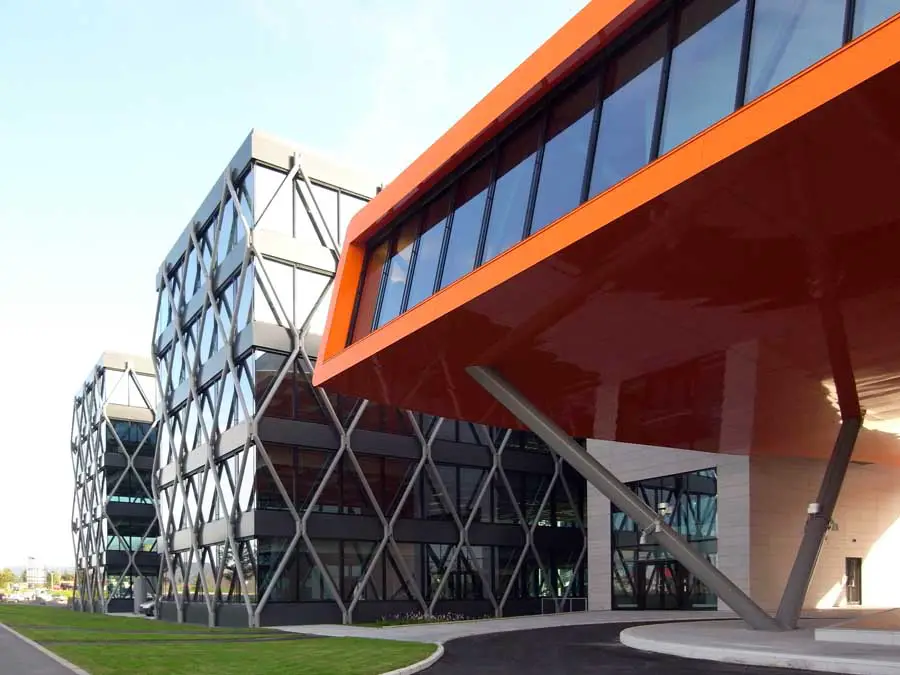
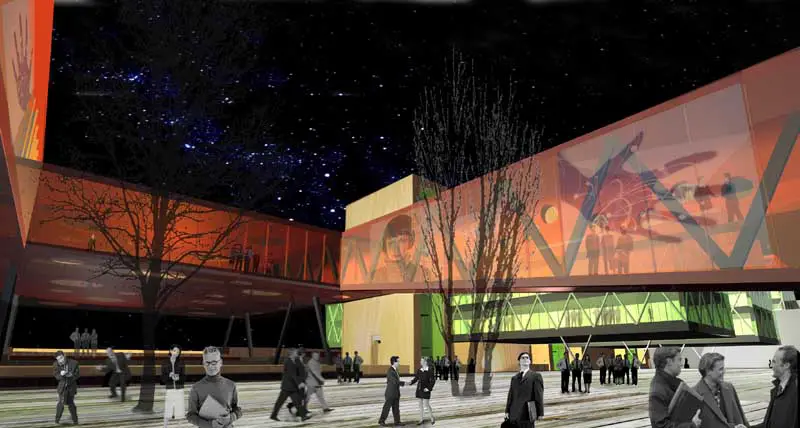
The main concept was to strip and divide the program into independent architectonic elements, clearly defined by function, in order to gain maximal flexibility and distinct architectural identity. A continuous base resolves the height difference of the terrain between the main street and the existing Terminal building, and forms a multifunctional floor for the Portal building. The project consists of four glazed office blocks, where light, views and acoustics are optimal, four stone clad supply towers and the public Hub covered in “mandarin red” aluminum composite panels, lifted over the main entrance.
Building
The four office blocks have a rectangular and rational form and are relieved of all the internal cores and vertical structure allowing an efficient and flexible internal organisation, based on a flexible open floor, a tabula rasa plan, where different users can define and design their special necessities, with a variety of possibilities. Each office block has 5 floors with a total area of 3750m2.
The structure is put outside the exterior façade. It is shaped as a diagonal steel structure around the block and is attached every 4,8 meters with a steel joint through the façade to the floor beams.
All shared functions such as vertical communication, technical services and wet cores are placed in intermediate towers, detached from the working areas. The towers are designed as closed massive monoliths, where the program that does not need daylight or views is located.
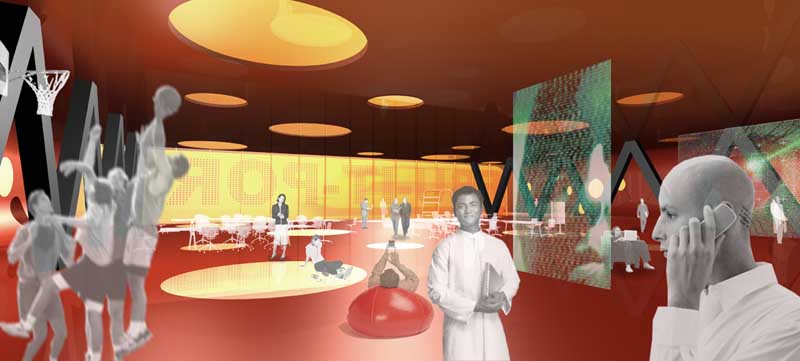
The free-form orange Hub is an exception and has a clear identity, it acts as a strategic element that glues all the activities, highlights the synergy between the existing terminal Building and the new It-Fornebu Portalbuilding.
On behalf of IT Fornebu AS and a-lab architects.
IT-Fornebu Portal building – Building Information
Location: Fornebu, Norway
Function: Offices, extension to existing complex
Build cost: 500 mill NOK
Total floor area: 28 000 m2
Stories: 6
Structure: Steel and concrete (prefabricated)
Finish: glass, stone and aluminium composite panels
Photographer: Luis Fonseca
Completion: Nov 2009
Partners : Odd Klev, Geir Haaversen, Adnan Harambasic
Design team: Jan Petter Seim, Tonje Løvdahl, Tor Inge Hjemdal, Jarand Midtgaard,Inger Totland
Client: IT-Fornebu Eiendom
Architect: a-lab
Interior design: a-lab
Landscape design: Asplan Viak
Structural engineer: Rambøll Norge AS (competition phase: Arup)
M&E services: Electro : Føyn Consult / Ventilation : Norconsult
IT-Fornebu Portal building images / information from a-lab
Previously:
IT-Fornebu, Oslo
a-lab
Client: IT-Fornebu
Area: 15 000 m2
The former Oslo Airport area is now being transformed into the business centre for digital technology based companies. This new project will create a portal to the new district complex, connecting tightly to the existing terminal buildings.
The new buildings are situated where the landing strip, piers and planes used to be.
Starting with the central hall as a main space, a new main entrance is created. New rental areas and working places add qualities that the terminal building is lacking, rather than competing with it. It is in the union of old and new that a unique project that profiles IT-Fornebu as an international IT-centre is created.
The new building is solved in three typologies.
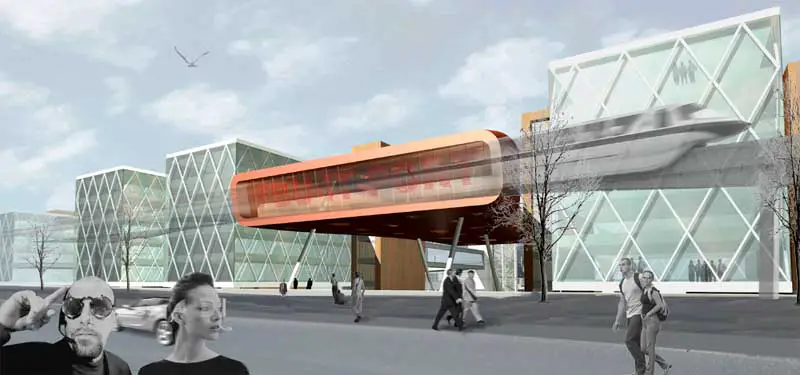
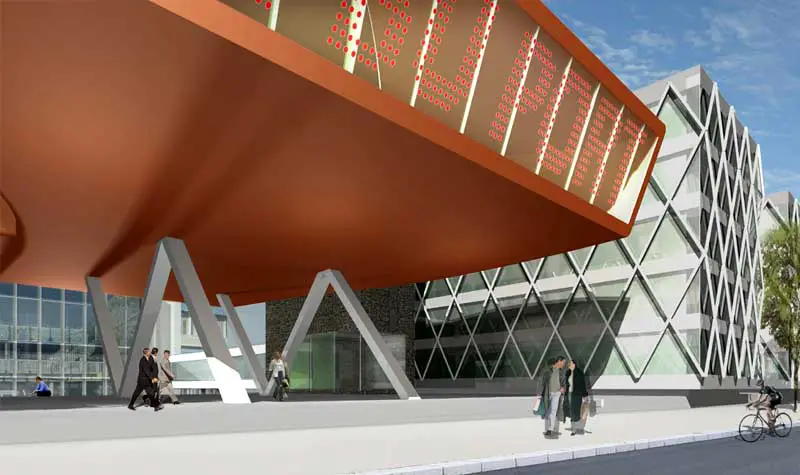
The “MEGAHUB” is visually a signal element of entrance, entrance space and attraction. It hovers over the new public entrance space and leads the movement further towards the main entrance in the central hall for all visitors.
MEGAHUB is a place for expo related activity, but can also be used as office space.
The “work platforms” are optimal arenas for each renter’s enterprise by being a tabula rasa situation. There is “nothing” between the glass in the façade, the panelled ceiling and technical flooring other than open space. The content of the room is the most important, uniquely reflected in the façade.
The “supply towers” provide the work platforms with electricity, air and water (vertical infrastructures), together with informal meeting spaces and connections between the platforms. The towers are connected on level 1, linking them to the supplying goods and technical areas.
IT-Fornebu Oslo images / information from a-lab 2008
IT-Fornebu Oslo architects : a-lab
Location: Fornebu, Oslo, Norway
Norwegian Architecture
Contemporary Norwegian Architecture
Norwegian Architecture Designs – chronological list
Oslo Architecture Walking Tours
Oslo architects : Snøhetta
Oslo Buildings – Selection
Crystal Clear Towers
C. F. Møller Architects
Crystal Clear Oslo
Red House
Jarmund/Vigsnæs Arkitekter
Oslo House
Oslo Operahouse
Snøhetta
Oslo Operahouse by Snøhetta
Knut Hamsun Center Norway by Steven Holl Architects
Norwegian Building : Molde
Comments / photos for the IT-Fornebu building Oslo page welcome

