
Champalimaud Foundation Cancer Centre, Lisbon Building Images, Architect Design, Arquitetos
The Champalimaud Foundation Lisbon
Research and Clinical Center in Portugal design by Charles Correa architect
5 Oct 2010
Opening Event + Public route between the buildings:
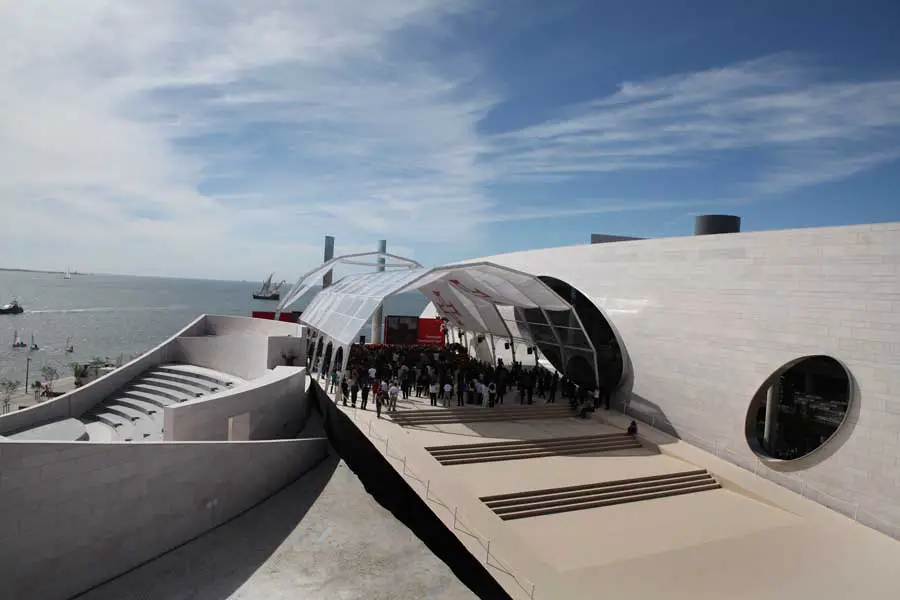
photo : Rui Ochôa/Champalimaud Foundation
The Champalimaud Foundation Centre Opening
Opening Event:
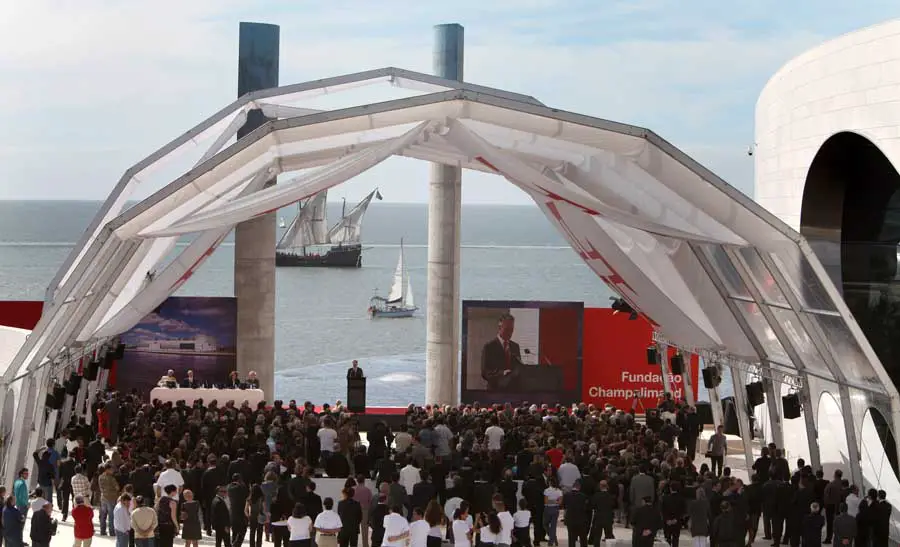
photo : Rui Ochôa/Champalimaud Foundation
Charles Correa, architect:
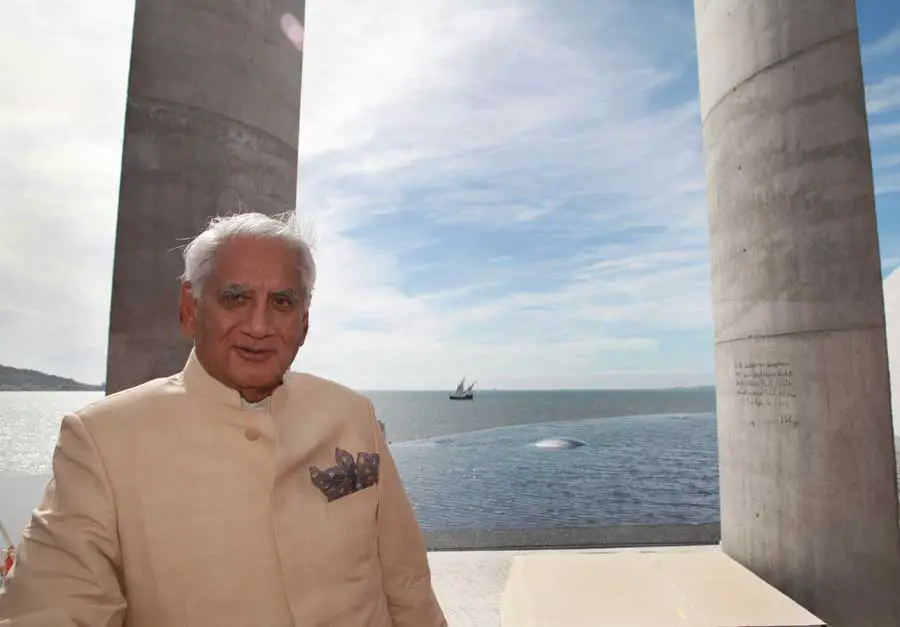
photo : Rui Ochôa/Champalimaud Foundation
from Left to Right: William Newsome, Alfred Sommer, Cavaco Silva (Portuguese president), Tony Movshon and Leonor Beleza:
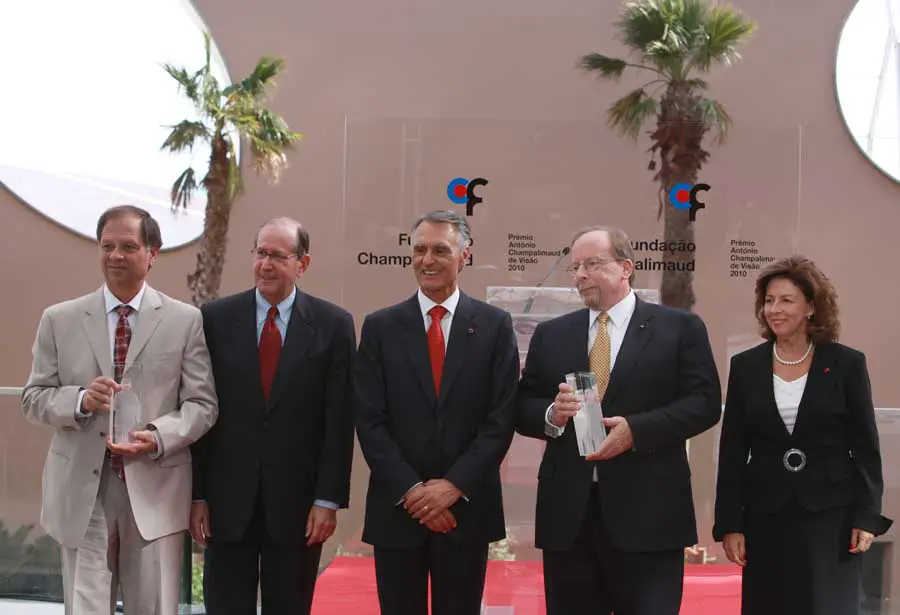
photo : Rui Ochôa/Champalimaud Foundation
2 Oct 2010
The Champalimaud Foundation Centre Lisbon
The Champalimaud Foundation Centre is due to open on 5 Oct. We talked briefly to Charles Correa – he described completion works as going fine and when asked to discuss the building he summarised it as being all about discovery. We hope to bring you more details on this intriguing project over the weekend.
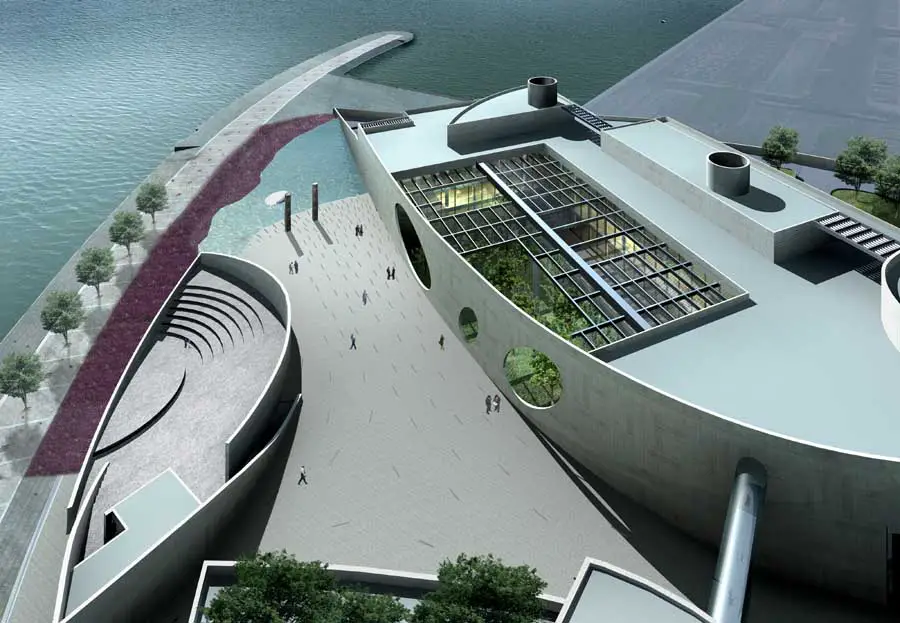
In summary the project is divided into three key elements – the research and healthcare building, the conference centre building and an ampitheatre. Between these runs a wide public route rising up towards the sea, ending at a pair of monoliths (totems) with a pool beyond. There is an indoor/outdoor space within the perimeter of the research and healthcare building, connected to the public route by massive oculi, reminiscent of Louis Khan in India or indeed the Federal Chancellery in Berlin.
Why the research and healthcare facilities are not articulated as separate volumes is interesting, with the program split into three then it is just one more step to clarify functions and split into four. A brief of cancer care, research, administration and creating a “tourist destination” on one fairly compact site seems rather adventurous.
Lisbon Research and Clinical Center
2008-
Charles Correa Associates with RMJM Hillier & Consiste
Portugal’s Prime Minister breaks ground on Champalimaud Cancer Research Center
Landmark building expected to be centerpiece of historical and tourist district
Champalimaud Center for the Unknown
Lisbon – October 8, 2008 – A groundbreaking ceremony was held on October 5th, 2008 for Portugal’s first major research center. The Champalimaud Foundation Centre, named for the late Portuguese businessman and benefactor Antonio Champalimaud, will be a 300,000-square-foot research facility on cancer and neurosciences and an outpatient cancer clinic in one of the city’s key historical and tourist districts on the banks of the Tagus River, indicative of the extent to which Portugal is willing to invest in scientific research. Bombay-based firm Charles Correa Associates is the Design Architect, in collaboration with RMJM Hillier as Laboratory and Clinical Design Architects. Consiste of Portugal is the Architect of Record.


The Portuguese Prime Minister José Sócrates, Architect Charles Correa and Champalimaud Foundation President Leonor Beleza each gave remarks at the ceremony, which took place at the Pedrouços Dock in Lisbon, on the banks of the Tagus River. As a symbolic gesture regarding the building’s significance in ushering in a new era of scientific exploration and discovery for Portugal, the Foundation arranged for a small robot to place the first stone in the building’s foundation. The anticipated inauguration date for the Centre is October 5th 2010.
The Champalimaud Centre is located on an extraordinary sweep of land where the Tagus River joins the Atlantic Ocean – the point from which 15th – and 16th -century Portuguese explorers embarked on maritime journeys to discover new geographic lands. In a similar fashion, researchers at the Champalimaud Centre are expected to make new discoveries in the worlds of science and disease treatment, according to Champalimaud Foundation and government officials.
Cancer is the second most common cause of death in Portugal, and mortality rates are on the rise throughout Europe, according to the International Agency for Research on Cancer. In the US, while deaths to cancer are dropping, the number of people living with cancer is expected to double from 1.3 to 2.6 million between the years 2000 to 2050.
The Champalimaud Centre will attract scientists from all over the world to do ground-breaking translational research in cancer and the neurosciences using a multidisciplinary team approach. The new facility will bring together research and cancer care in a single location, fostering collaboration between world class researchers and renowned cancer specialists. The state-of-the-art facilities for basic and clinical research and for teaching will foster frontline research in oncology, molecular biology, genetics, immunology, neurosciences and behavior, as well as post-graduate and doctorate programs, and the diagnosis and treatment of neurological and cancer patients.
The buildings will support the Foundation’s goals by providing research facilities that stimulate creativity and interaction within a compassionate and humanistic environment for patients and their families. Three main structures have been designed by Correa, RMJM Hillier, and Consiste:
·1 Building A houses the Diagnostic Centre, Treatment Centre, and Wellness Centre on the lower levels, and the Research labs and the Administration offices on the upper floors. A rainforest garden, accessible to patients and staff, grows within the building.
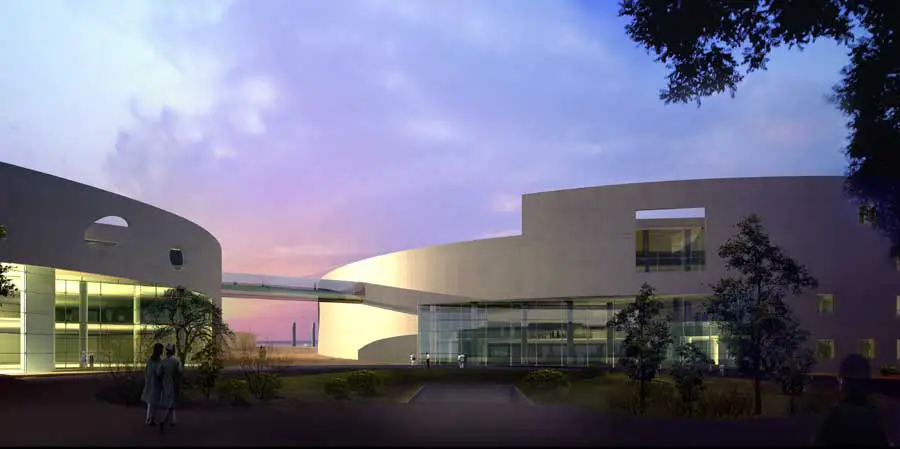
·2 Building B houses the Auditorium, Restaurant and the Exhibition area on the entrance level and on the upper level the Conference Centre, together with the Foundation offices connected via an elegant glass bridge to the Research labs.
·3 Building C is an open-air amphitheatre facing the river for public performances and community events.
According to the architects, the project will include high-performance buildings that employ optimal energy and resource management while celebrating the unique site on which it is located.
“The project is an excellent example of a holistic, site-specific approach to sustainability,” according to R. Stephen McDaniel of RMJM Hillier. “For example, the proximity to the Tagus River allows us to have a geothermal heat-sink for temperature control, which is further controlled by the massive rain forest garden in the main building. The garden will be 80 x 40 metres, the size of a US football field.”
The three buildings have been arranged to create a 125m long pathway or ramp leading diagonally across the site, towards the open seas. The plaza is open to the public and well-suited for exhibitions, performances or contemplation.
According to Charles Correa, “At the end of the ramp are two stone monoliths, straight from the quarry, as primordial as Stonehenge. When you reach the highest point, you begin to see a large body of water – which seemingly connects to the ocean beyond. In the centre of this water body, just below the surface of the water, is an oval shaped sculpture – made of stainless steel and slightly convex, so that it reflects the blue sky and passing clouds above.”
The Champalimaud Centre is the first building in a major redevelopment plan to change the face of the Belem area in Lisbon, along the river. A major tourist destination, Belem is also home to the Belem Cultural Centre, Jeronimos Monastery, Belem Tower and The Coach Museum. The Champalimaud Centre is expected to be a tourist destination as well, building on the theme of Portuguese exploration and discovery through a public exhibition center located in the facility.
Approx. building area: 50,000 sqm
Champalimaud Foundation Project – Building Information
Design Architect: Charles Correa Associates
Laboratory & Clinical Design Architects: RMJM Hillier
Architect of Record: Consiste
The Champalimaud Foundation supports individual researchers and research teams working at the cutting edge of medical science. It aims to stimulate novel theoretical and practical methodologies by utilizing the experience of both research scientists and medical practitioners, connecting pure scientific investigation with applied clinical research.
The Champalimaud Foundation aims to maximize the work being done in the fields of cancer research and neuroscience, including stem cell research and its clinical applications for Parkinson’s and Alzheimer’s disease, diabetes and spinal injury. It is named for Antonio Champalimaud, who was the richest man in Portugal when he died in 2004, bequeathing a quarter of his $3.1 billion estate to set up the Foundation.
Architect and planner Charles Correa is one of few contemporary architects who address not only issues of architecture, but of urban planning and low-income housing as well. His work covers a wide range, from the Mahatma Gandhi Memorial at the Sabaramiti Ashram in Ahmedabad, the Jawarar Kala Kendra in Jaipur and the State Assembly for Madhya Pradesh, to housing projects and townships in Delhi, Bombay, Ahmedabad and Bangalore.
Champalimaud Foundation lead architect : Charles Correa
RMJM Hillier is an international expert in the design of translational cancer facilities that combine research and treatment in one building. Other projects in RMJM Hillier’s portfolio include the Cancer Institute of New Jersey, The University Hospital Cancer at UMDNJ New Jersey Medical School, the University of South Alabama Cancer Research Institute, the Louisiana Cancer Research Institute and the Puerto Rico Cancer Center.
RMJM Hillier is the North American division of RMJM Group, one of the largest architectural practices in the world with 1,200 people and 15 offices in the United States, Europe, Middle East and Asia. The firm provides services in architecture, interior design, master planning, historic preservation, landscape design and environmental graphics.
Champalimaud Foundation co – architect : RMJM Hillier
Champalimaud Foundation Building images / information Charles Correa Associates
Location: Lisbon, Portugal
New Portuguese Architecture
Contemporary Portuguese Architecture
Portuguese Architecture Designs – chronological list
Lisbon Architecture Tours by e-architect
Portuguese Architecture – Selection
Paradinha Cabins, Porto, northern Portugal
Architects: SUMMARY
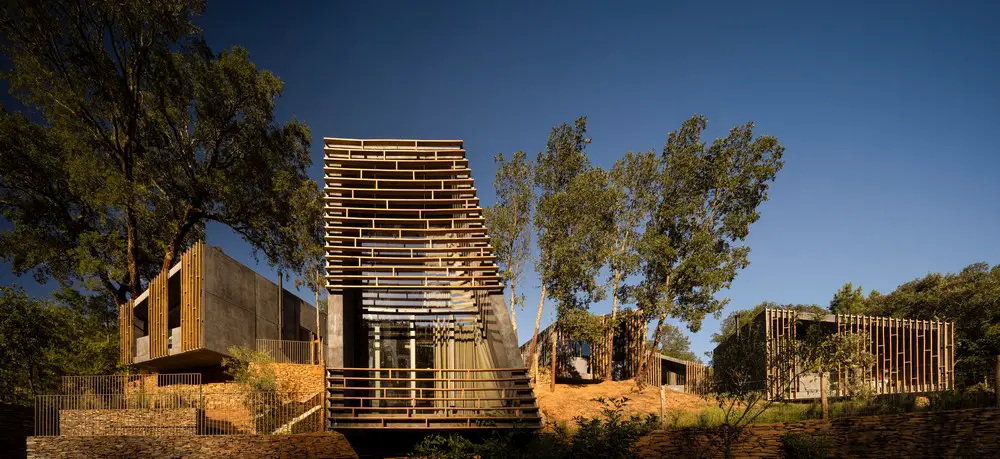
photo © Fernando Guerra_FG+SG
Paradinha Cabins, Arouca
MG Coudelaria, Minho Region, Northern Portugal
Architecture: Visioarq
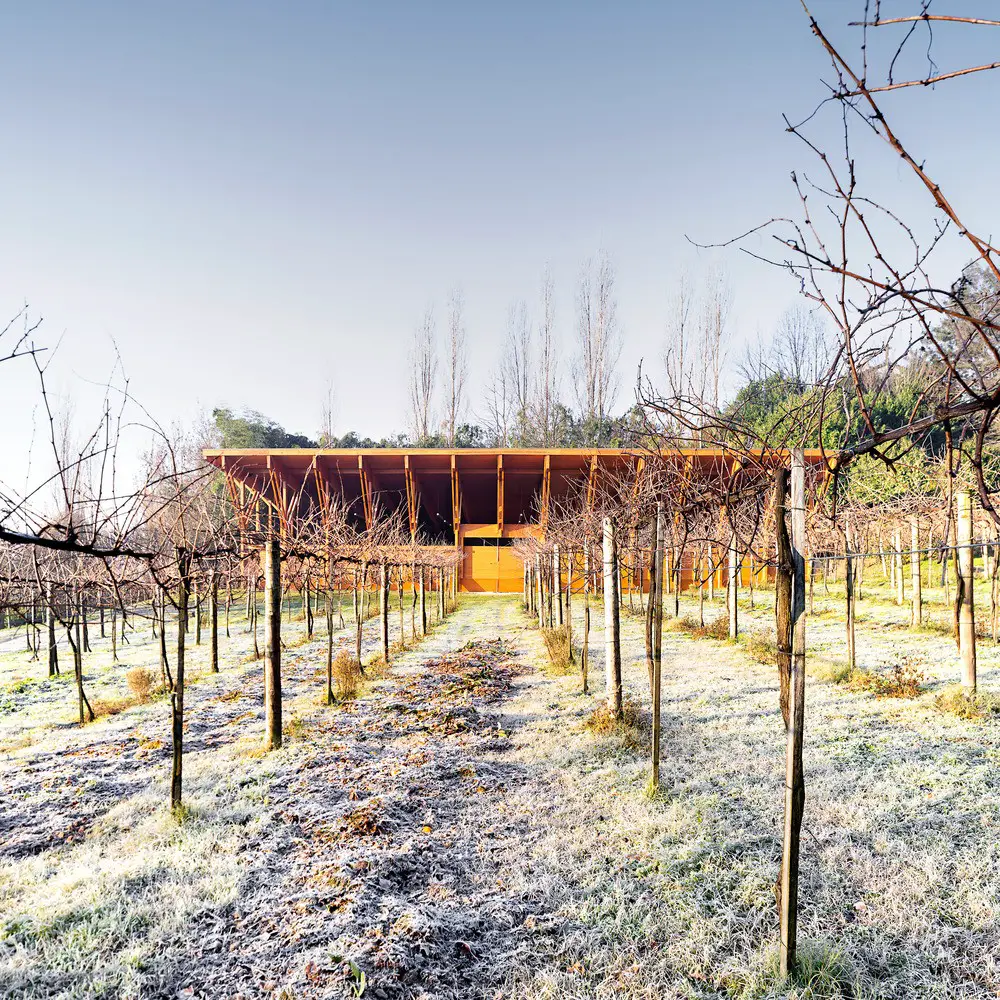
photo : Maria João Gala
MG Coudelaria, Minho, North Portugal
Casa da Música, Oporto
Rem Koolhaas Architects
Casa da Musica Porto
Casa Turismo Ponte de Lima
João Álvaro Rocha
Casa Turismo Ponte de Lima Portugal
Portuguese Architecture Studios
Comments / photos for the Champalimaud Foundation Cancer Centre Lisbon building design by Charles Correa architect page welcome
Website: www.fchampalimaud.org
