|
|
Saint-Étienne Architecture, Architect, Factory, French Design, Platine, Images
Cité du Design, France : Information + Photos
French Building, Harbour basin of Saint-Étienne by LIN
Cité du Design Saint-Étienne, France
2006-09
LIN Finn Geipel + Giulia Andi
LIN Finn Geipel + Giulia Andi, architects urbanists, announce the
opening of the Cité du design at Saint-Etienne, which has just
been inaugurated by Frédéric Mitterrand, the Minister
of Culture for France.
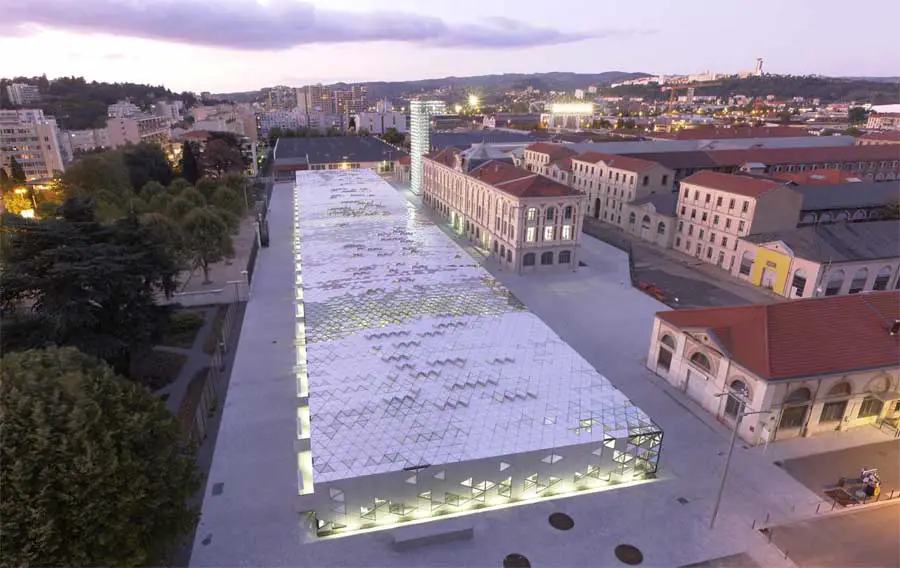
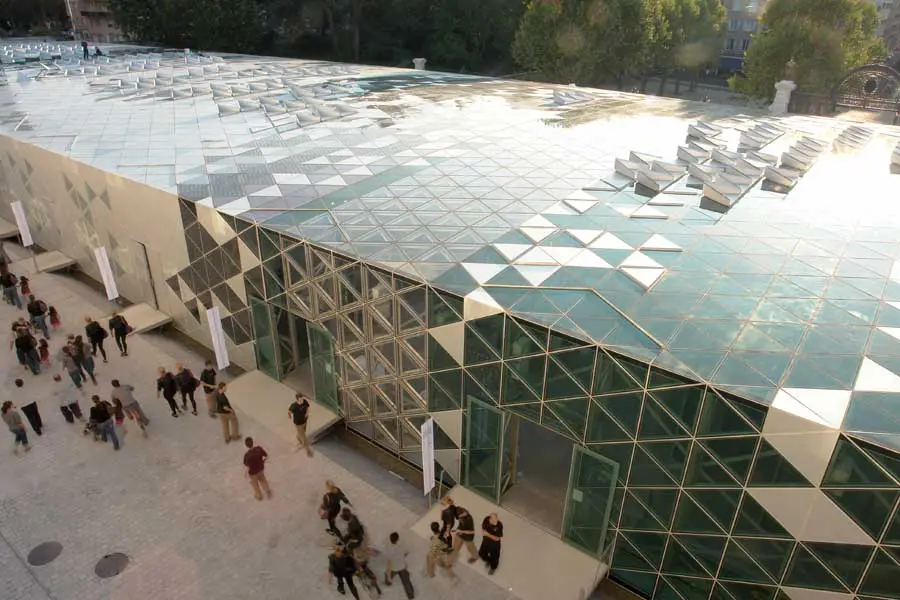
The 'Platine'
photo © LIN Finn Geipel + Giulia Andi photographer:
Jan-Oliver Kunze, LIN
The Cité du design is a new international institution for communication,
dissemination, research and training for design. The project involves
the transformation of the Saint-Etienne Manufacture d'Armes, one of
the major industrial spaces of the territory. It also represents a
first step in the city's redevelopment.
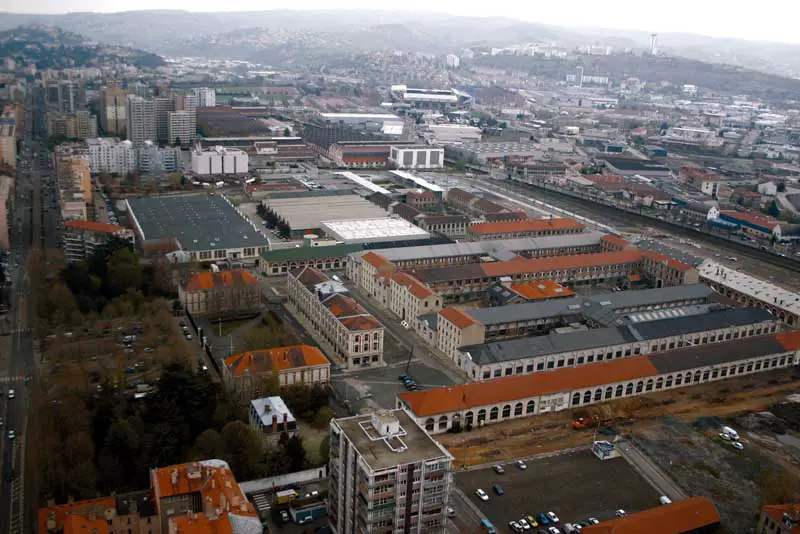
View of the ensemble (from the north):
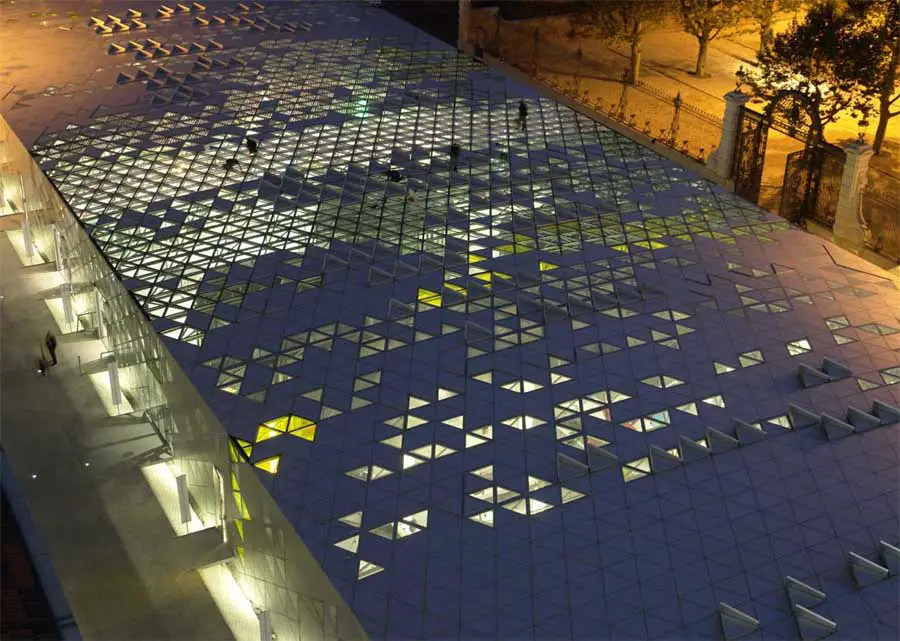
photo © LIN Finn Geipel + Giulia Andi photographer:
Jan-Oliver Kunze, LIN
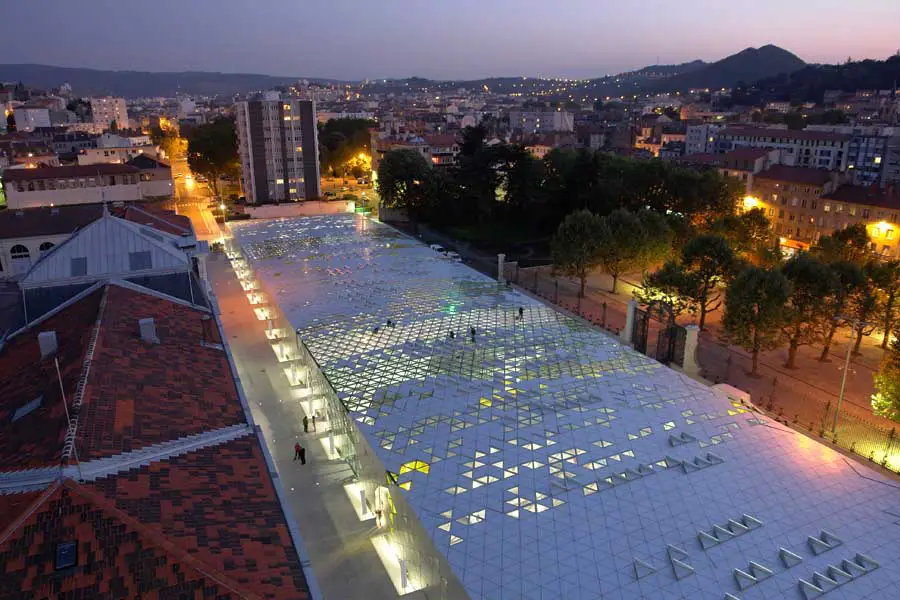
The essential elements consist of the restoration of some of the buildings
of the old Manufacture, a new building, the large 200x32 m single
space called La Platine, an Observatory tower, two Gardens, and the
Place d'Armes, a large public plaza.
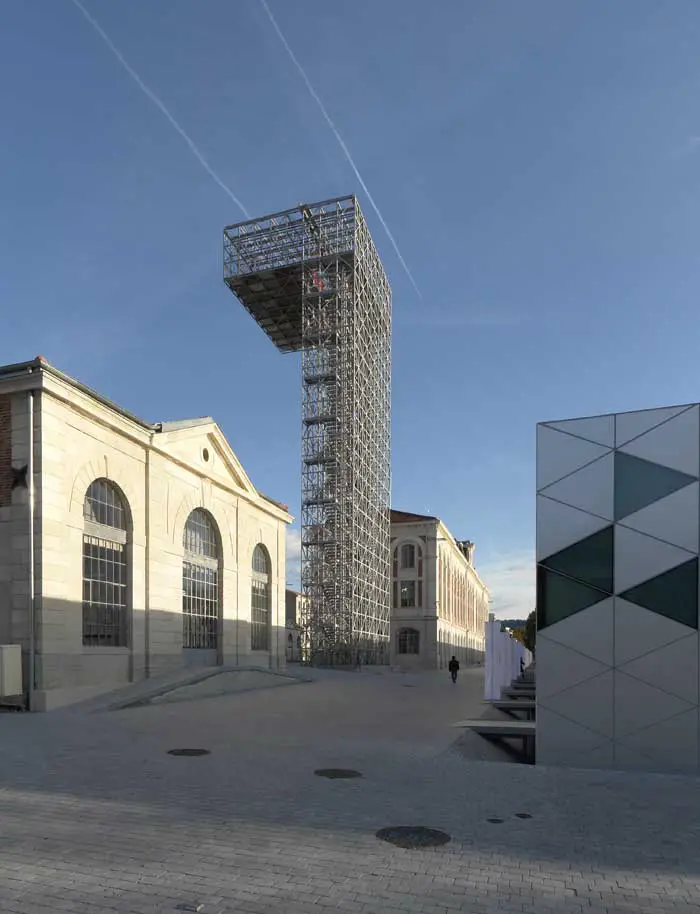
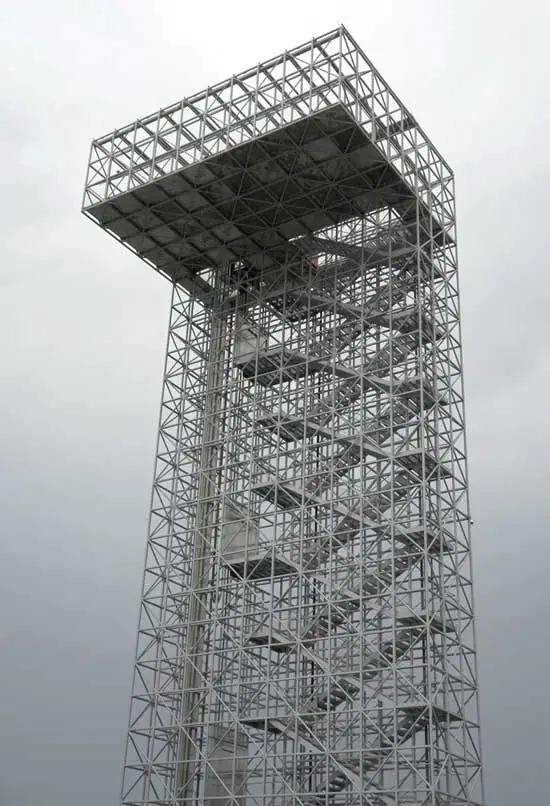
Observation tower
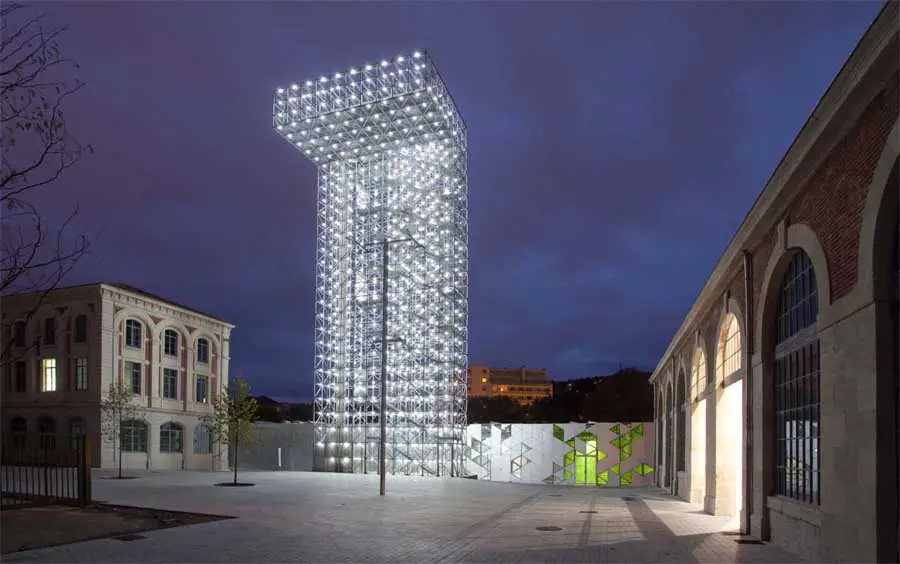
photo © LIN Finn Geipel + Giulia Andi photographer: Francois Maisonnasse, LIN
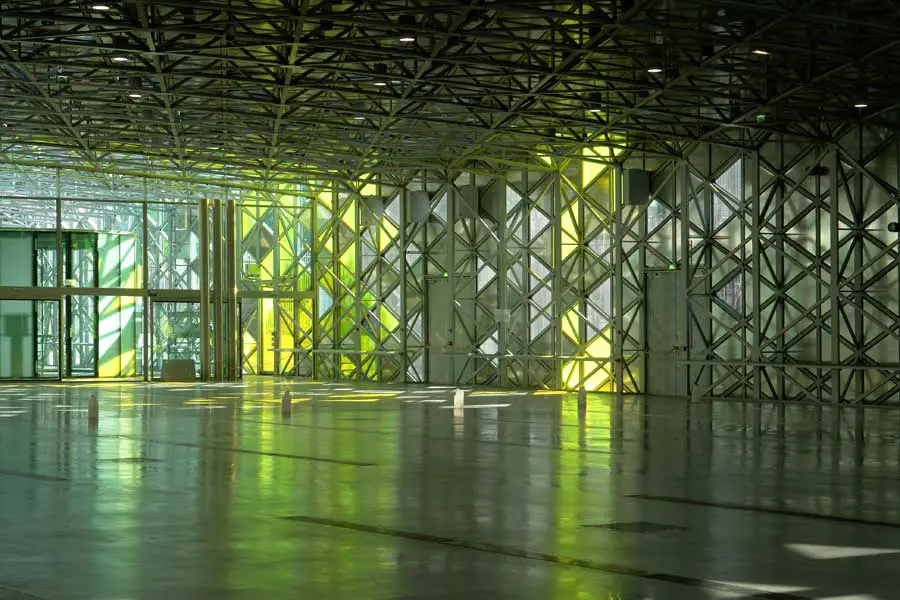
The Platine is an interclimatic laboratory whose adaptable skin encloses
several programs, such as exhibition spaces, the auditorium, the Agora,
the Greenhouse and the Material Library, and responds to their needs
in terms of light and climate. It is also an articulation between
the different activities of the Cité du design.
The 'Platine'

photo © LIN Finn Geipel + Giulia Andi photographer:
Jan-Oliver Kunze, LIN
The 'Platine' exhibition space B

photo © LIN Finn Geipel + Giulia Andi photographer:
Jan-Oliver Kunze, LIN
The 'Platine' (from the south)

photo © LIN Finn Geipel + Giulia Andi photographer:
Jan-Oliver Kunze, LIN
Observation tower

photo © LIN Finn Geipel + Giulia Andi photographer:
Jan-Oliver Kunze, LIN
Client:
Saint-Étienne Métropole
with the assistance of the European Community, the National Government,
the Rhône-Alpes Region and the Département de la Loire
Photographs : Christian Richters, Jan-Oliver Kunze and François
Maisonnasse.
[Completed building images online later today]

Previously:
Cité du Design Saint-Étienne
The Cité du Design in Saint-Étienne is a new and unique institution
for research, education, communication and media, and design related
services. It addresses diverse groups, combining urban and social
activities with industrial and artistic expertise. A single slender
body, the Platine, is integrated into the site of the Manufacture
d’Armes, a former arms factory. This monospace will act as a switchboard
that links communication facilities to the many programmes set in
the various buildings of the site. The observatory tower is the pioneering
element that signifies the starting point of this transformation.
The city centre of SaintÉtienne is built densely into the hilly
landscape of the Massif Central. It is made up of a dense grid of
long, narrow streets that extend over a wide area, rising and falling
over the undulated terrains.

The Manufacture was a blind spot – a place erased from public awareness.
It was reduced to the few elements visible from the city: Grille,
Bâtiment de l’Horloge, and the two gardens on both sides of the
Place d’Armes.
The old factory facilities include courtyards, internal streets,
gardens and wide spaces. Over time, they have been secluded from
the rhythm of the surrounding city.
Eventually it was the gardens, flanking the Place d’Armes to the
north and south, which most aptly represented this area of the city:
overgrown and barely visible, falling into oblivion.
The archetypical arrangement of edifices was covered with an ever-changing
landscape of industrial structures: chimneys, water towers, cooling
plants and steam engines.
In 1889 the publicist Marius Vachon founded the Musée d’Art et d’Industrie,
intent on reforming the relationship between the two domains. This
serves as an early instance of what today can be regarded as the
regions's long tradition of design.
Arms were once produced in the elongated halls of the Bâtiment Ateliers.
Later, they simply served as warehouses.
Inside the austere edifices, spacious halls form non-hierarchical,
open structures. Here the serial repetitiveness of a few structural
elements clearly reflects the Manufacture's industrial origins.
The Cité du Design is being established on the premises of the former
Manufacture d'Armes in Saint-Étienne as an international institution.
However, it remains closely related to the local conditions. In
fact, Saint-Étienne is a city with a long tradition in design and
production, which the Cité du Design will continue to pursue. Furthermore,
the old industrial site of the Manufacture bears a special relationship
to Saint-Étienne’s industrial heritage. Its location close to the
city centre reflects the city's historical urban structure. Due
to the par ticular topography, factories were embedded into the
city’s core, creating immediate spatial relationships with public
spaces. Originally, Saint-Étienne's urban growth was strongly confined
by the topography of the surrounding landscape. In particular, its
perpendicular orientation to the river Furan restricted the city's
expansion.
Based on the plans of the architect Dal’Gabbio, Saint-Étienne was
restructured in the 19th century along a central street running
parallel to the river. A rectangular grid provided the framework
for clear-cut urban growth; densely built-up quarters varied with
a sequence of public spaces. At the same time, large factories became
part of the urban fabric.
The hills - artificially reshaped by the mining industry's excavation
activities over time - also defined the city's natural boundaries.
Supporting the densification of the centre and the city's growth
lengthways, they remained another essential factor in Saint-Étienne's
development. Where they did interfere with the rectangular grid,
they caused dynamic deformations.
Today this development offers great oppor tunities of regeneration.
After the gradual relocation of industries to the surrounding regions,
disused islands were left behind. These vast open spaces, integrated
into a dense and closely knit urban fabric, promote the region's
development from within the city centre.
After ceasing to exist as a factory, the Manufacture d´Armes became
one of these islands.
The Manufacture’s composition – leading from the public square to
the focal building of the Bâtiment de l’Horloge and following the
rectangular sequence of individual buildings – was, representative
purposes aside, based on the rational requirements of the production
facilities. Over time, it became an indicator of how the place slowly
fell into oblivion beyond its own boundaries.
By reviving the Manufacture, the Cité du Design is breathing new
life into a place which had been lost to the city, reconnecting
the place into local and international networks of relationships.
The Observatoire guides this process as an architectural element,
which is not only a highly visible symbol of the Cité du Design,
but also offers a unique view of the city. The transformation of
the Manufacture into a lively central quarter can be followed step
by step.
The Observatoire is assembled from hollow and solid profiles, connected
by star-shaped nodes to create a delicate space frame.
The Manufacture becomes the Cité du Design. The Observatoire is
the first element of this transformation. It is assembled onsite
and installed next to the Bâtiment de l’Horloge.
The Observatoire is situated at the intersection of the Manufacture's
divers spaces. The Observatoire breaks up the predominance of the
Manufacture's symmetrical composition and hierarchy that exists
between the showpiece-façade of the Bâtiment de l'Horloge and the
production courtyards.
The viewing plat form is accessible through an elevator and two
opposing sets of stairs within one open stairwell. The platform
offers a new view on Saint-Étienne and its surrounding hills.
The process of the Cité du Design's construction can be followed
from within. Approaching from the city, the head of the Observatoire
points behind the Bâtiment de l'Horloge, to the long-forgot ten
back side of the site.
The Observatoire is not only a viewing platform, but also a strong
symbol of the Cite du Design, visible from afar. Its presence is enhanced
by controllable light elements that line the tower's grid construction.
Cité du Design architects - LIN
Text: Finn Geipel, Giulia Andi, Simon Wiesmaier
Photography: Jan-Oliver Kunze, Finn Geipel, Jacques Cadilhac, Stefan
Jeske
Illustration credits:
Ville de Saint-Étienne, Saint-Étienne
Balloïde Photo, Neuville de Poitou
Copyright: Jean Michel Place
|
Cité du Design
3, Rue Javelin Pagnon
42000 Saint-Étienne, France
T +33-477-33 53 88
www.citedudesign.com
Laboratory for integrative Architecture and Urbanism
LIN, Finn Geipel + Giulia Andi
Helmholtzstraße 2-9, 10587 Berlin
Tel +49 30 39 800 900
Zenith Music Venue proposal, St Etienne
2007-
Foster & Partners
Paris Architecture
Zenith Saint-Etienne by Foster +
Partners
French Architect Studios
French Buildings

World Architecture : e-architect
- key buildings across the globe
Comments / photos for the Cité du Design France page welcome:
info@e-architect.co.uk
Saint Etienne Building : page - adrian welch
/ isabelle lomholt |
|
|
|