
Culloden Battlefield, Memorial Centre Photos, Scottish Architecture, Award, Images
Culloden Battlefield Scotland : Visitor Centre
Highlands Visitor Centre Scotland design by Gareth Hoskins Architects
10 Oct 2008
Culloden Battlefield Visitor Centre
World Architecture Festival Awards 2008 : Culture Category Shortlist
Culloden Battlefield Memorial Centre
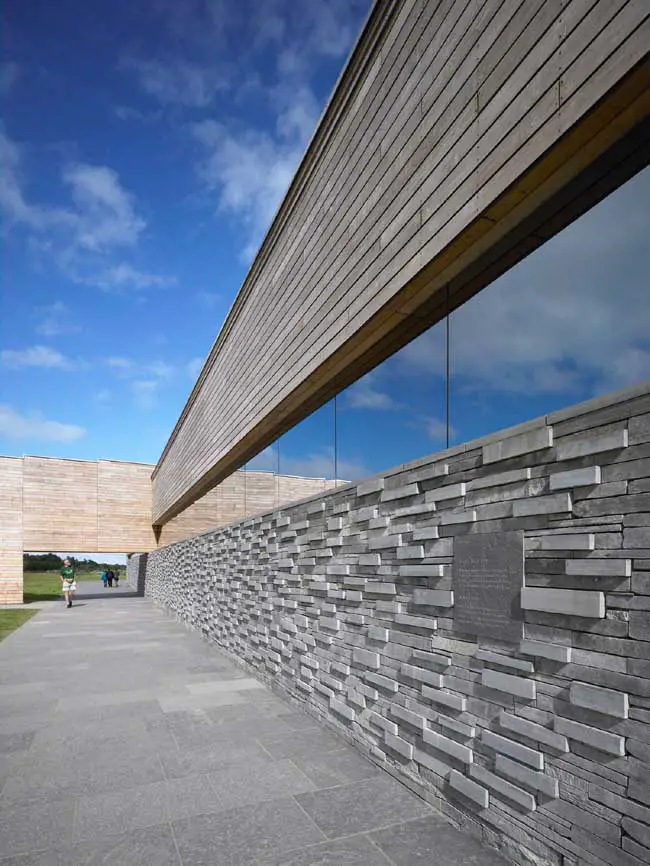
Memorial wall from Battlefield
photo © Andrew Lee
Visitor Centre
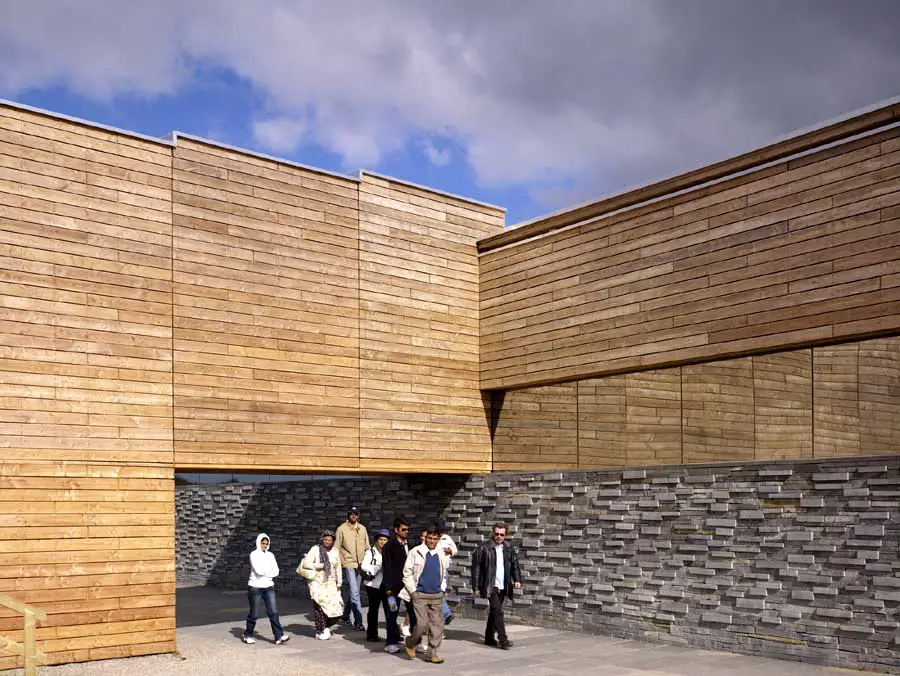
photo © Ewen Weatherspoon
RIAS Best Building in Scotland Award Finalist 2008
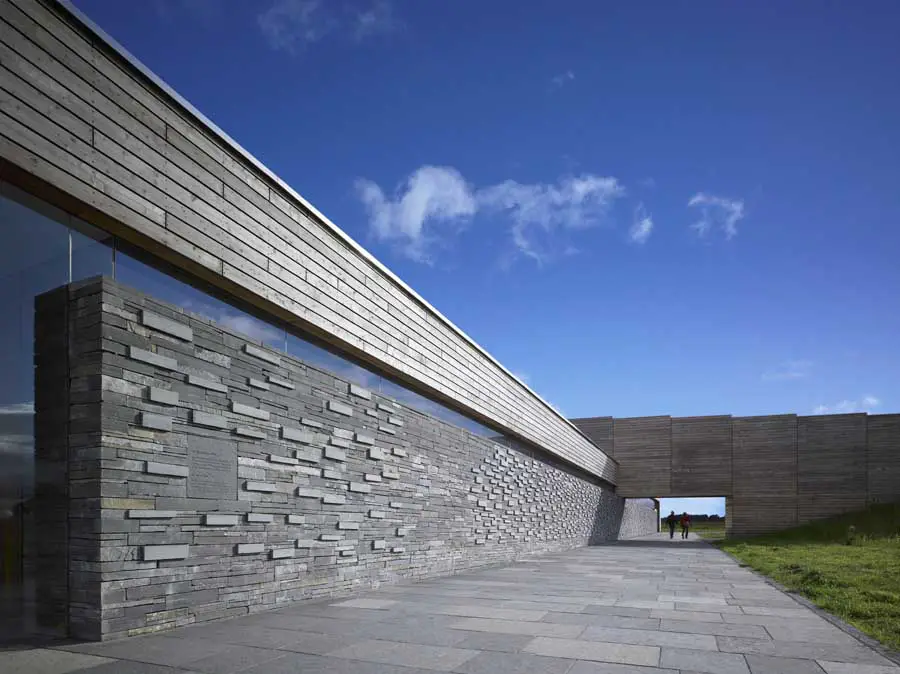
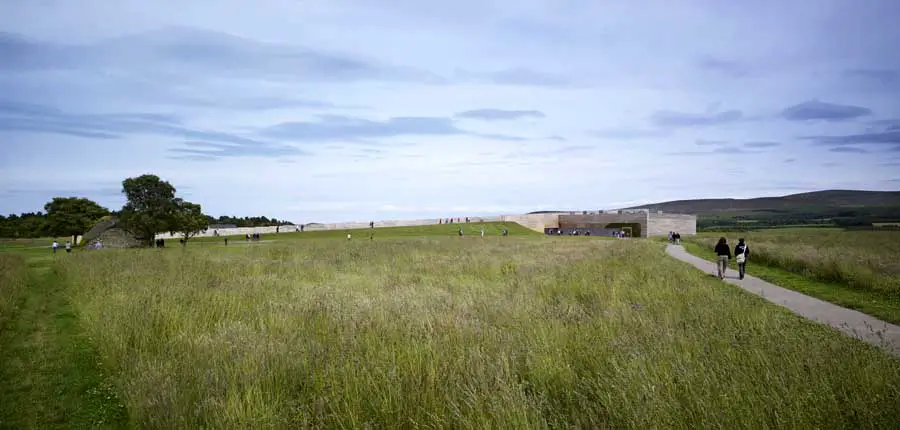
photo © Andrew Lee
Terrace landscape view:

photo © Ewen Weatherspoon
The Culloden Battlefield Memorial Centre, designed by Gareth Hoskins Architects, is the result of an international design competition which was held by the National Trust for Scotland in 2004.
South elevation:
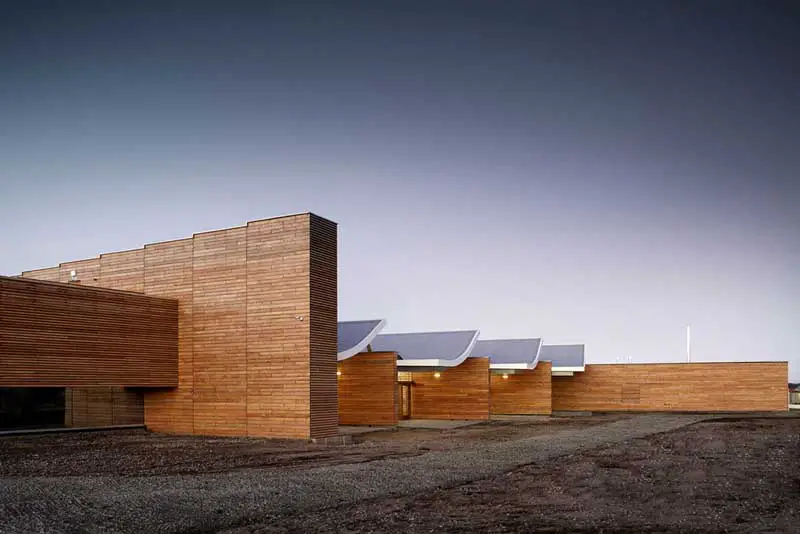
photo © NTS
As the last land battle within the UK, in which King George II’s troops defeated Bonnie Prince Charlie and his Jacobite supporters in 1746, the virtually untouched site is of major international and historical significance.
Sunny view from battlefield:
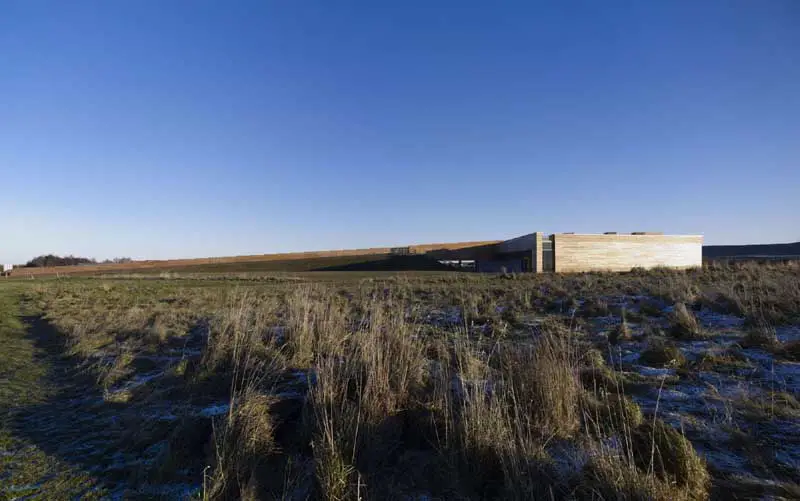
image © Ewen Weatherspoon
The project, which includes the reinterpretation and reinstatement of the landscape of the battlefield and a new 1000 sqm museum, was designed in collaboration with international exhibition designers, Ralph Appelbaum Associates, with input from a wide range of historians and archaeologists.
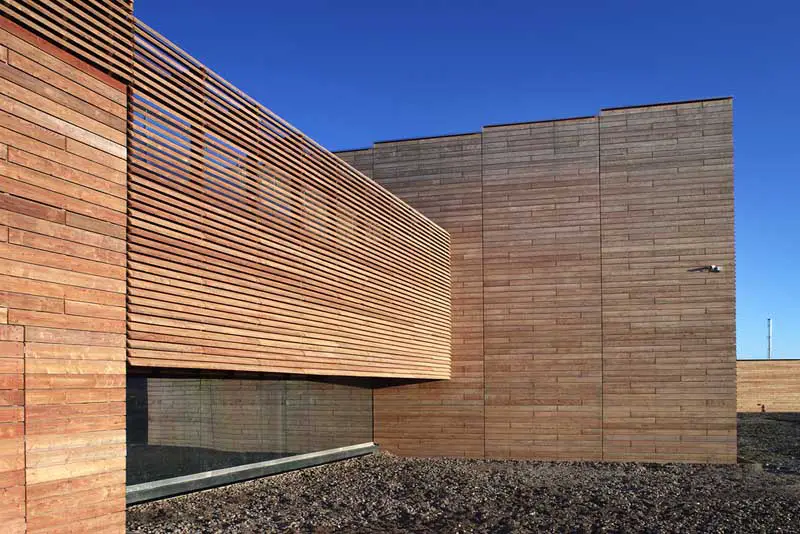
South facade:
photograph © NTS
The building will have its official opening on 16th April 2008, the anniversary of the battle.
Exhibition:
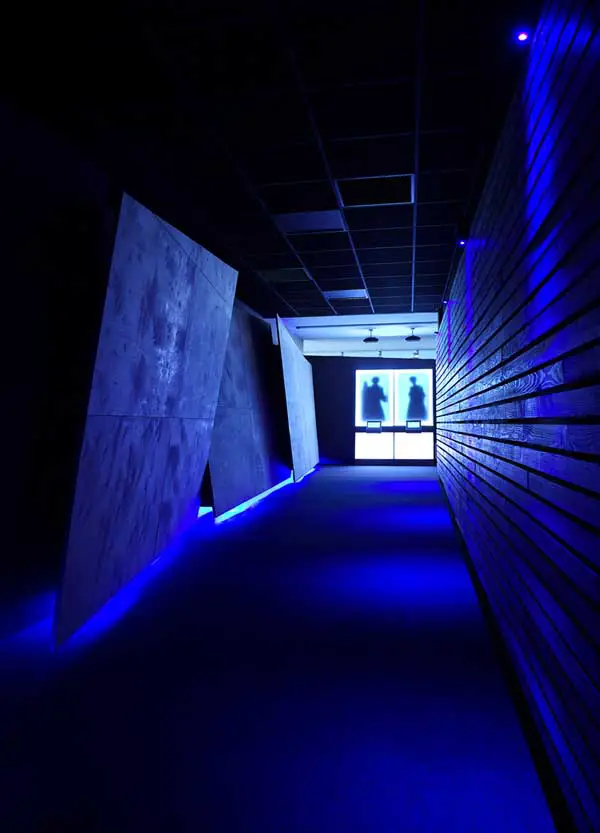
photo © NTS
Set back from the actual battlefield, the landscape-hugging building is defined by a wave-form roof and a 150m long berm wall that passes through the building and out into the landscape, to define the position of the Government troop line on the actual battlefield.
Restaurant internal view:
picture © GHA
The new centre includes a series of controlled exhibition spaces, educational space, restaurant, shop and support facilities and a landscaped roof platform offers panoramic views over the battlefield, the final resting place for over 1800 soldiers.
Sunny view from battlefield:
picture © GHA
The building itself has also been designed as a model of environmental sustainability. It is positioned to reduce wind-chill and take advantage of natural daylight. It’s heavily insulated envelope is clad in locally sourced larch, Caithness stone and site-salvaged field stone, and it is heated by a woodchip burning biomass boiler system, supplied from local forestry sources.
Exhibition space:
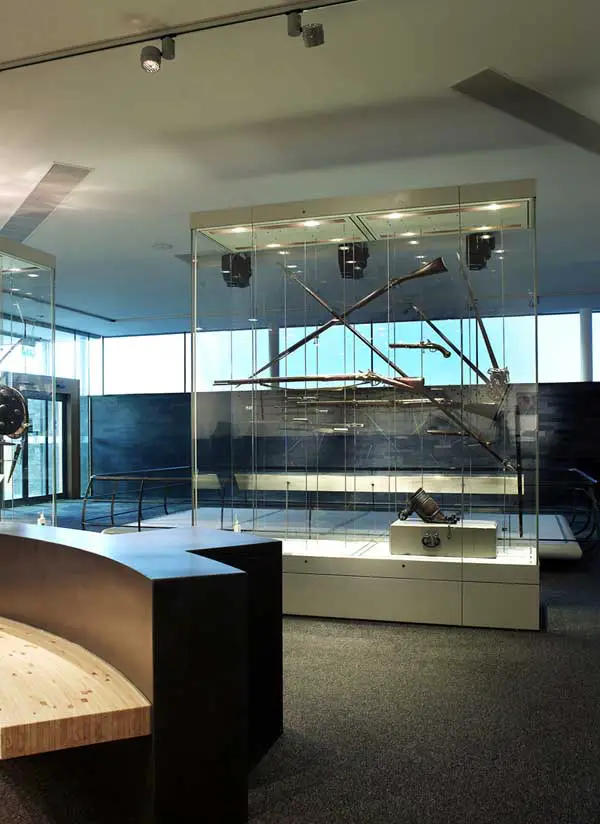
photo © NTS
Culloden Battlefield Memorial Centre Info from Gareth Hoskins Architects 140308
Culloden Memorial Battlefield Project : background information
Culloden Battlefield Information
Directions
The Battlefield is 3 miles southeast of Inverness, Scotland; 12 miles from Nairn.
Culloden Battlefield: Background
The battle was between the Crown and the Jacobites, led by Bonnie Prince Charlie. It took place on April 16th, 1746 on this barren moor. The Jacobites were defeated by the Duke of Cumberland with heavy losses to Scotland’s establishment; around 1200 people were reputedly killed. Culloden is often referred to as the last battle in the UK.
Culloden Visitor Centre
Facilities: restaurant, audio-visual show, bookshop, exhibition
Opening Times: all year except Jan
summer – 9am to 6pm ; winter – 10am to 4pm
Contact Culloden Battlefield Visitor Centre: 01463 790 607
Culloden Battlefield Visitors Centre architects – Gareth Hoskins
Culloden is maintained by the National Trust for Scotland
Location: Culloden, Scotland
Architecture in Scotland
Scottish Architecture Designs – chronological list
Gareth Hoskins Architects projects in Edinburgh:
Edinburgh Castle Visitor Centre
Comments / photos for the Culloden Battlefield – Visitor Centre page welcome

