
Paraty House, São Paulo Beach Property, Brazilian Architecture, Luxury Home Architect
Paraty House : São Paulo Beach Residence
Luxury Contemporary Beach Property Brazil design by Marcio Kogan / studio mk27, South America
post updated 28 August 2021 ; 16 June 2019 ; 8 Sep 2009
Paraty House
Location: Paraty, Brazil
Date built: 2009
Design: Marcio Kogan Arquitetos
Contemporary Brazilian Beach Residence designed by studio mk27 architects:
Photos: Nelson Kon
São Paulo Beach House
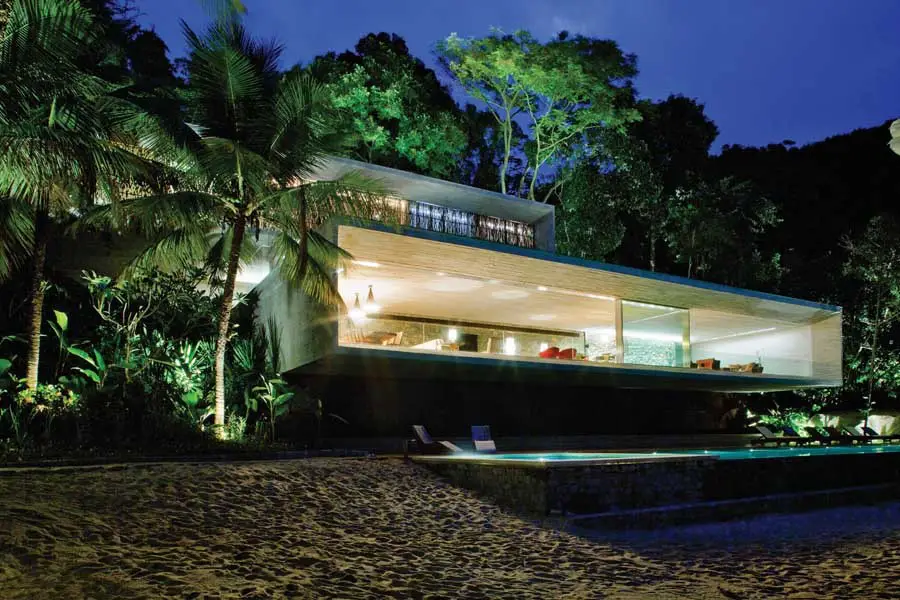
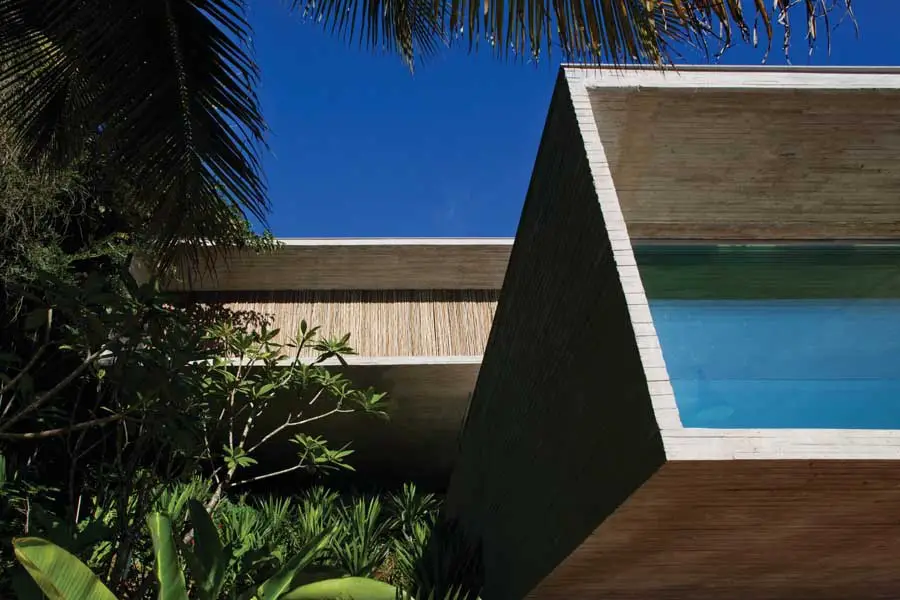
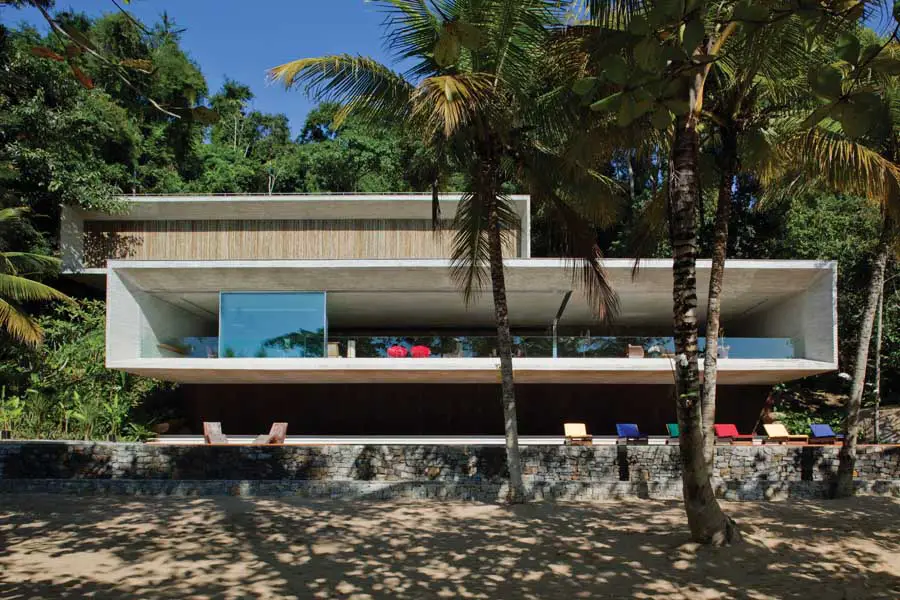
Paraty House’s two reinforced concrete boxes, sit atop each other, connected on the mountainside of one of the islands of the colonial city of Paraty and Angra dos Reis (between São Paulo and Rio de Janeiro), like two modern prisms between the large colossal stones of the Brazilian coast.

The building projects outward from the mountain, almost onto the beach, in an 8m cantilever. The house finds balance in the topography of the land, creating an extensive open doorway and living space in the practically untouched nature. Paraty House features a furniture collection showcasing 20thcentury design, including works by many well-known artists.
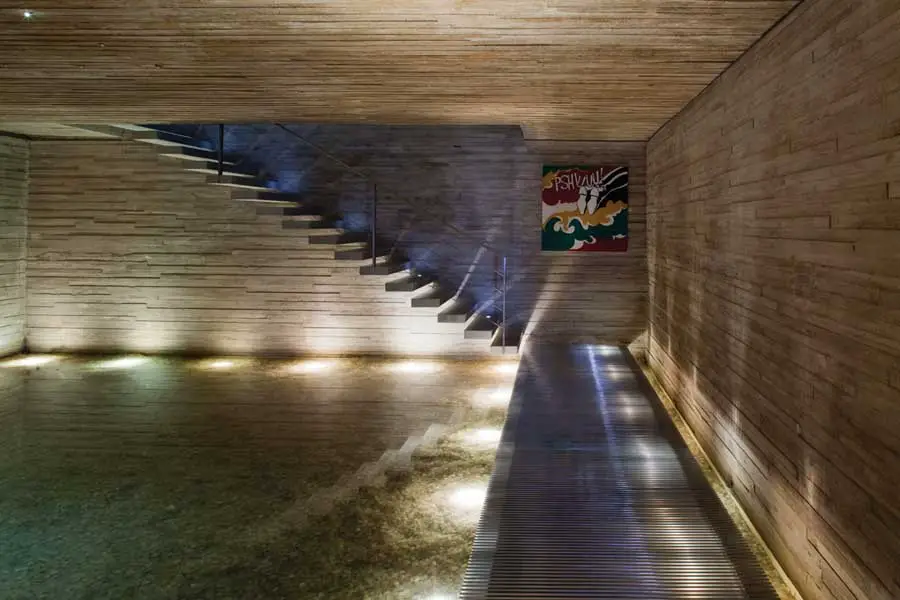
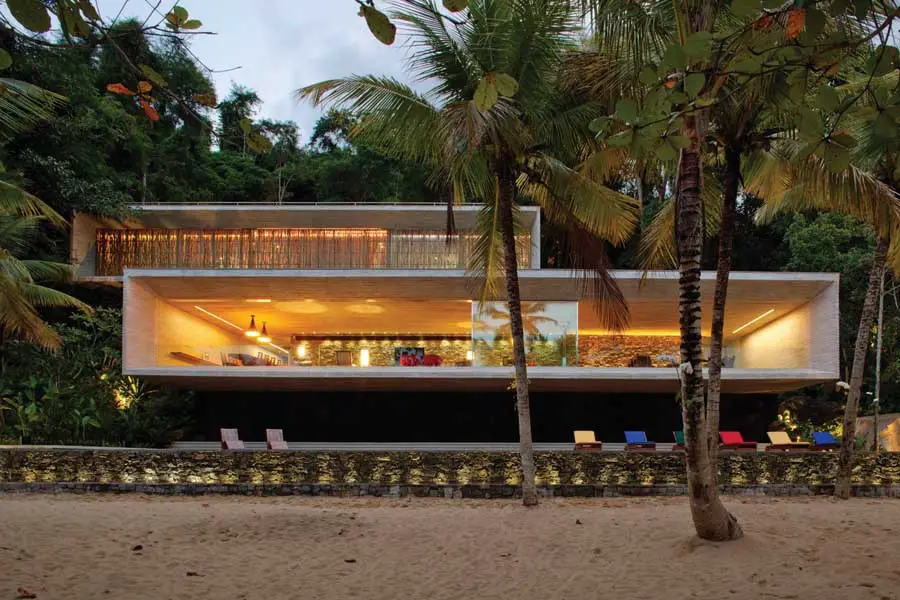
The residents arrive by boat. After stepping out onto the sand a metallic bridge positioned over a crystal-lined reflecting pool leads to a set of stairs connecting to the lower volume. This volume contains the living room, kitchen and service area. The continual internal area has a 27m span and huge glass windows to take advantage of the view of the sea.
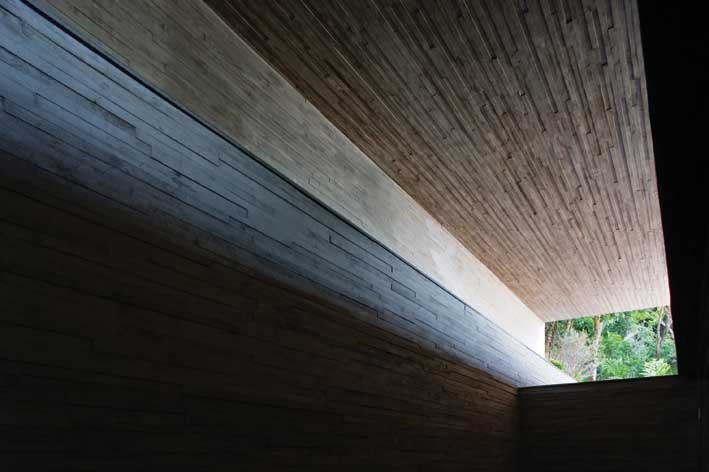
The same entrance stairs also lead to the upper volume that houses the bedrooms. In the front part of the house, retractile panels of eucalyptus sticks protect the bedrooms from the sun. The areas that face the mountain have small internal patios with zenithal lighting, and use exposed reinforced concrete, which grants a striking texture to the walls.
The entire top of the house is covered with terraces, used as observation decks for the residents, and as a garden for sculptures, medicinal plants and edible herbs.
Paraty House – Description by Gabriel Kogan
There is a legend which says that the region of the colonial city of Paraty and Angra dos Reis (between São Paulo and Rio de Janeiro) has 365 islands, one for each day of the year. Two boxes of reinforced concrete, rest fixed connected on the mountainside of one of these islands; two modern prisms between the large colossal stones of the Brazilian coast. The volumes project outward from the mountain, almost abreast of the beach, in a 8-meters cantilever.
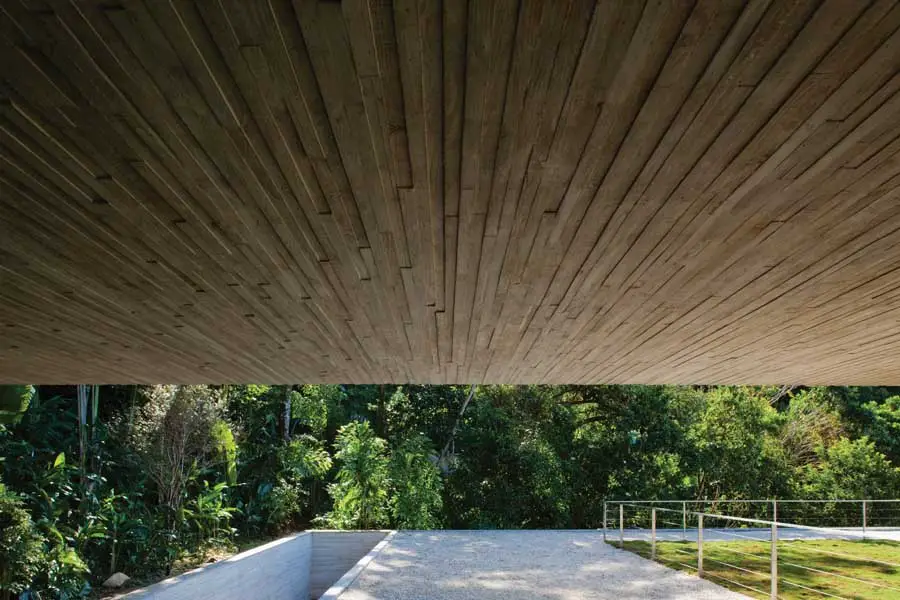
The house, of structural ingenuity, finds balance in the topography of the land, constituting an extensive open doorway and living space in the practically-untouched nature. In the rocks of Paraty, in the dense rain forest of the island, poisonous spiders, discover this orthogonal volume and penetrate the grass that coats the slab. Moving their fore and hind legs quickly, they reclaim the site.
The spiders continue on their way into the house and penetrate into an important furniture collection of the XX century designed, among others, by George Nakashima, Luis Barragan, Lina Bo Bardi, Sérgio Rodrigues, Joaquim Tenreiro and José Zanine Caldas. The spiders become lost in the upholstered chair.

The inhabitants arrive by boat: the entrance to the house, already protected by the slab, after stepping on the sand, is via a metallic bridge positioned over a crystal-lined reflecting pool. The bridge leads to stairs connecting to the lower volume. This volume contains part of the program of the house: living room, kitchen and service area. The continual internal area has a 27-meter span and huge glass windows allow for the view, the sea.
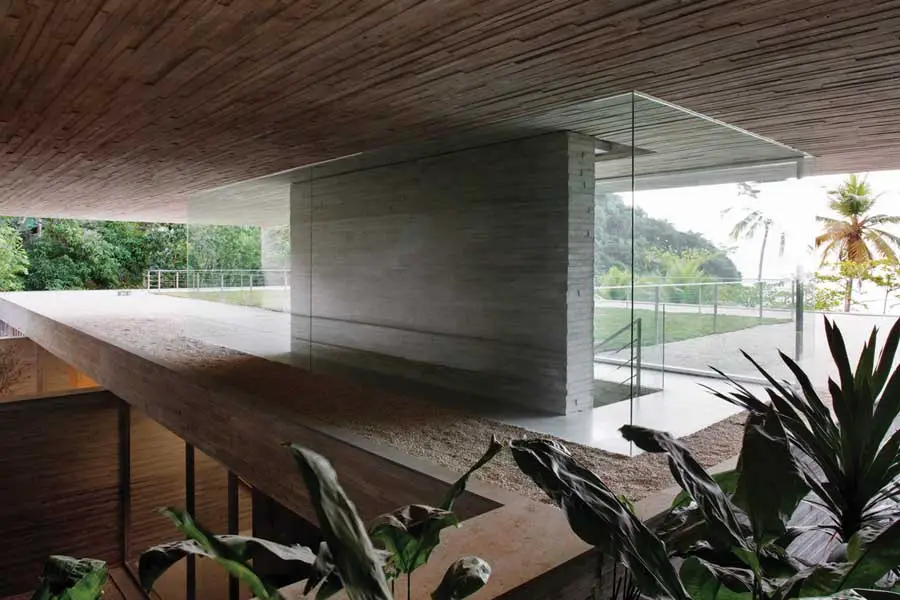
The same entrance stairs lead to the upper volume which lodges the bedrooms. In the front part of the house, retractile panels of eucalyptus sticks protect the bedrooms from the sun. The spaces that face the mountain, have small internal patios with zenital lighting and the use of exposed reinforced concrete grants a striking texture to the walls.
The entire top of the house is covered with terraces, observatories for the inhabitants, for the poisonous spiders, or garden for the sculptures and for the medicinal plants and edible herbs.
Paraty House Brasil Beach Property – Building Information
Project: Paraty house
Location: Paraty, RJ, Brazil
Client: Private
Size of project: 1,050m²
Project: Jan 2008
Conclusion: May 2009
Site area: 50,000 m2
Built area: 1,050 m2
Architecture
Author: marcio kogan
Co-author: suzana glogowski
Interior design co-authors: diana radomysler, carolina castroviejo
Team: beatriz meyer, eduardo glycerio, gabriel kogan, lair reis, maria cristina motta, mariana simas, oswaldo pessano, renata furlanetto, samanta cafardo
Landscape architect: gil fialho
General contractor: lock engenharia – arq. andressa donadio, eng. romolo germano
Structure engineer: sf engenharia – eng. Otávio de souza gomes
Photographer: nelson kon
Paraty House São Paulo images / information received 080909
LEAF Awards Winner 2009
Location: Paraty, São Paulo, SP, Brasil
São Paulo Architecture
São Paulo Architecture Designs – chronological list
Toblerone house
Architecture and interiors: studio mk27 – marcio kogan + diana radomysler
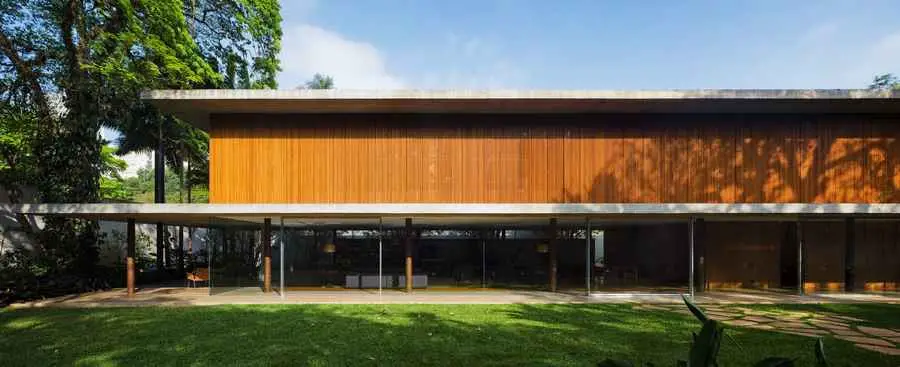
photograph : Nelson Kon
Toblerone house
Casa dos Ipês
Design: studio mk27 – marcio kogan + lair reis
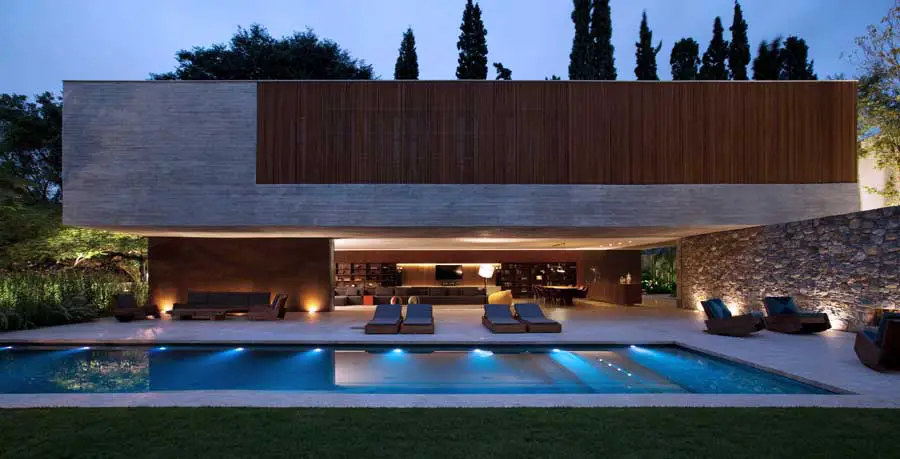
photo © Reinaldo Cóser
Casa dos Ipês São Paulo
Corten House
Design: Marcio Kogan
São Paulo home
Brazilian Architects Practices
Marcio Kogan Arquitetos – studio mk27 SP, Brasil
Comments / photos for the Paraty House Brazil page welcome

