
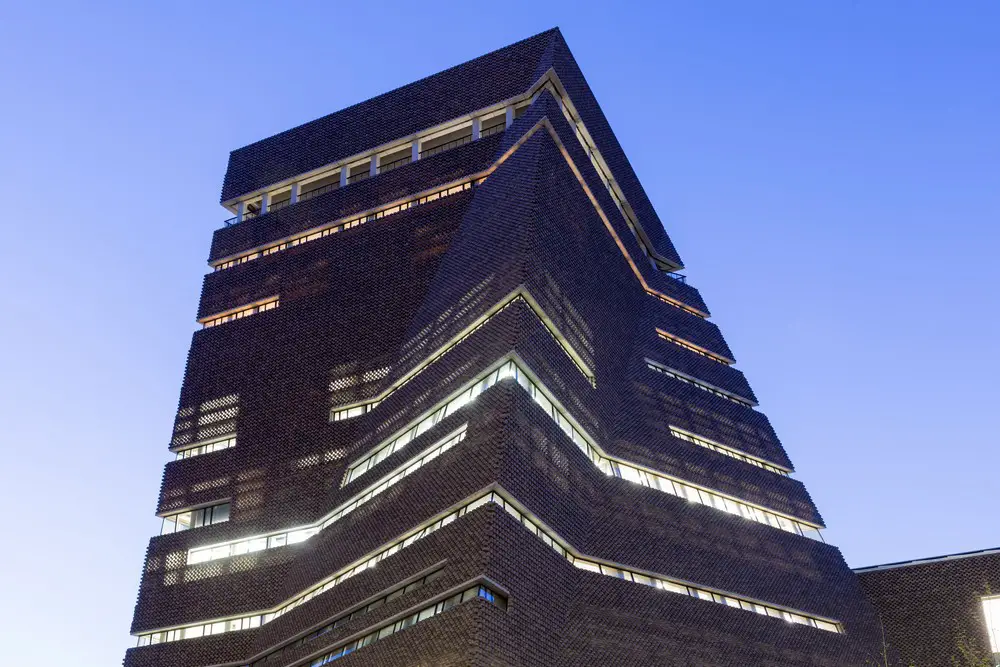
New Tate Modern London Extension Architecture Design, Swiss Architect, Opening, Building Picture
Tate Modern Expansion
London Art Gallery Building Development design by Herzog & de Meuron, Architects
7 Sep 2017
RIBA Client of the Year 2017
Shortlisted for RIBA Client of the Year 2017
22 Jun 2017
RIBA Awards Winner in 2017
RIBA Awards – Tate Modern Extension is one of winners announced for the London region.
6 Sep 2016
New Tate Modern Extension Privacy Problems with
Tate Modern Extension Privacy Issue
Residents of Neo Bankside luxury flats have complained that the Tate Modern’s new public viewing deck is invading their privacy.
People living in flats next to the Tate Modern Switch House extension have instructed lawyers after complaining that people in the gallery viewing deck were taking photos of them in their living rooms.
18 Jun 2016
Tate Modern Extension Photos
new photos of this major new building in London:
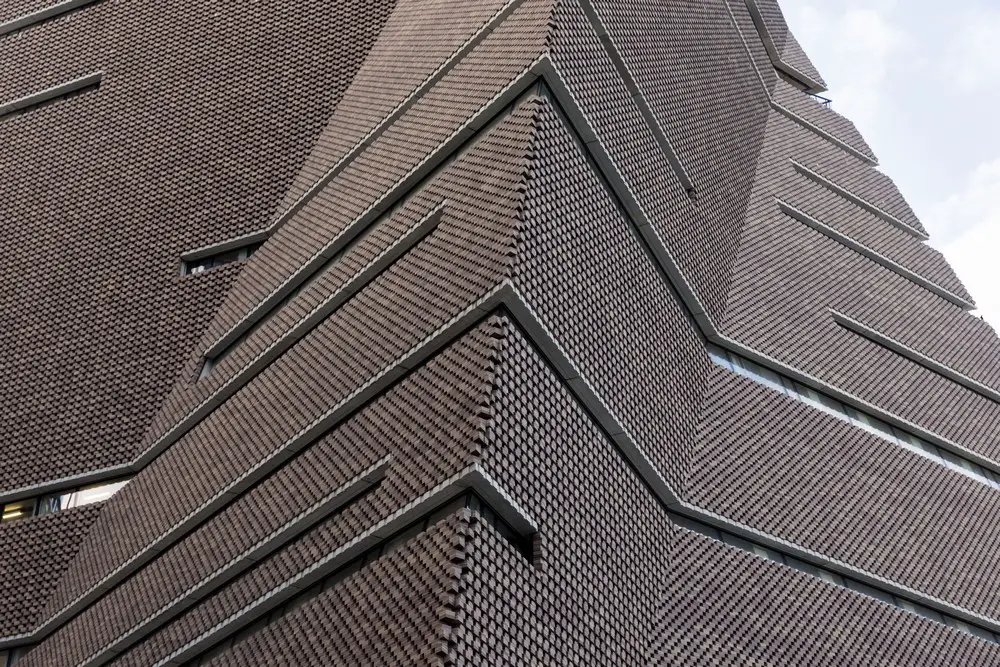
bold brickwork, matching the existing industrial building (former power station), but contorted into a new rising form. The brick patterning and folding form is delicious, yet some commentators have criticised the architecture for looking too industrial.
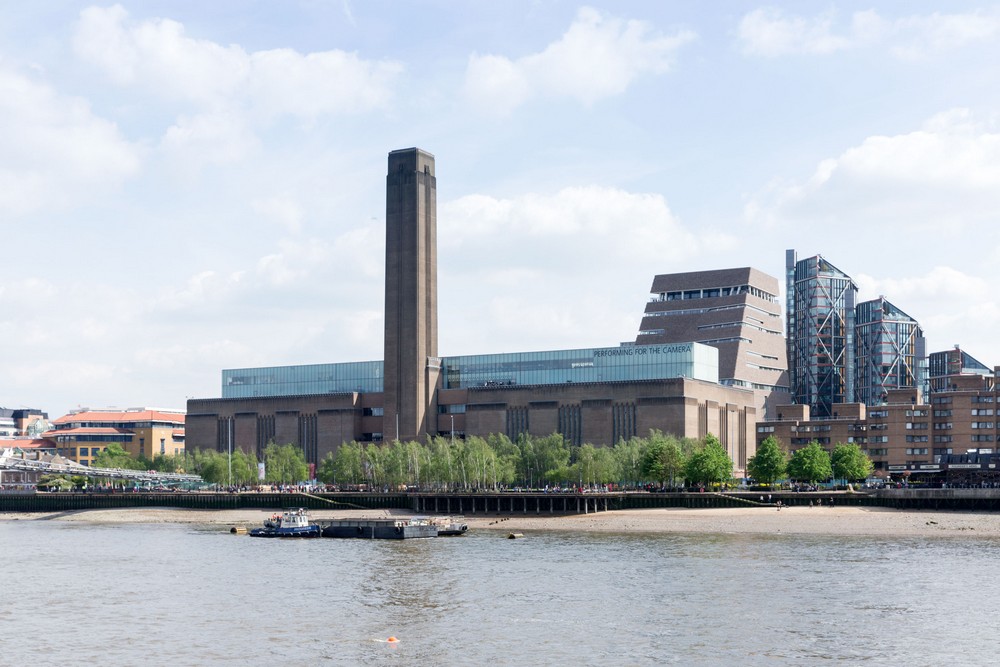
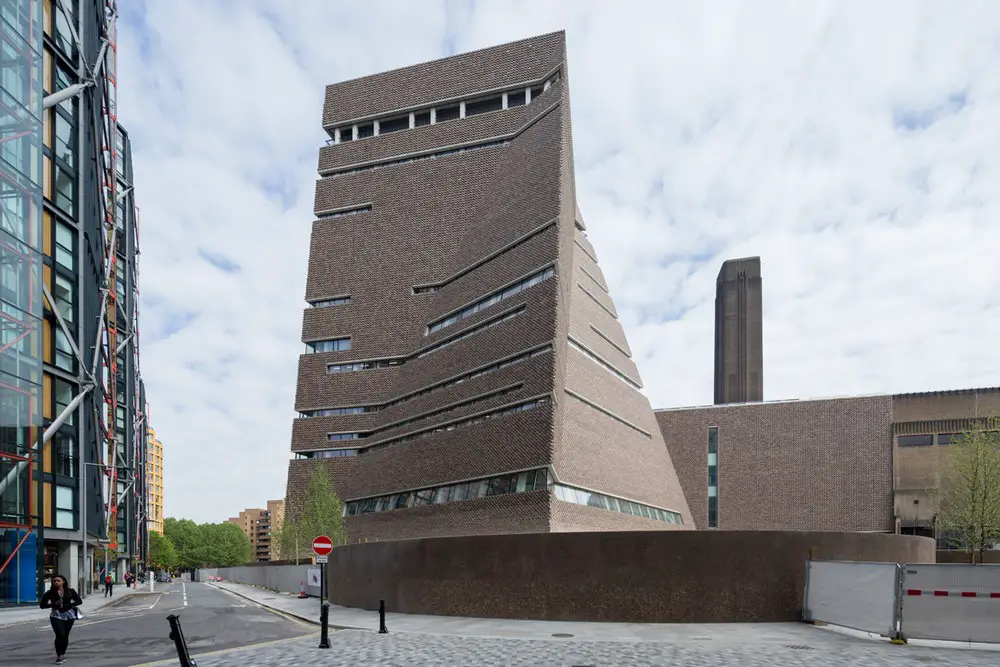
Switch House, Tate Modern © Iwan Baan
The Tanks:
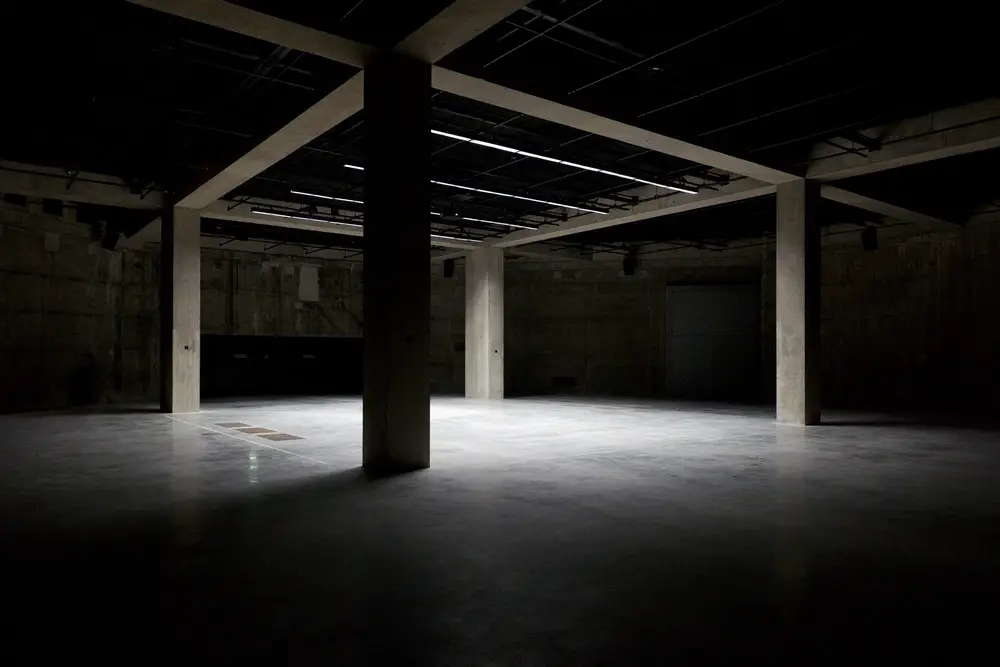
The Tanks (bottom right) © Tate Photography
Pupils from Charlotte Sharman Primary School attended the special schools preview day, A.S.S.E.M.B.L.Y., and were the first members of the public to visit the new Tate Modern:
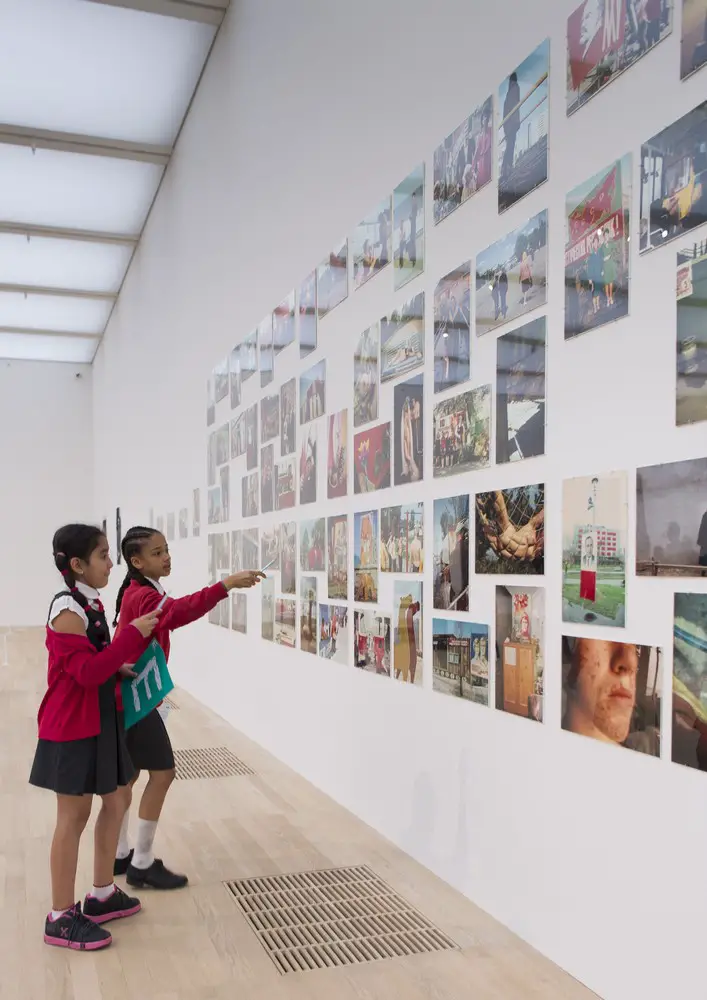
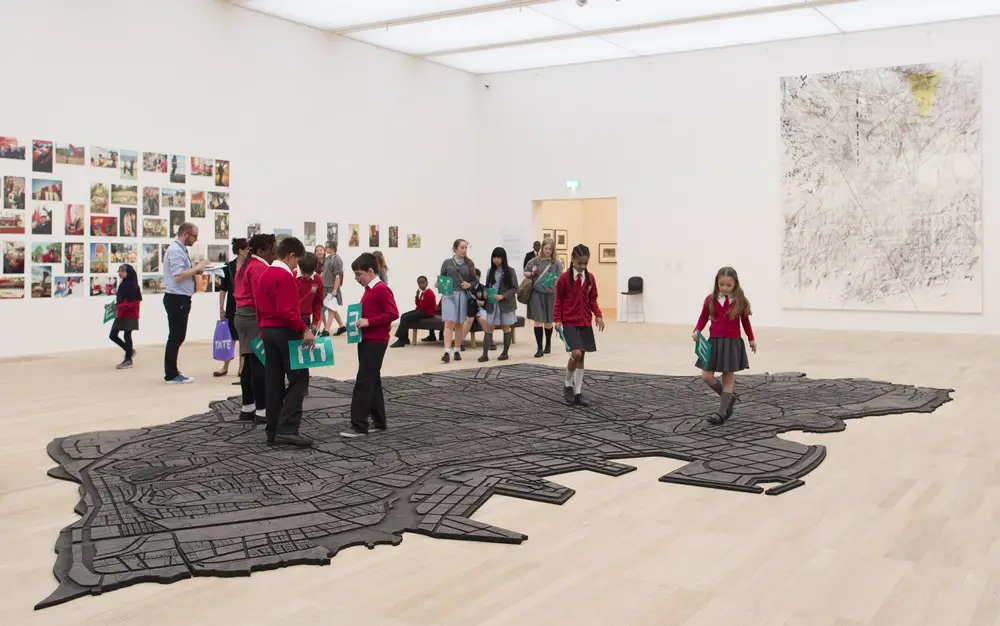
photos courtesy Tate Photography
Tate Modern has changed London since 2000. The impact it has had on urban design and the development of the South Bank and Southwark, has been as substantial as its influence on the city’s artistic, cultural and social life.
The new development will add another decisive dimension to the architecture and environment of this quarter and beyond. With a new entrance to The South, and a direct north-south passage, taking people from the Thames through the existing building and the Turbine Hall out to a new city plaza to the south on Sumner Street and from there on to Southwark, the development will connect Southwark with the Thames and provide much improved open, public space.
Tate Modern is the world’s most visited museum of modern art. In its next stage of development the vision is to establish a new model for museums of modern and contemporary art, by fully integrating the display, learning and social functions of the museum, strengthening links between the museum, its locality and the city. In close collaboration with the Tate, we carved a path through the jungle of unusually numerous parameters that must be taken into account.
The resulting paths and connecting lines, gradually acquired shape, condensing into a pyramidal form generated from the combined geometries of the site context and existing building. The clover-shaped dramatic subterranean oil tanks are at the heart of these plans and they are a point of departure for the new building. When we converted the power station we dug out the Turbine Hall in order to turn the vast physical dimensions of the existing structure into a tangible reality. Here, the Oil Tanks form the foundation of the building as the new volume develops and rises out of the structure below.
Interior views:
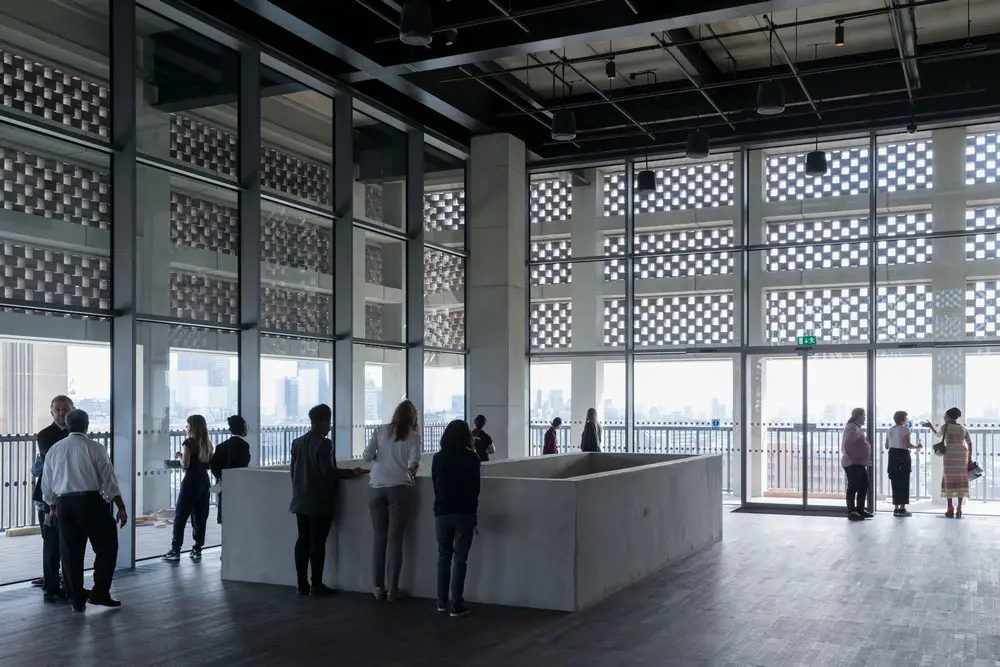
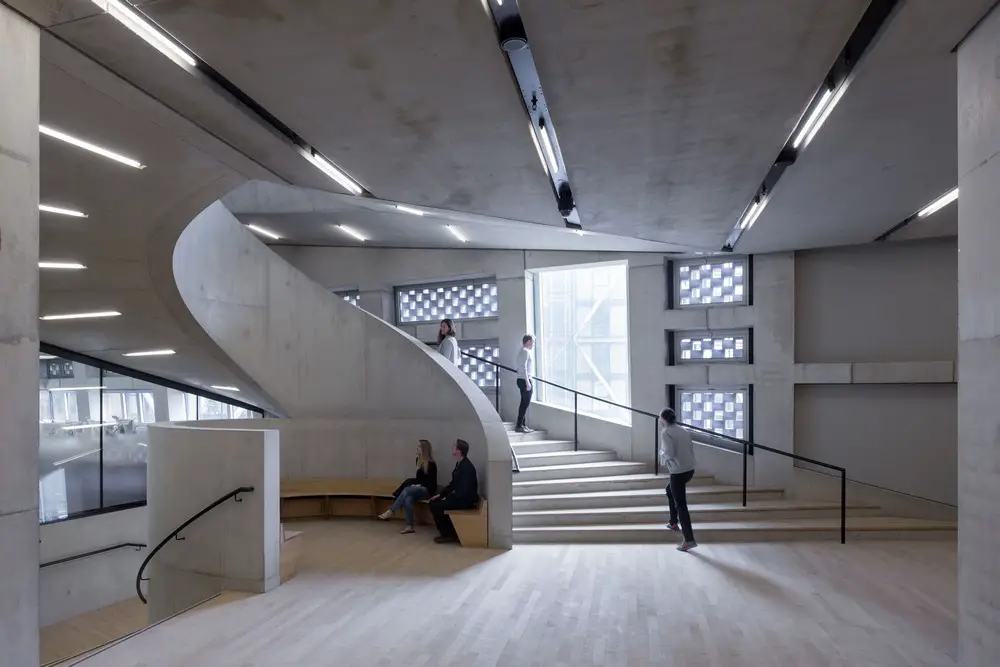
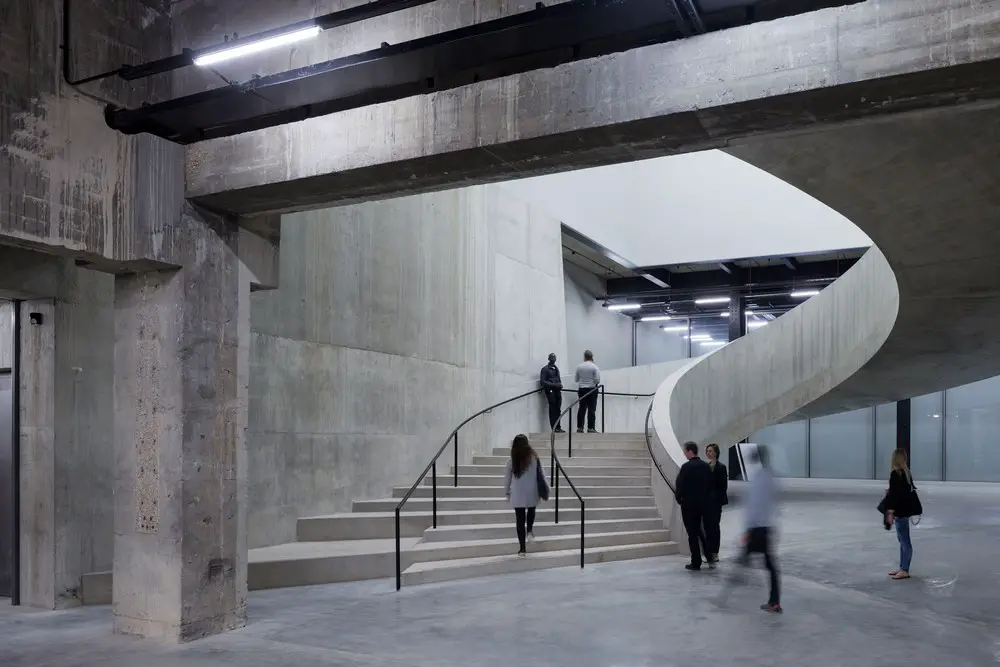
Switch House, Tate Modern © Iwan Baan
They are not merely the physical foundation of the new building, but also the starting point for intellectual and curatorial approaches which have changed to meet the needs of a contemporary museum at the beginning of the 21st century. These approaches require a range of gallery spaces, both larger and smaller, along with ‘as found’ spaces of less conventional shape, and better facilities for the gallery’s popular learning programmes. As well as doubling the gallery space, The Tate Modern Project will create a diverse collection of public spaces dedicated to relaxation and reflection, making and doing, group learning and private study.
These spaces are spread over the building and linked by a generous public circulation system rising through the building. The vertical orientation of these spaces is clear in the same way that a horizontal orientation is evident in the first phase of the Tate Modern. At the same time we felt it was important for the building to be visible from the north. As one approaches Tate Modern from the river, it can be seen rising behind the power station without competing with the iconic chimney.
Integrating the new building into the existing has been fundamental to the project, as well as integrating it into the skyline of the city and ensuring that visitors both inside and out could orient themselves. We wanted the combined elements of Tate Modern, old and new, to be expressed as a whole, to have them come together and function as a single organism. Using the same base palette of bricks and brickwork in a radical new way, we created a perforated brick screen through which light filters in the day and through which the building will glow at night.
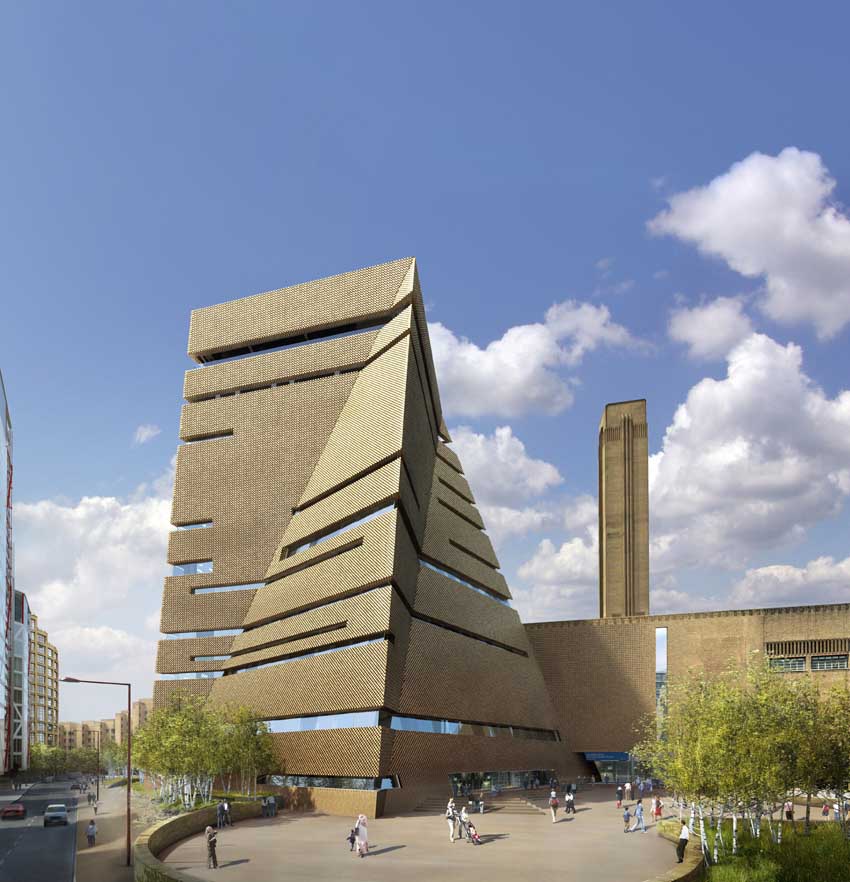
The brickwork also reacts to the inclined faces of the form by stepping to approximate the pure geometry. With both of these simple actions, texture and perforation, the brickwork is transformed from a solid and massive material to a veil that covers the concrete skeleton of the new building. The façade changes in appearance depending on the observer’s point of view, not just from transparent to opaque, but also in pattern and orientation.
This continuous wrap of perforated brickwork is broken through the introduction of horizontal cuts to allow for views out and to provide for daylight and natural ventilation to the internal spaces. The location of these ‘cuts’ is in direct relation to the internal programming and planning of the building. The result is a new yet symbiotic reading that is distinct and unique along the skyline of London.
Herzog & de Meuron, 2011
3D view:
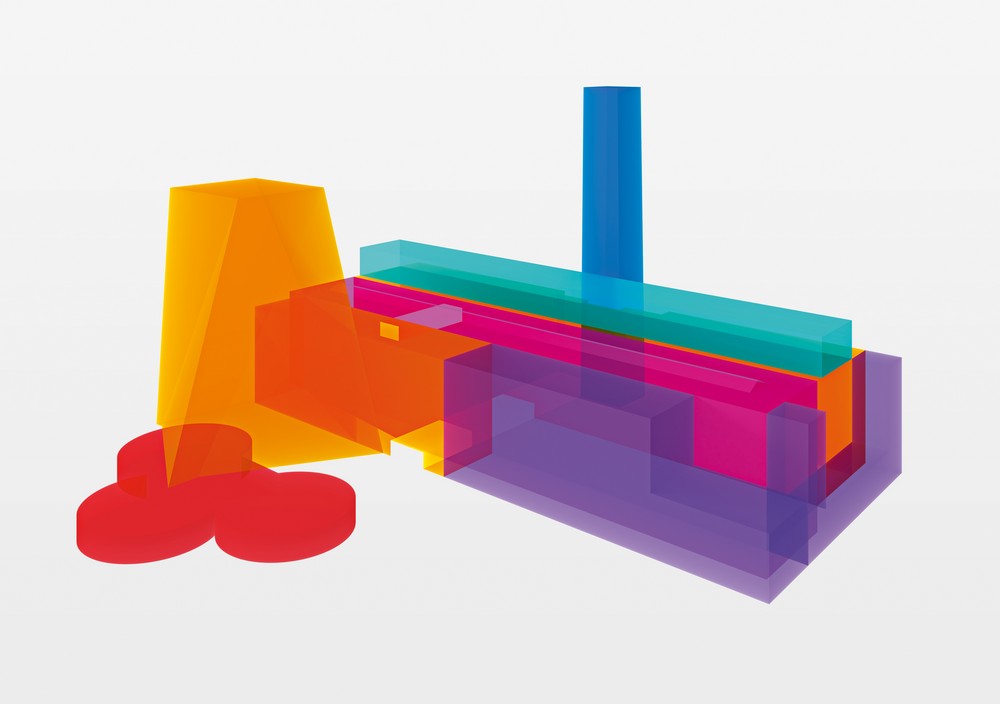
The new Tate Modern © Peter Saville with Paul Hetherington and Morph
14 Jun 2016
The new Tate Modern Building
Tate Modern Opening
Design: Herzog & de Meuron Architects, Switzerland
Tate Modern’s new extension, a pyramid-like tower that transforms London’s skyline, has been been unveiled ahead of its official opening, reports the BBC.
The tower, billed as Britain’s most important new cultural building since the British Library, is part of a £260m revamp at the famous modern art museum.
The 10-storey building includes three new gallery levels and a panoramic roof terrace.
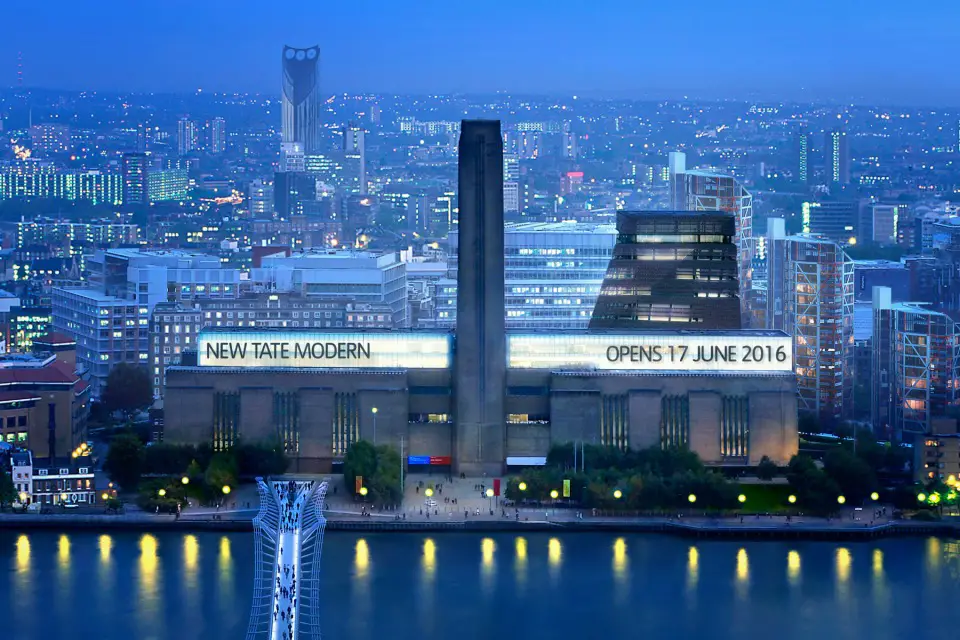
image © Hayes Davidson and Herzog & de Meuron
It allows 60% more artworks from the Tate collection to go on show.
Tuesday’s launch event allowed the invited guests a first glimpse of the cavernous new gallery spaces and 360 degree views across the capital.
Tate Modern Extension Building – BBC article
25 Apr 2016
The new Tate Modern opens on 17 June 2016.
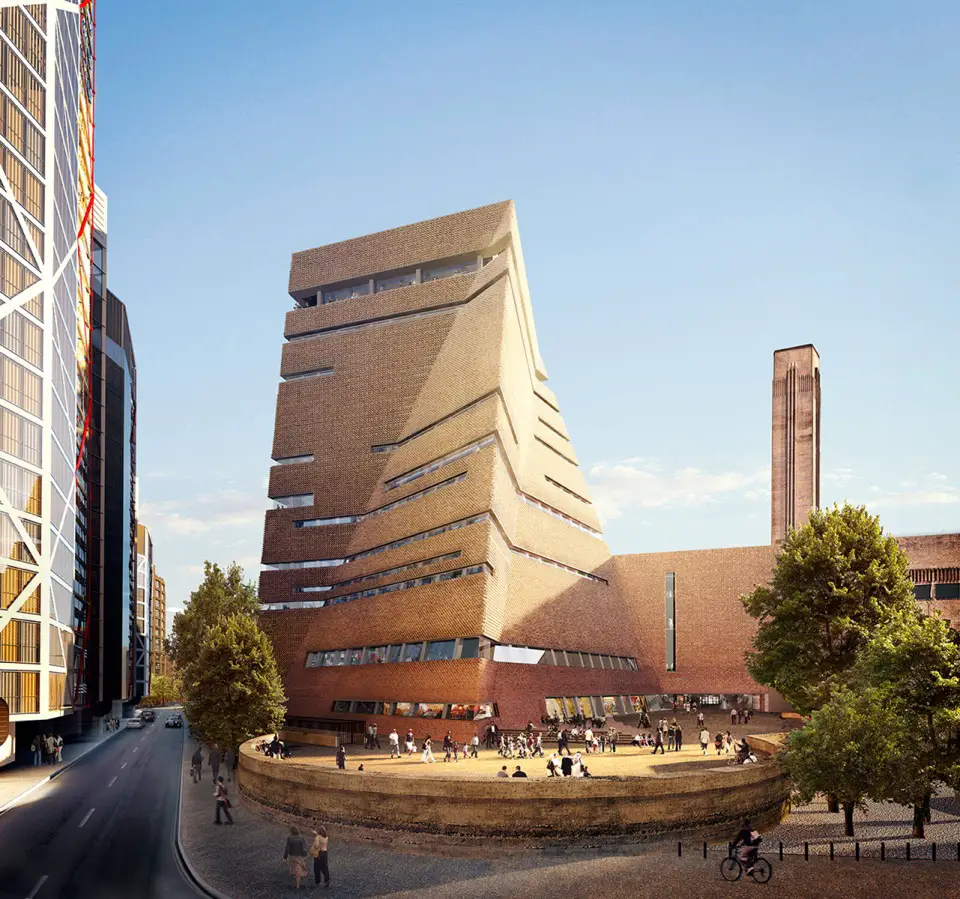
picture © Hayes Davidson and Herzog & de Meuron
It will have more space for new kinds of art and introduce artists from around the world.
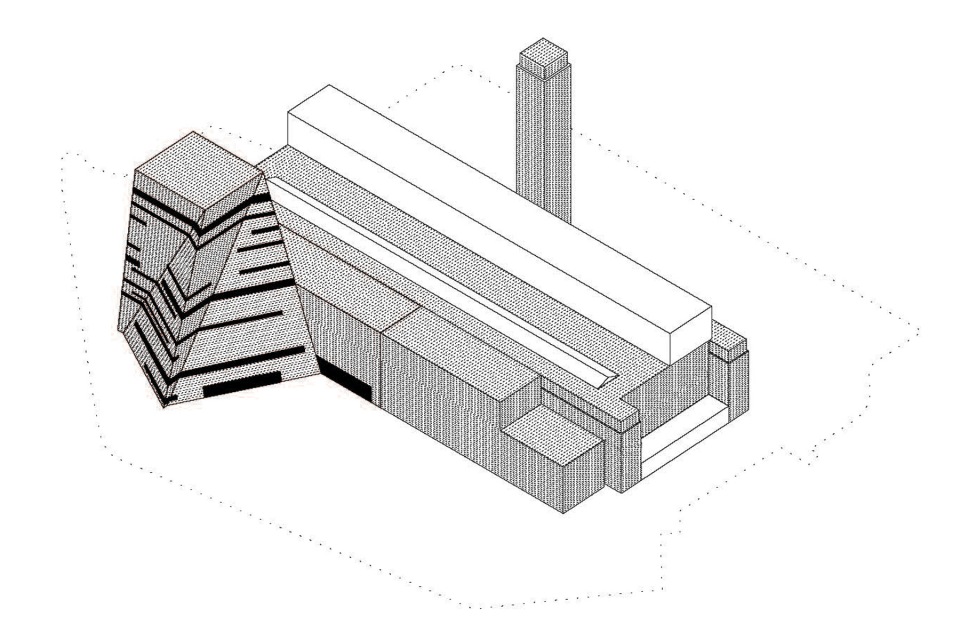
A new ten-storey building has been created behind the original power station, with additional galleries and new places to meet, learn and create.
Tate Modern opened in 2000. The new building by the world-famous Swiss architecture studio will display a greater variety of artworks and show more artists from around the world. It will present an increasingly international view of modern and contemporary art.
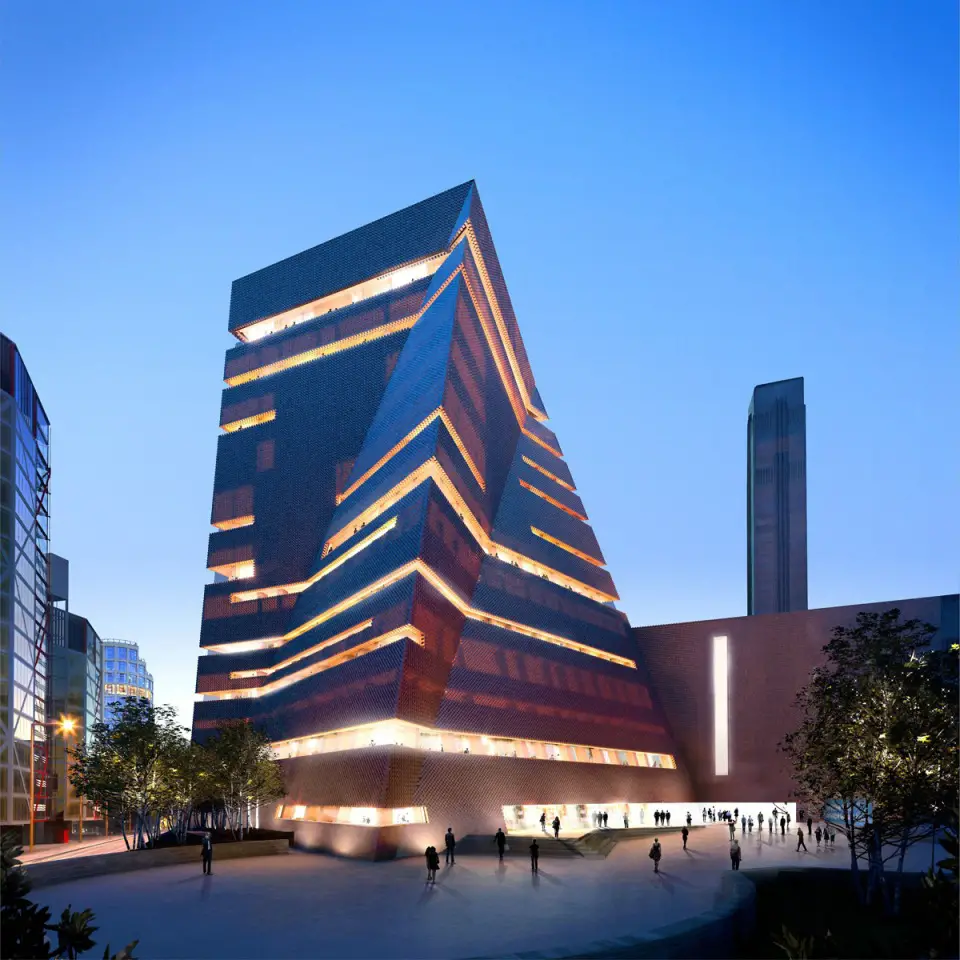
The new building is ten-storeys on top of The Tanks – the world’s first gallery spaces dedicated to live art, film and installations – its height responding to the chimney of the existing Tate Modern building which was originally designed as a power station by Giles Gilbert Scott in the 1950s.
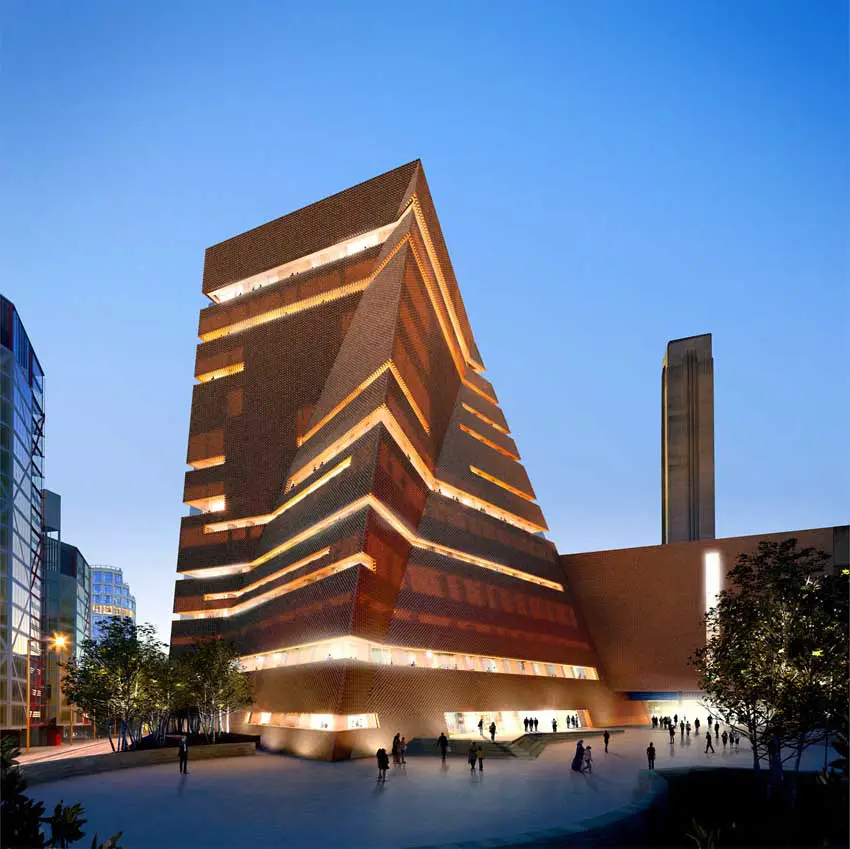
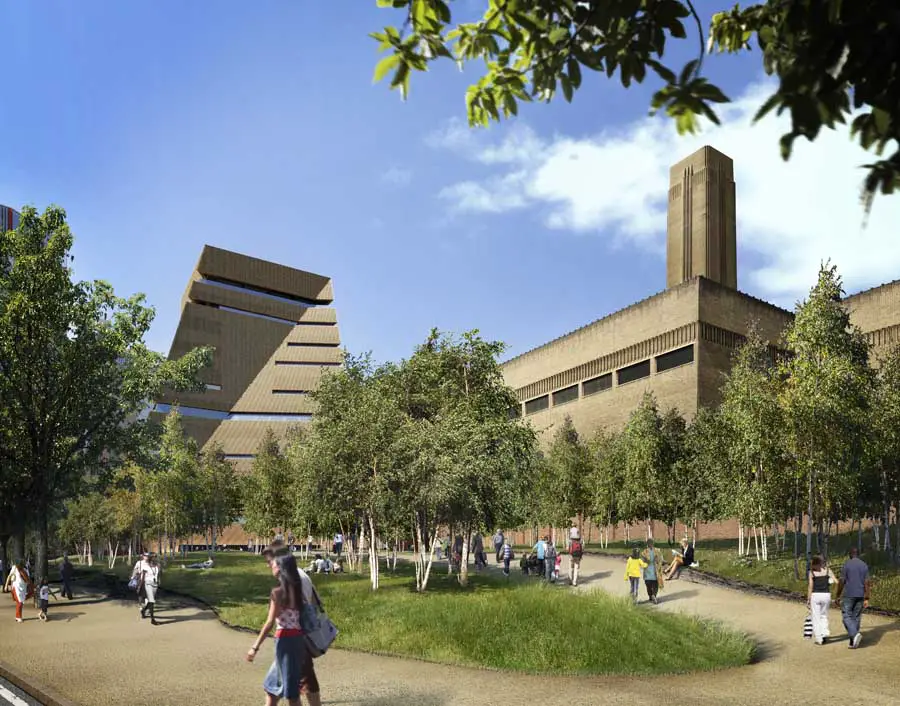
Its twisting, pyramid-like shape will be a memorable addition to London’s skyline and will offer 60% extra space for visitors to explore.
Website: https://www.tate.org.uk/visit/tate-modern
Tate Modern Extension
Construction Update – Site Progress
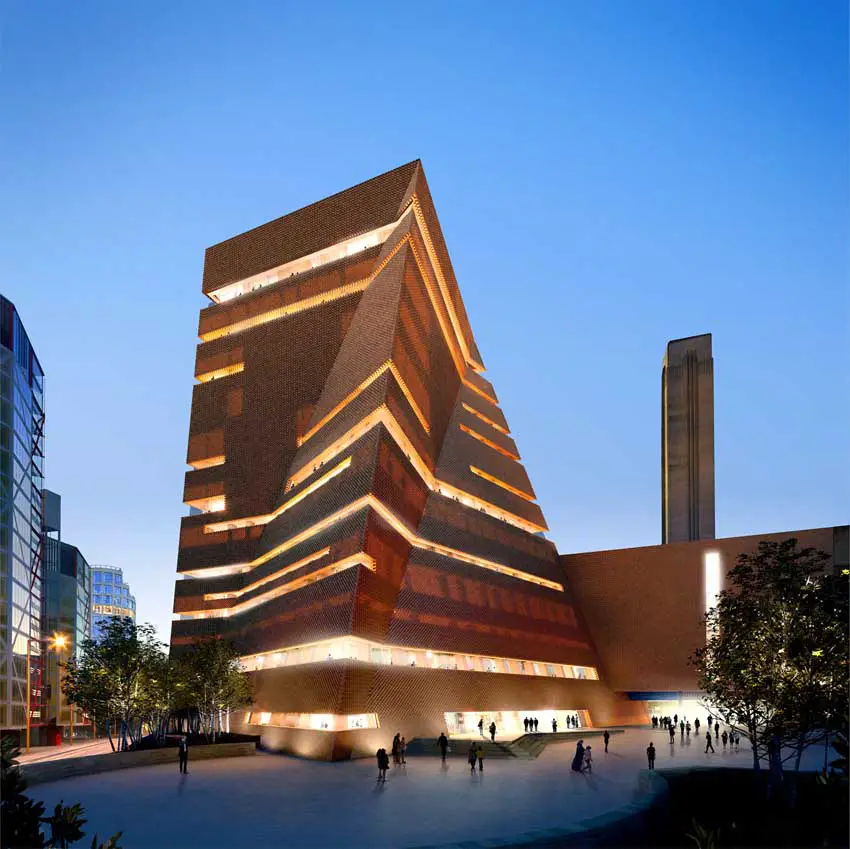
Photo from Aug 2015:
The Tate Modern Project under construction:

photo Author: the wub; courtesy wikimedia commons
Photos from 29 Apr 2013:
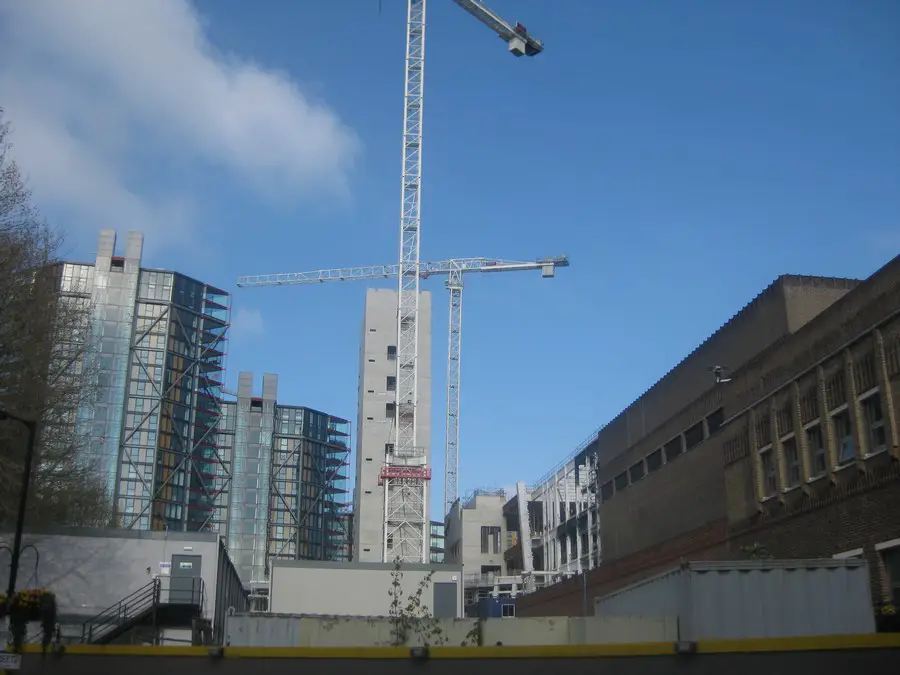
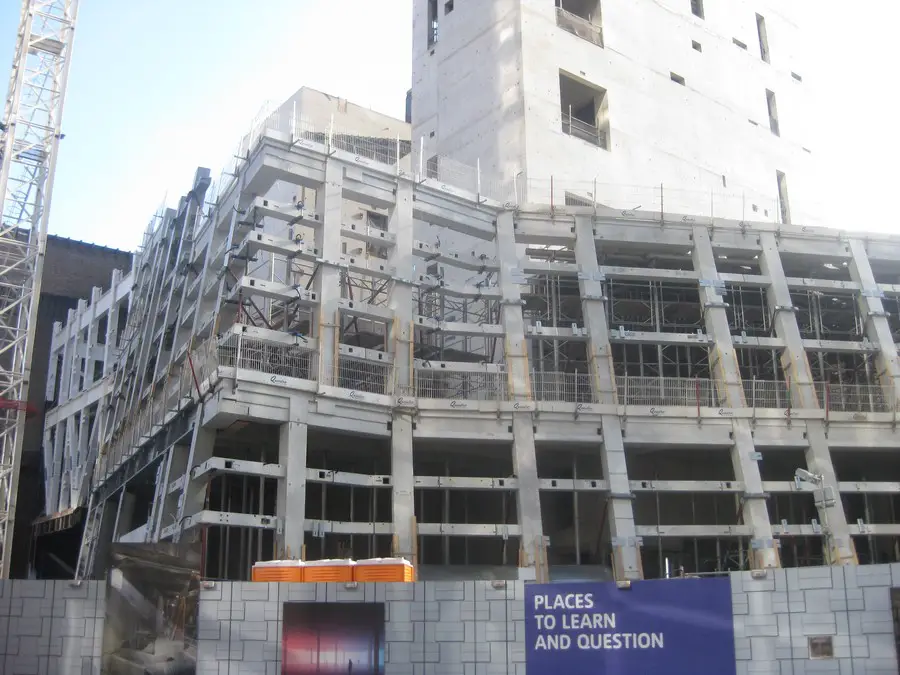
photo © Adrian Welch
Photo from 31 Jan 2011:
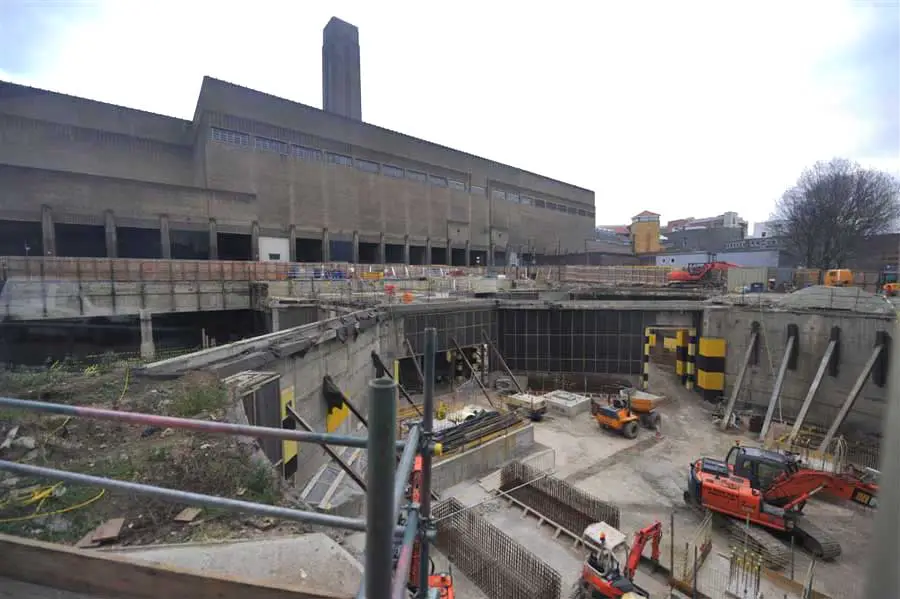
photograph © Nick Weall
8 Apr 2009
New Images
Transforming Tate Modern. Exterior views from the south
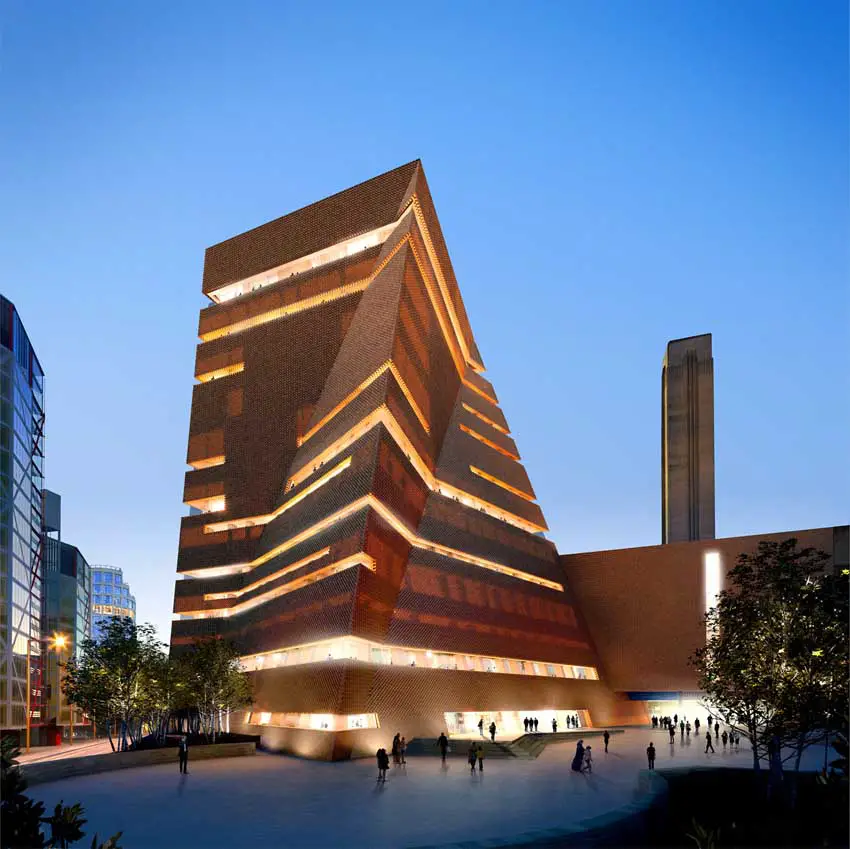
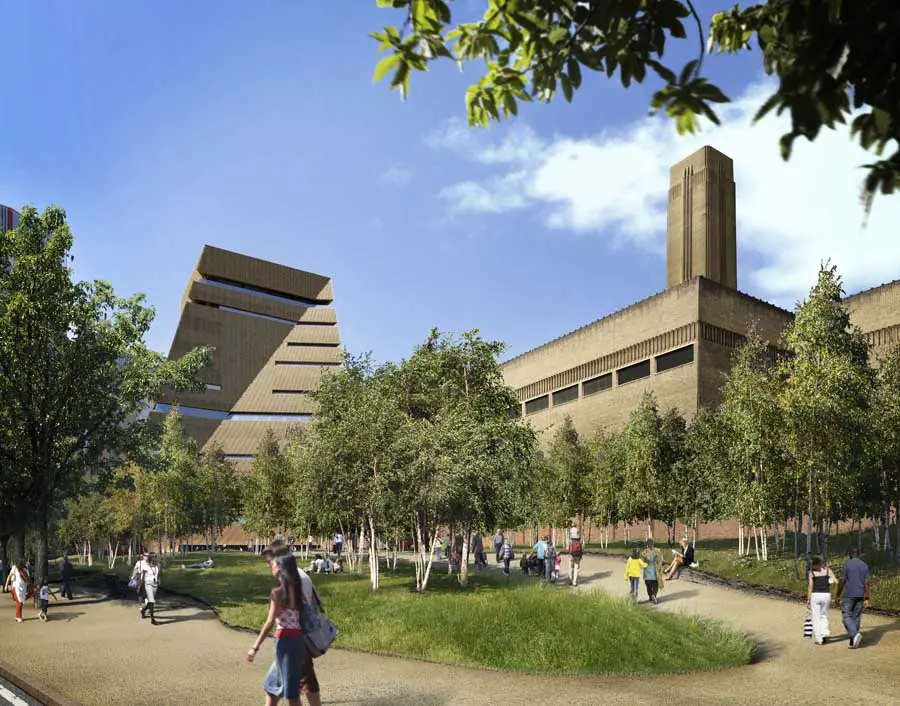
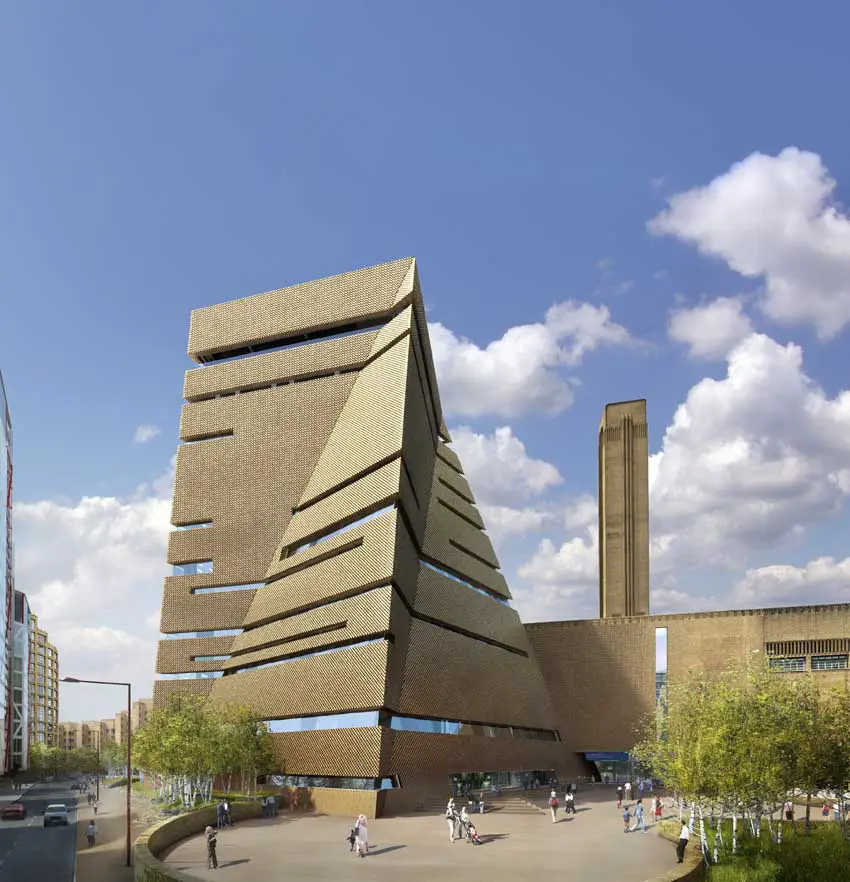
images © Hayes Davidson and Herzog & de Meuron
Planning approval gained for the extension design
News Update – 27 Mar 2009:
Support from Southwark Council + CABE, set for planning approval w/c 30 Mar 2009
Transforming Tate Modern. Exterior view from the south at dusk:
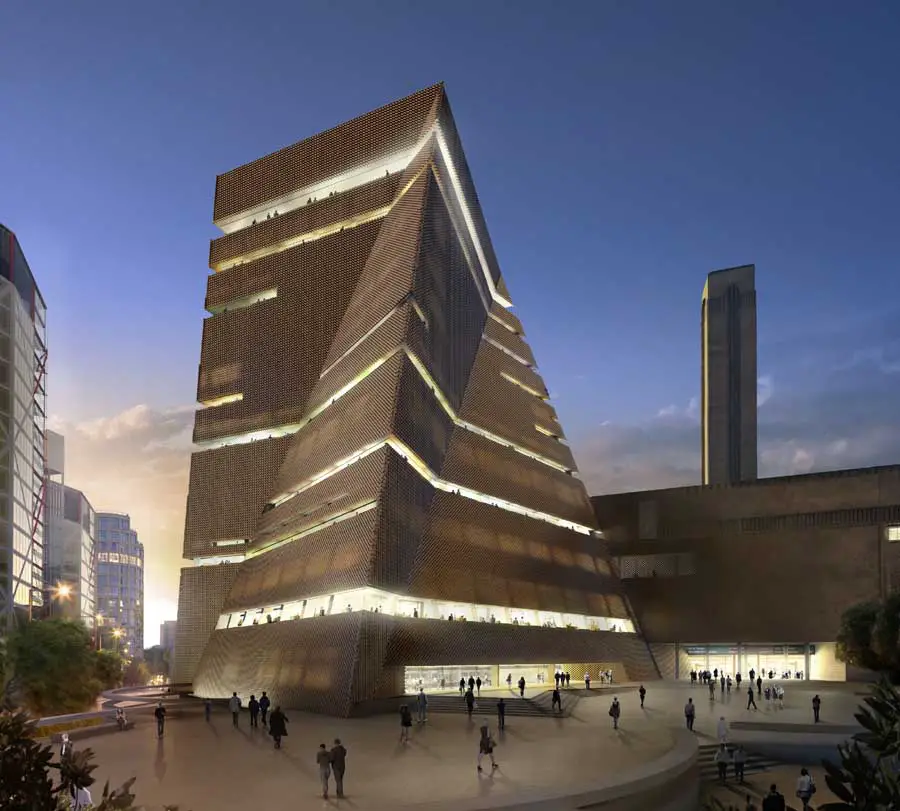
image © Hayes Davidson and Herzog & de Meuron
Tate Modern – H&dM Panoramic Image of Southern Oil Tank with Orange Light:
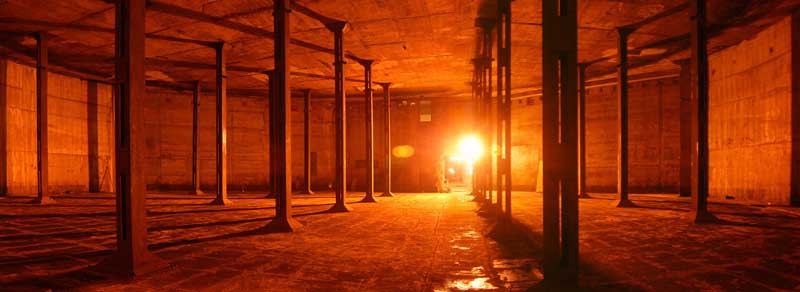
photo © Herzog & de Meuron
Previously:
Tate Gallery Extension
2006-
Herzog & de Meuron Architects
£50m funding approved early Dec 2007
Tate Modern – Day South View:
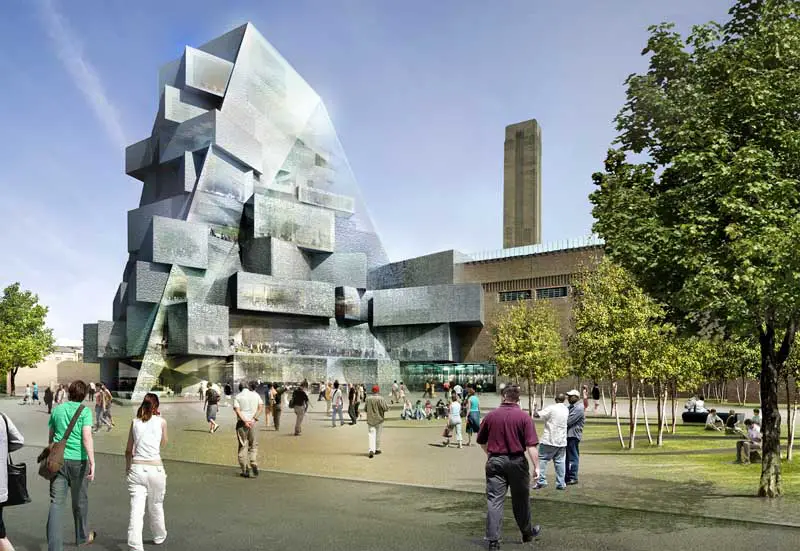
image © Herzog & de Meuron
Tate Modern – Turbine Hall:
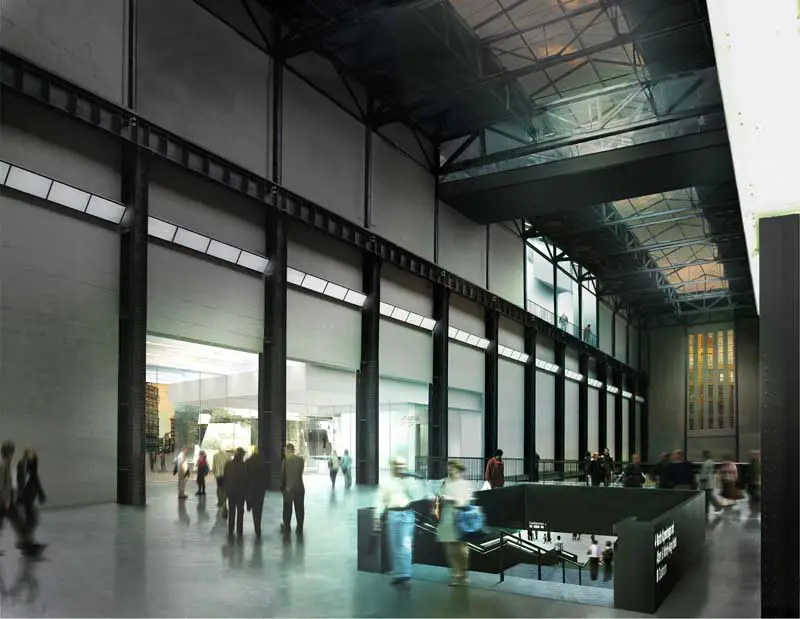
picture © Herzog & de Meuron
Tate Modern – Day West View:
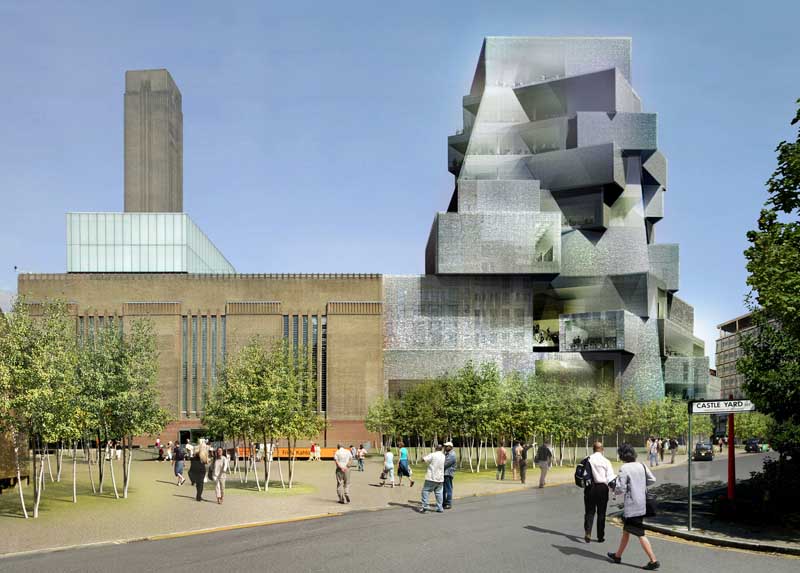
image © Herzog & de Meuron
Tate Modern – Night South View:
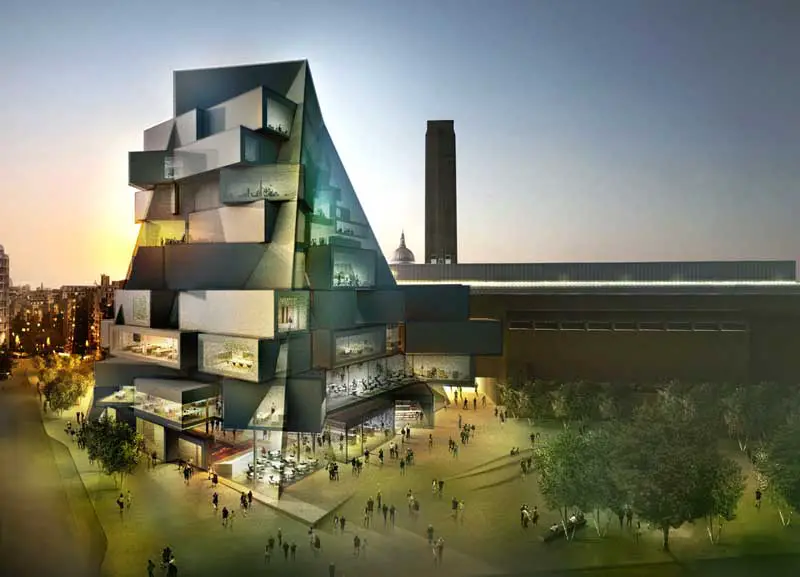
picture © Herzog & de Meuron
Planning permission received Mar 2007 for the Extension
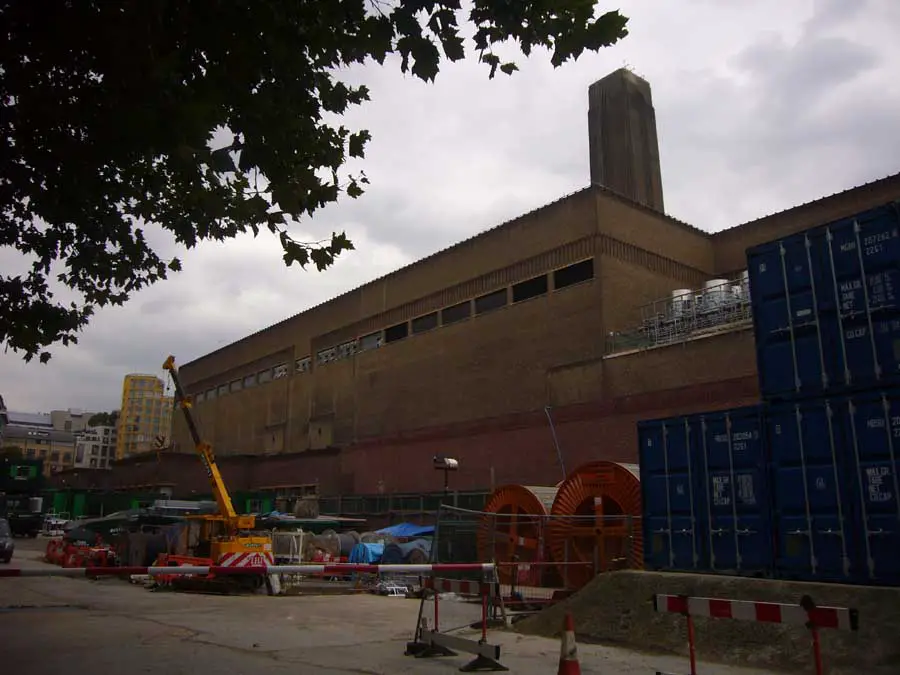
photograph © Adrian Welch Sep 2008
£50 million to build on the success of Tate Modern and invest in the next generation of creative Britain
South Bank Gallery Building Expansion
Press release from Tate, Dec 2007
The Secretary of State for Culture, Media and Sport, The Rt Hon James Purnell MP, announced today a capital investment of £50 million towards the new development of Tate Modern. This is the largest capital commitment by Government to a cultural project since the British Library which opened in 1998.
Nicholas Serota, Director Tate, said: “Today’s announcement is an important endorsement by Government of the contribution that the arts make to society as a whole and the importance of British art at an international level. It gives us a platform for the creation of an institution for the 21st century, designed to serve the next generation of artists and visitors. This commitment confirms London’s position as one of the leading international centres for the visual arts.”
The Success of Tate Modern
In 2000, an investment of £137 million of public and private money created Tate Modern. In just seven years, the gallery has become most popular museum of modern art in the world. It has attracted over 30 million visitors since it opened and is Britain’s second leading tourist attraction. Around 60% of visitors are under 35 years of age. The gallery has helped revive a wide area of inner London, helping to reconfigure cultural tourism along the South Bank, creating up to 4,000 new jobs.
The Need to Develop Tate Modern
In spite of its success, much of Tate Modern’s potential is still to be realised. One third of the building remains derelict and needs to be brought into use. The building was originally designed for 1.8 million visitors a year. With present audiences at nearly 5 million, there is serious overcrowding in the galleries, particularly at weekends, and there is an urgent need to improve and extend facilities. Different kinds of galleries are required to show art forms new to Tate, including photography, video, film and performance, as well as more galleries to show major exhibitions in their entirety. Bigger spaces are needed to meet the requirements of Tate’s growing number of large-scale works and installations. With additional space, more of Tate’s Collection can go on view and key paintings, sculptures and installations can be brought out of storage and displayed on a more permanent basis.
The New Building
The new development, by internationally celebrated architects, Herzog & de Meuron, will create a spectacular new building adjoining Tate Modern to the south, on the foundation of the former power station’s oil tanks. This will be Britain’s most important new building for culture since the creation of the Royal National Theatre in 1976, the Barbican in 1982, and the British Library in 1998. The new building will increase Tate Modern’s size by 60% adding approximately 21,000 square metres of new space. The development will provide more space for contemporary art and enable Tate to explore new areas of contemporary visual culture involving photography, film, video and performance, enriching its current programme. Tate Modern’s outstanding and pioneering education programme will at last have the space to meet its potential and serve a new and broader audience.
New Cultural Quarter
The new development of Tate Modern will create a dynamic new part of London – a creative campus stretching southwards. A new entrance on the south side will open up a north-south route or ‘street’ right through the building, creating a pedestrian way from the City across the MillenniumBridge through the Turbine Hall to Southwark and the Elephant and Castle. The new development lies at the heart of London’s cultural quarter running from the London Eye to the DesignMuseum and consisting of a group of more than 20 cultural organisations.
Next Steps
The designs for the new building were granted planning permission by Southwark Council in March 2007 with the Planning Committee unanimous in its support for the scheme. The project will now enter its detailed design phase and a project team is being appointed. The total costs of the project are comparable to the costs of creating the original Tate Modern: £165 million in 2006 prices, £215 million at outturn in 2012. A projected additional 1 million visitors a year will increase Tate Modern’s operating revenues significantly.
The Mayor of London has given a major investment of £7 million from the LDA towards the development and help fast-track the scheme so that it might be completed in time for the Olympic Games in 2012. Fundraising from the private sector is progressing well and includes the recent announcement of £5 million from the philanthropist John Studzinski.
Tate Modern, London
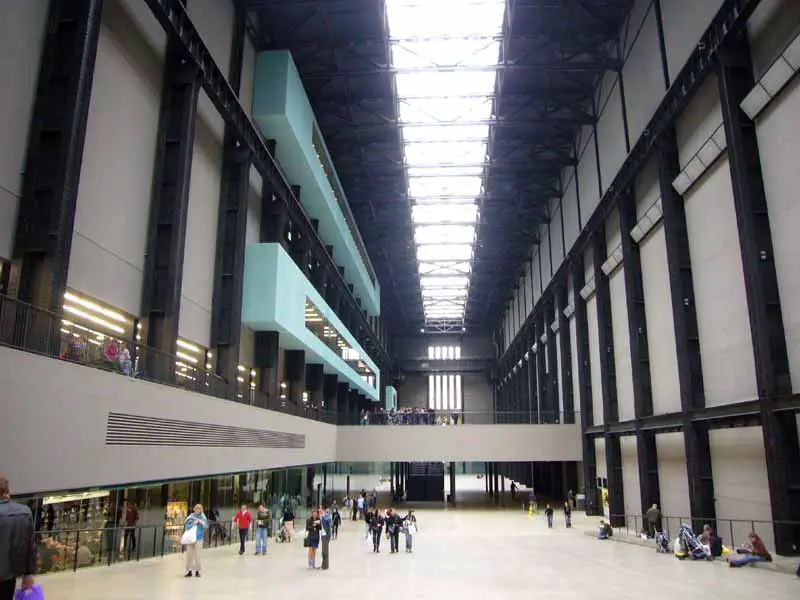
Turbine Hall photo © Adrian Welch, Jun 2007
Location: Sumner Street, Bankside, South London, SE1 9TG, England, UK
London Building Designs
Contemporary London Architectural Designs
London Architecture Links – chronological list
London Architecture Tours – bespoke UK capital city walks by e-architect
Tate Gallery Extension designers : Herzog & de Meuron Architects
https://www.tate.org.uk/about-us/projects/tate-modern-project
PM’s Award Winner 2001 – Tate Modern London
Lords Masterplan designers – Herzog & de Meuron Architects
St Thomas’ Hospital East Wing in Central London
Design: Arup
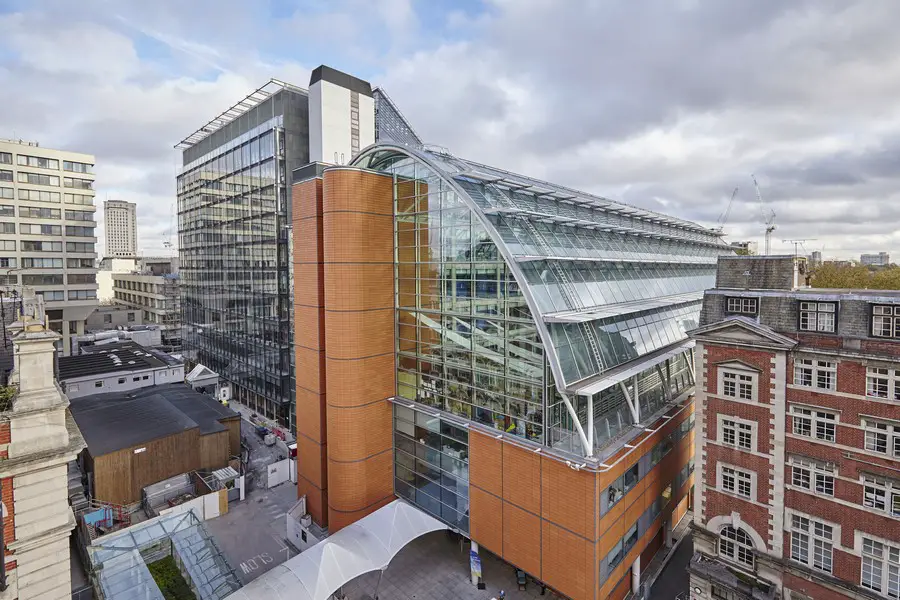
picture from architect
St Thomas’ Hospital East Wing in Central London
New Architectural Designs in UK Capital
New Architecture in London – architectural selection below:
David Hockney Digital Sunrise at Piccadilly Circus
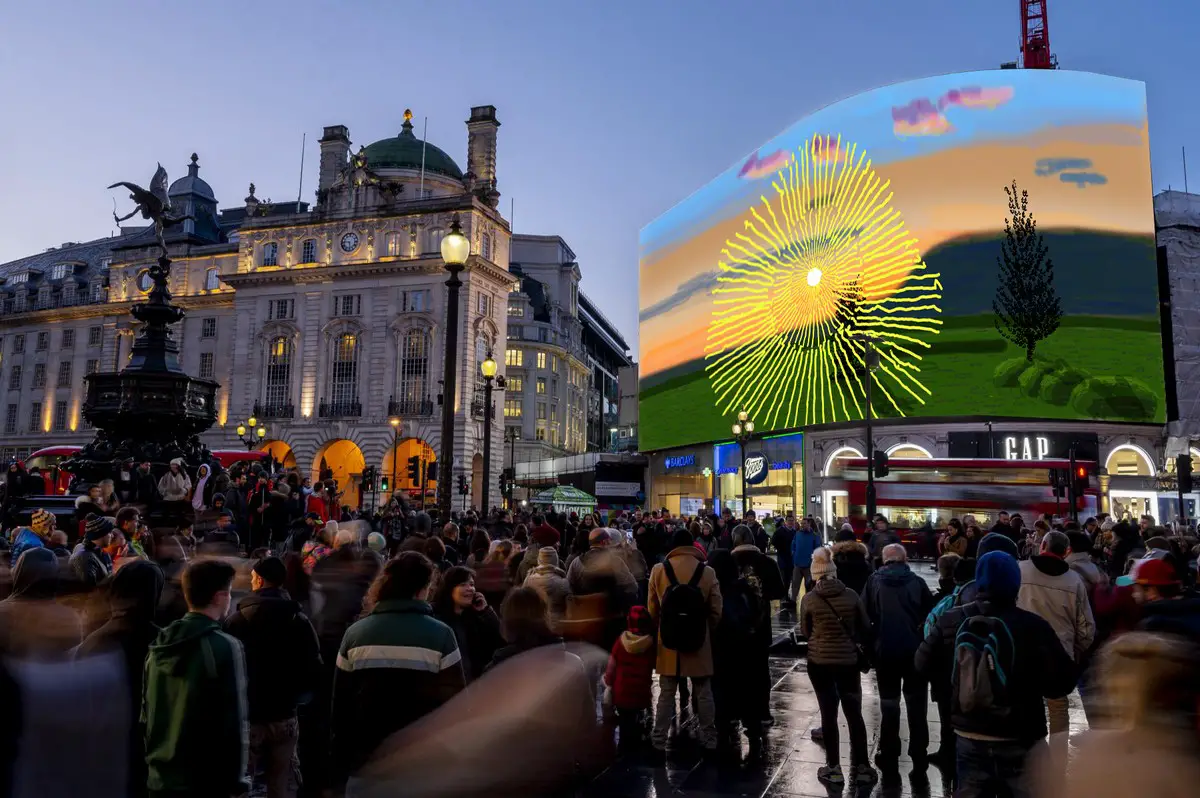
image courtesy David Hockney
David Hockney at Piccadilly Circus
British Academy Refurbishment, Carlton House Terrace, St. James’s
Design: Wright & Wright
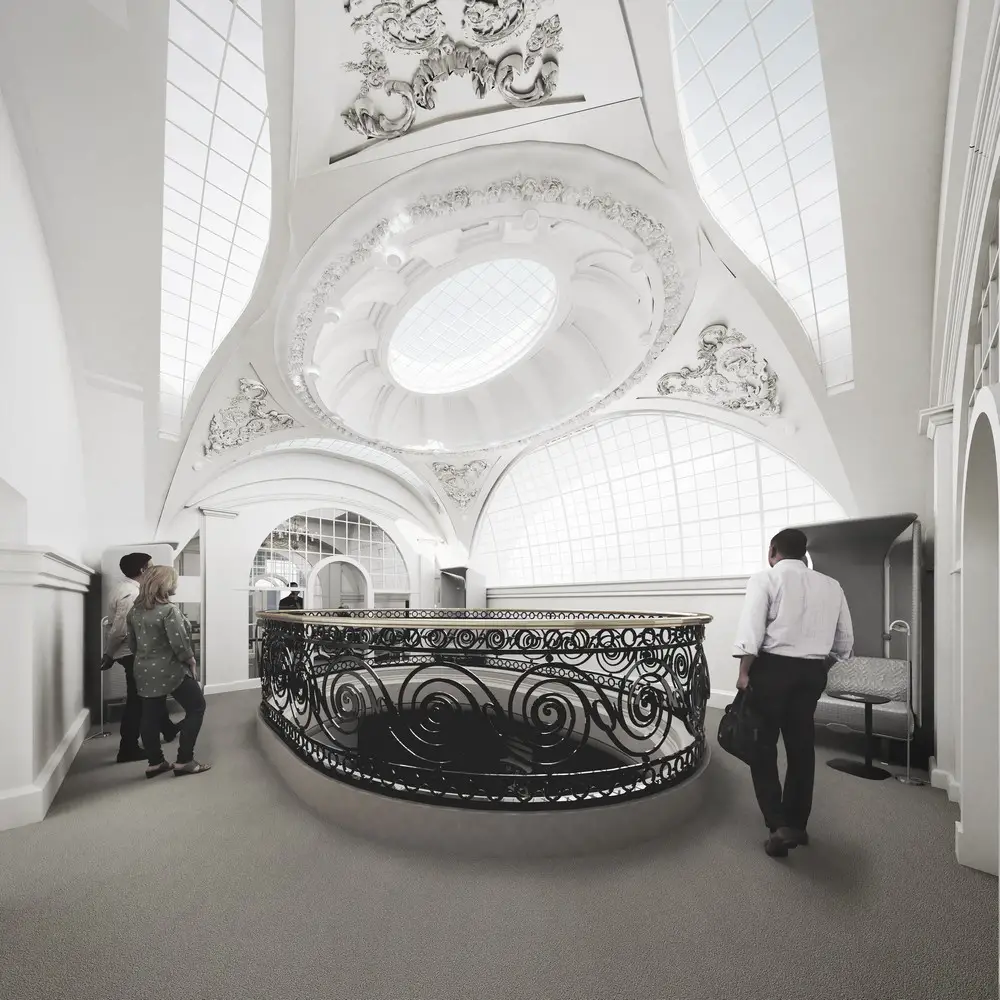
image © architects
British Academy Refurbishment
Comments / photos for the Tate Modern Building Extension page welcome

