
New Acropolis Museum Athens Building Images, Architects, Design, Parthenon Greece
New Acropolis Museum Athens Architecture
Contemporary Greek Building design by Bernard Tschumi architect
11 Mar 2013
Acropolis Museum Athens
New images added March 2013 of this major Greek building:
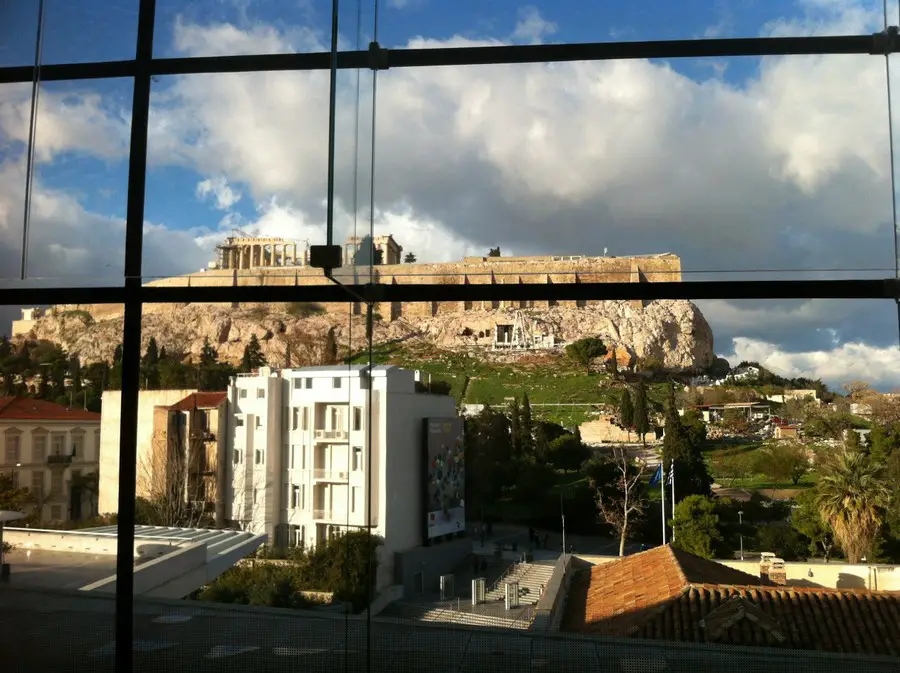
photograph : Roland Wahlroos-Ritter
7 Apr 2009
Acropolis Museum Athens Building
The New Acropolis Museum, Designed By Bernard Tschumi Architects, To Open June 20
New York, NY, April 7, 2009 – The historic masterpieces of the New Acropolis Museum – from the archaeological remains of ancient Athens left visible beneath the building to the glorious Parthenon frieze installed at the top— will be displayed in total for the first time when the Museum celebrates its much-anticipated official opening on Saturday, June 20, 2009.
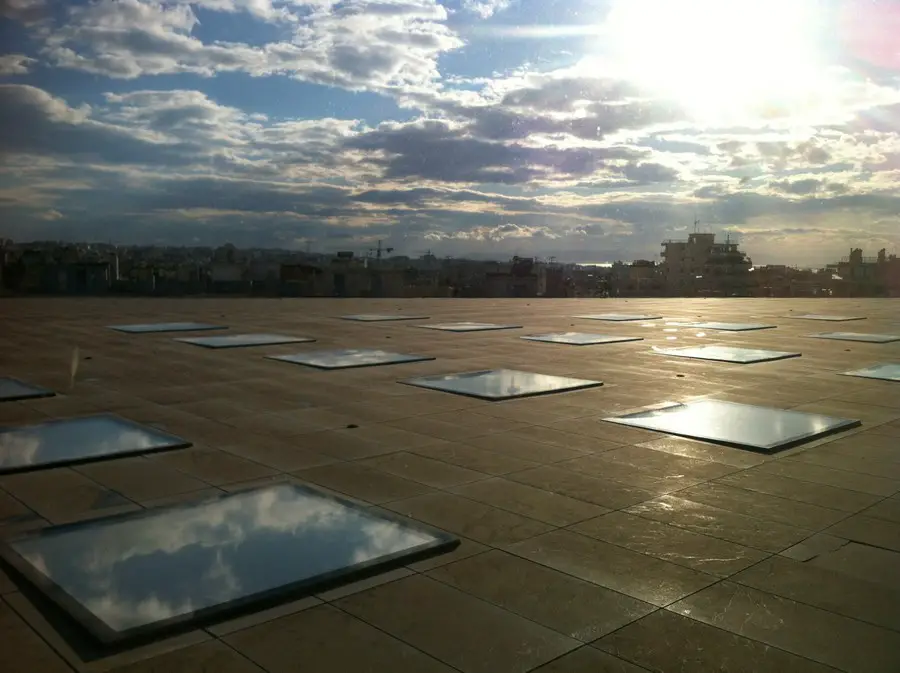
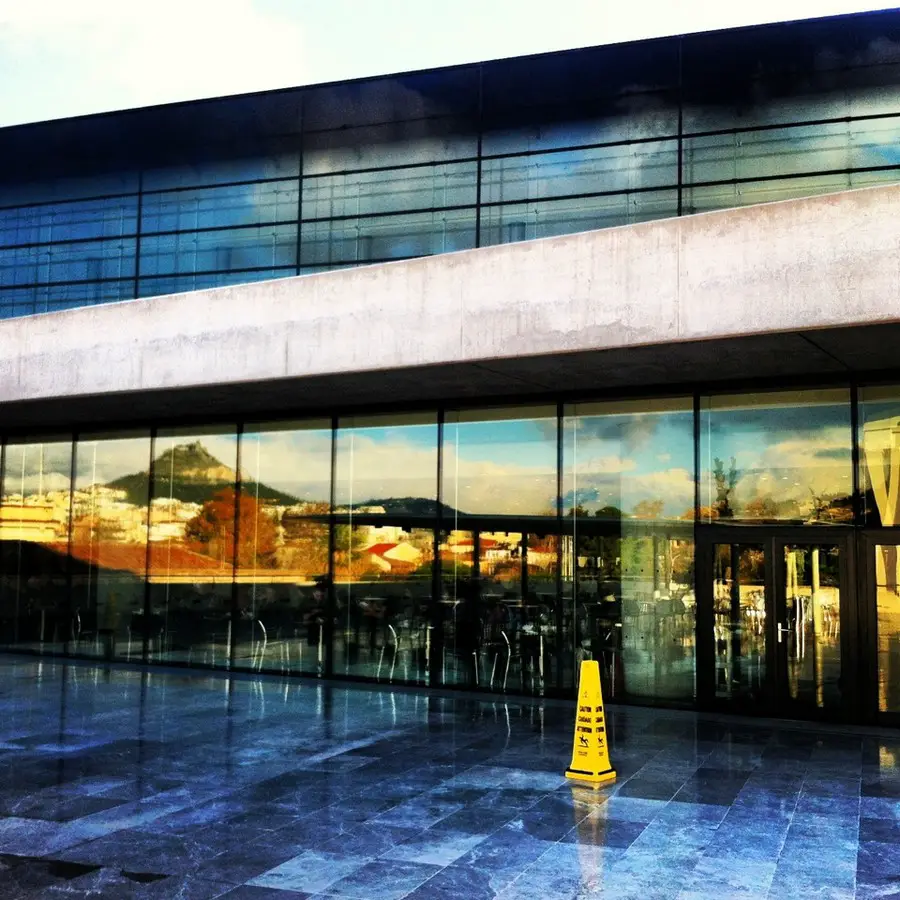
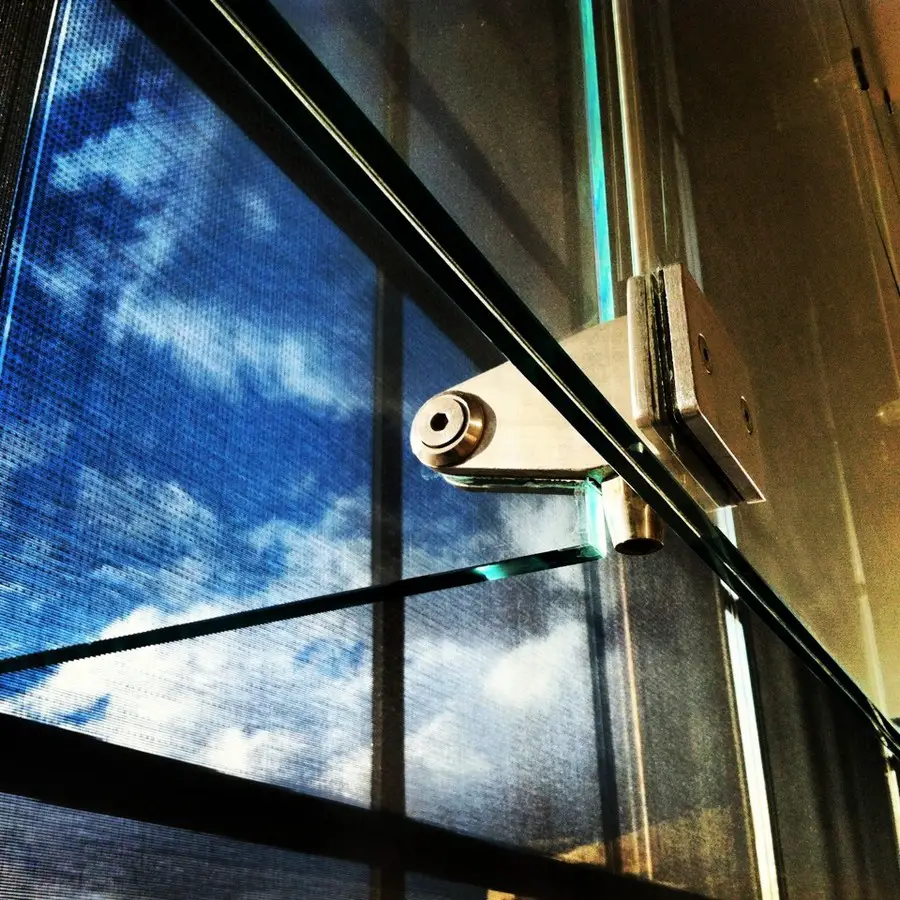
photos : Roland Wahlroos-Ritter
Designed by Bernard Tschumi Architects of New York/Paris with Michael Photiadis of Athens as local associate architect, the Museum has presented a number of temporary exhibitions in a lower-floor gallery over the past year. With the official opening, visitors will at last view the full suite of galleries, presented in a dramatic architectural experience designed explicitly for this collection.
With more than 150,000 square feet of exhibition space—ten times more than the previous Acropolis museum—the New Acropolis Museum will display surviving antiquities from the Acropolis and serve as a catalyst for strengthening international interest in the classical world. The 226,000 square foot Museum is both a defining cultural project for Greece and a key reference point for the art community around the globe.
New Acropolis Museum Photos : Nikos Daniilidis
To present the unparalleled collection, architect and lead designer Bernard Tschumi created a deliberately non-monumental structure whose simple and precise design invokes the mathematical and conceptual clarity of ancient Greek architecture.
“The form of the building arose as a response to the challenges of creating a structure that was worthy of housing the most dramatic sculptures of Greek antiquity, and doing so in an overwhelmingly historic and monumental setting,” explains Tschumi. “The site at the foot of the Acropolis confronted us with the Parthenon itself, one of the most influential buildings in Western civilization. At the same time, we had to consider the sensitive archaeological excavations, the presence of the contemporary city and its street grid, and the special challenges of the hot climate in Athens and an earthquake region.
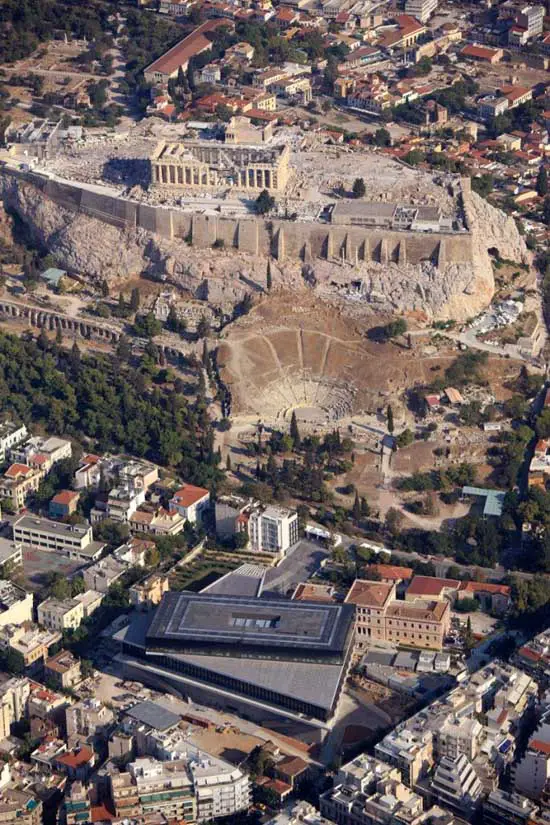
Located in Athens’s historic area of Makryianni, the New Acropolis Museum stands less than 1,000 feet southeast of the Parthenon, at the entrance of a network of pedestrian walkways that link the key archaeological sites and monuments of the Acropolis.
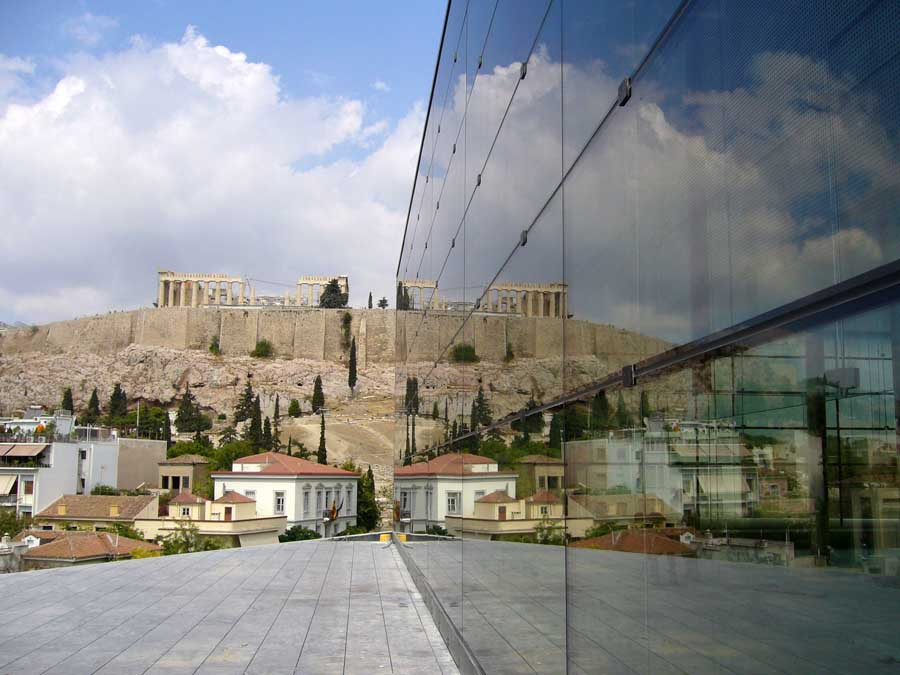
New Acropolis Museum Photos : Bernard Tschumi Architects
This location was carefully selected to enable a dialogue between the Museum’s exhibition spaces and the Acropolis buildings. Architect Bernard Tschumi won the commission in 2001 as the result of a design competition judged by a prestigious jury of architects, engineers, and archaeologists, chaired by Santiago Calatrava.
“The design was chosen for its simple, clear, and beautiful solution that is in accord with the beauty and classical simplicity of the Museum’s unique exhibits and that ensures a museological and architectural experience that is relevant today and for the foreseeable future,” stated Professor Dimitrios Pandermalis, President of the Organization for the Construction of the New Acropolis Museum.
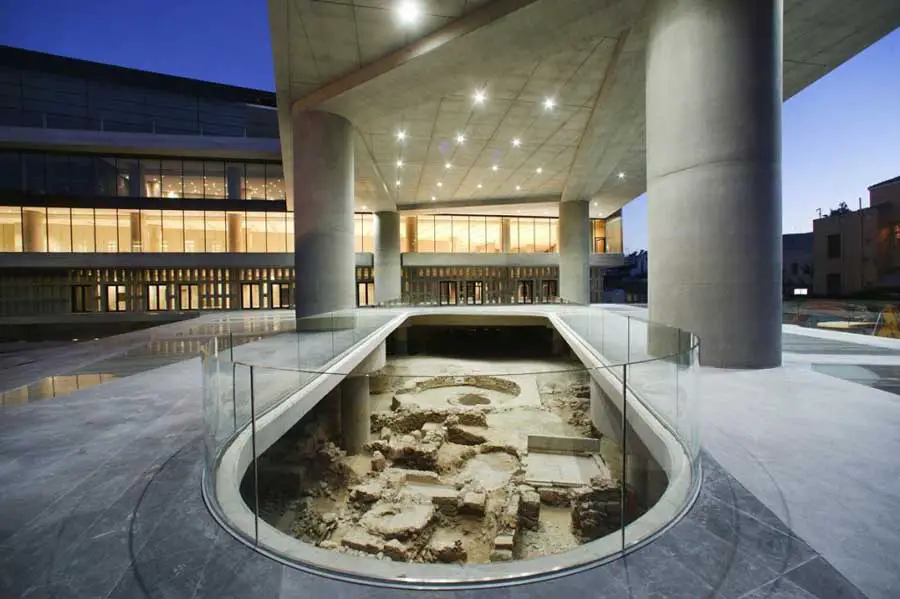
During pre-construction, archaeologists discovered the remains of an ancient Athenian city, excavating over 43,000 square feet. These remains have been preserved and integrated into the Museum design and are an important part of the visitor experience.
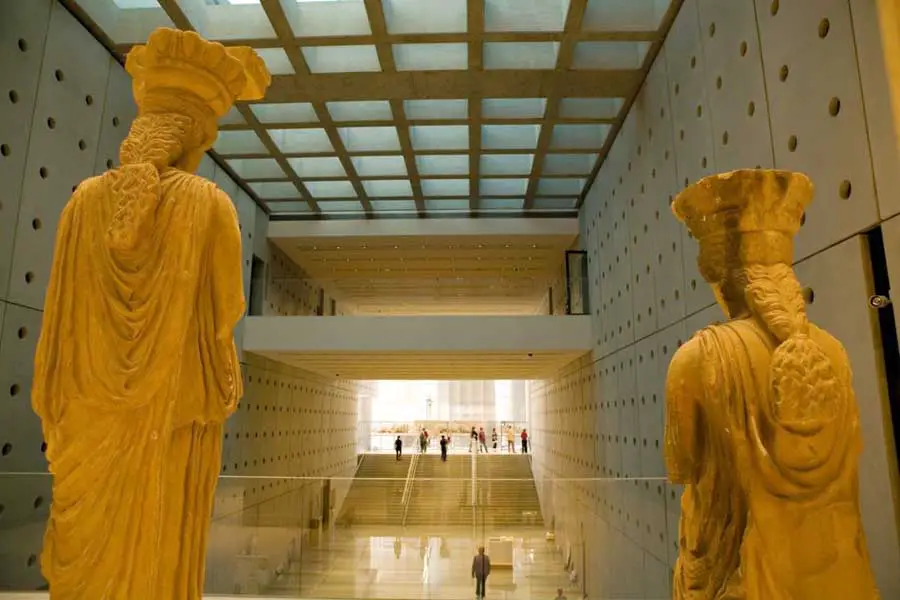
New Acropolis Museum Photo : Vasilis Vrettos
New Acropolis Museum Building
The building is articulated in three layers, with a base, a middle zone, and a top. The base hovers over the excavation site on more than 100 slender concrete pillars, which have been individually positioned with the help of experts so as not to disturb the delicate remnants. This level contains the main entrance lobby and temporary exhibition spaces, as well as openings and glass floors looking onto archaeological excavations.
A glass ramp leads to a double-height space in the middle section, which accommodates the permanent collection galleries from the Archaic to the late Roman period, and a mezzanine level with catering venues and a public terrace.
The building culminates in the Parthenon Gallery, a rectangular, glass-enclosed, sky-lit space that is rotated 23 degrees from the rest of the building so as to align with the Parthenon. The gallery’s glass outer walls allow visitors uninterrupted, 360-degree views of the ancient temple and the surrounding city.
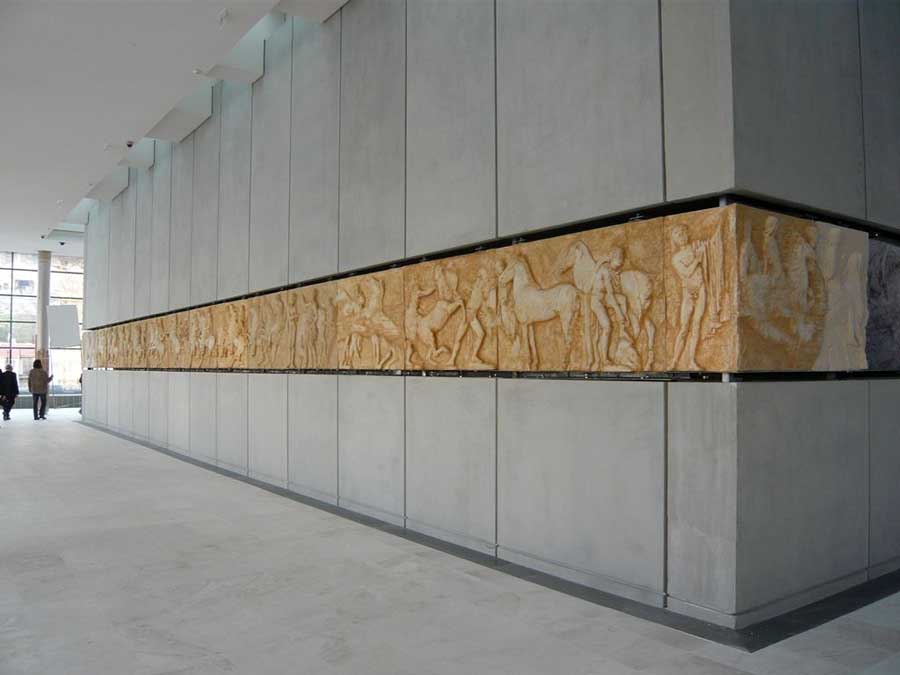
In the center of the Parthenon Gallery, the rectangular concrete core of the Museum serves as the wall on which the Parthenon frieze is exhibited, placed in the exact same arrangement and orientation as when it adorned the monument.
The route through these layers forms a three-dimensional loop, guiding visitors through the collection, which is installed in chronological sequence. Beginning with the archaeological excavations, visible through the glass floor in the entrance gallery, the sequence reaches a programmatic high point with the Parthenon Frieze, set in a gallery at the top of the building against dramatic views of the Acropolis, and then loops down to finish in the Roman Empire galleries below.
The sequence of movement through the Museum’s exhibitions is designed to be of the utmost clarity and to accommodate the large groups of visitors expected daily.
The collection of the New Acropolis Museum consists principally of sculptures, many of which originally decorated the monuments of the Acropolis. These works were created to be viewed in daylight, illuminated by subtle changes in light throughout the day.
Extensive use of glass in the building’s design allows the integration of natural light into the galleries, thus ensuring similar exhibition conditions. Ambient natural light floods the top-floor Parthenon Gallery and is filtered through the gallery’s glass-floored atrium into the floors below. Skylights, walls of shaded glass, and rectangular openings also help light flow through the building.

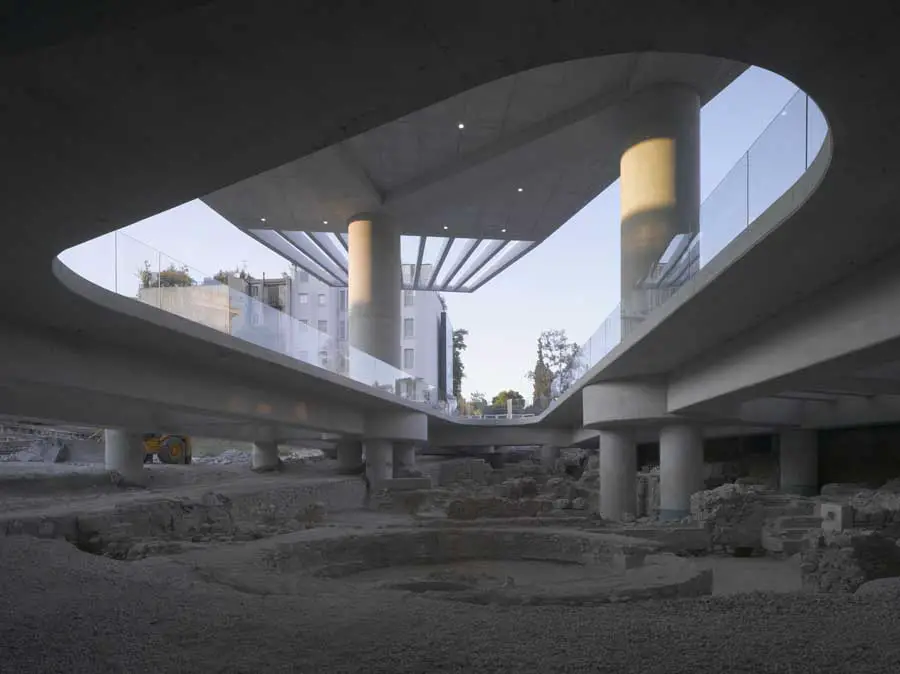
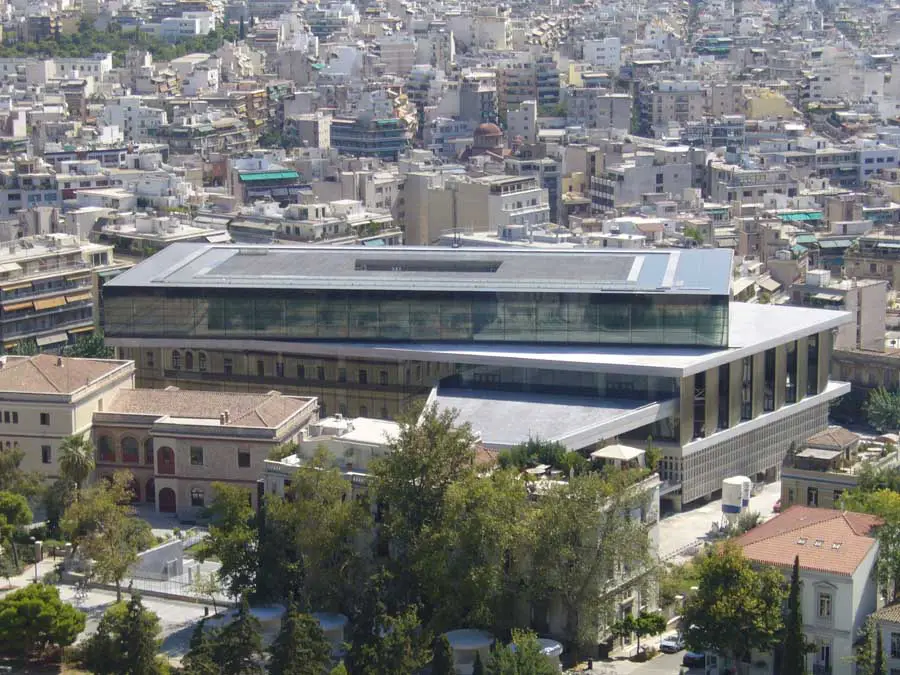
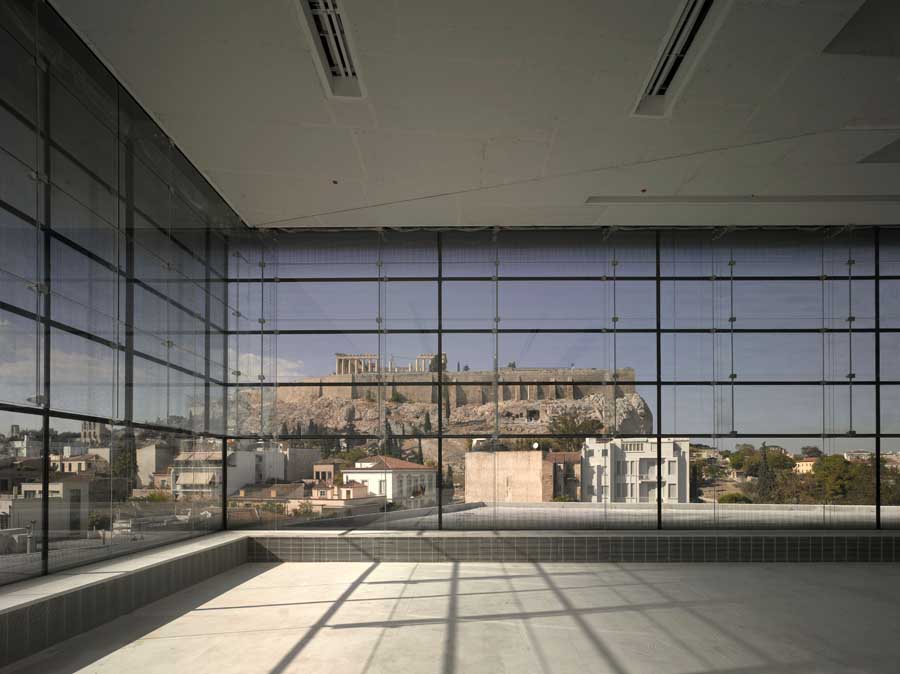
New Acropolis Museum Photos : Christian Richters
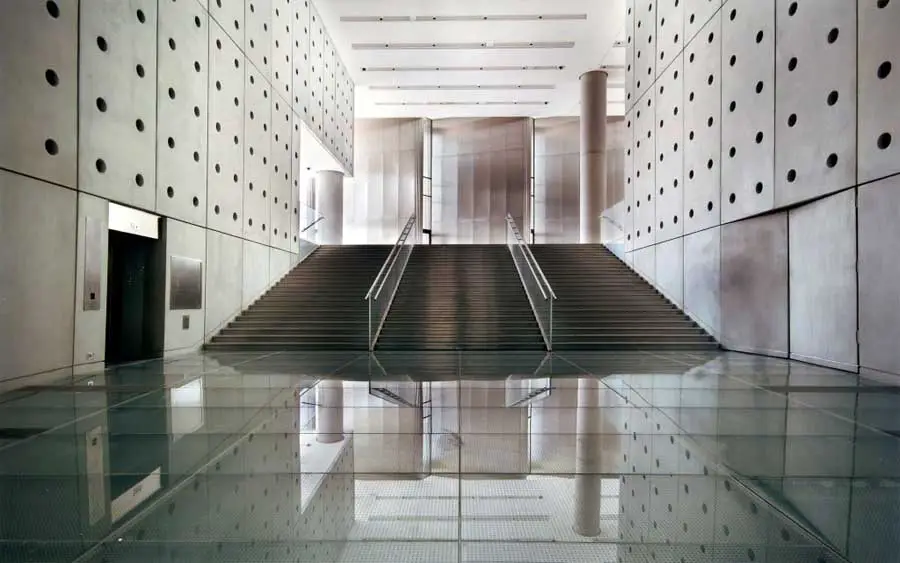
Throughout the New Acropolis Museum, glass, concrete and marble have been used to complement the simplicity of the overall design. Concrete provides the main building structure and acts as a neutral backdrop for the artwork. Circular holes have been placed at intervals throughout the concrete walls in order to absorb sound. Local marble has been used on the floors, with dark stone used for circulation and light beige for the galleries.
The New Acropolis Museum features galleries for the permanent collection, galleries for special exhibitions, a 200-seat auditorium, a multimedia space, a Museum store, a bar and restaurant, and support facilities. It is surrounded by 75,000 square feet of landscaped gardens. The overall project budget for the Museum was €130 million, or approximately $175 million.
New Acropolis Museum Athens building design – Bernard Tschumi Architects
Bernard Tschumi Architects
Bernard Tschumi Architects is an internationally-based firm dedicated to the interface between 21st-century conditions and architecture.
Opened with the commission for the celebrated Parc de la Villette in Paris (begun in 1983), completed projects by the firm include Le Fresnoy National Studio for Contemporary Arts in Tourcoing, France (1997); Columbia University’s Lerner Hall Student Center in New York (1999); an 8,000-person Concert Hall and Exhibition Complex in Rouen, France (2001); Florida International University School of Architecture in Miami, Florida (2003); the Vacheron-Constantin Headquarters and Manufacturing Complex in Geneva (2004); the Richard E. Lindner Athletics Center at the University of Cincinnati (2006); a 6,000-seat Concert Hall in Limoges, France (2007); and Blue Tower, New York (2008).
Between 2006 and 2008, Bernard Tschumi Architects designed comprehensive master plans for the Independent Financial Centre of the Americas in the Dominican Republic and new media zones in Singapore and Abu Dhabi, UAE. Currently under construction are a cultural center in Bordeaux-Cenon and a museum and archaeological park in Alesia, France.
Architect and lead designer for the New Acropolis Museum, Bernard Tschumi founded Bernard Tschumi Architects in 1983, after winning a competition to design the Parc de la Villette, a 125-acre public park containing dramatic buildings, walkways, bridges and gardens, located at the northeast edge of Paris.
A renowned theorist as well as an architect, he was Dean of the Graduate School of Architecture, Planning and Preservation at Columbia University in New York from 1988 to 2003. He is the author of ten books, including the Event-Cities series and Architecture and Disjunction, as well as numerous articles.
Tschumi is a member of the Collège International de Philosophie in France and the recipient of many honors, including the Légion d’Honneur, the Ordre des Arts et Lettres and the Royal Victoria Medal. He has been awarded France’s Grand Prix National d’Architecture and the AIA New York Gold Medal of Honor. He is an International Fellow of the Royal Institute of British Architects. Most recently, he was awarded membership in the prestigious College of Fellows of the American Institute of Architects.
New Acropolis Museum Collection
The rich collections of the New Acropolis Museum, dating from prehistoric times through to the Archaic, Classical, Hellenistic and Roman periods and up to late Antiquity (1,000 B.C. to 700 A.D.), will provide visitors with a comprehensive picture of the centuries-old human presence on the sacred site that represents the essence of classical culture in antiquity.
With approximately 4,000 objects, of which at least 300 are considered major masterpieces, the opening of the New Acropolis Museum marks the first time that the collection will be displayed together in one museum, telling the complete story of the Athenian Acropolis and its foothills.
At the same time, the extensive remains of the ancient Athenian city revealed on the Museum site by pre-construction archaeological excavations will also grace the museum exhibition program with rare, original testimonies of the private lives of the ancient Athenians who lived in the shadow of the Acropolis.
www.newacropolismuseum.gr/eng/
New Acropolis Museum in Athens – images from Bernard Tschumi Architects 211106
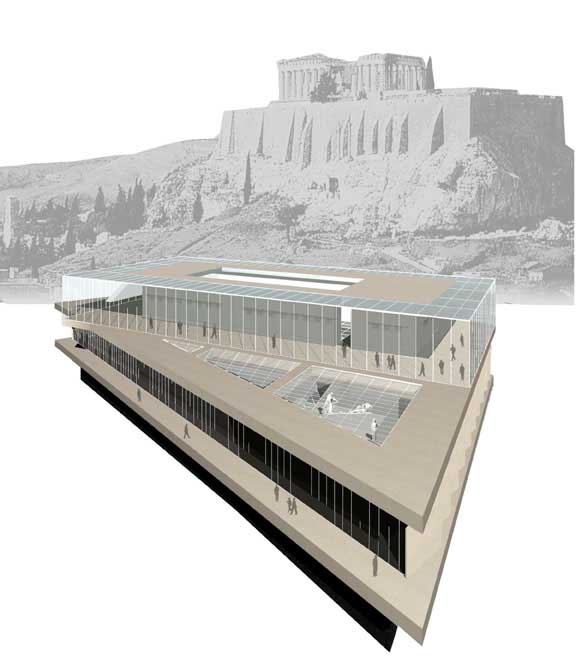

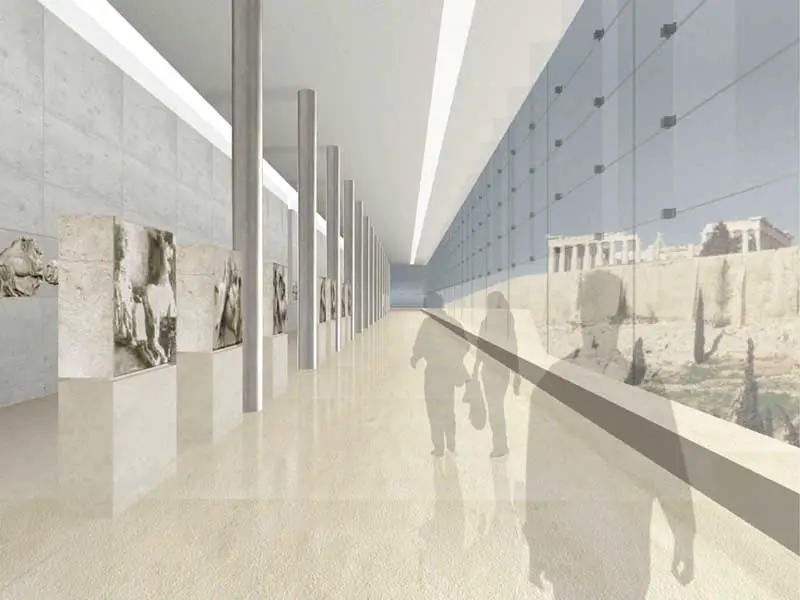
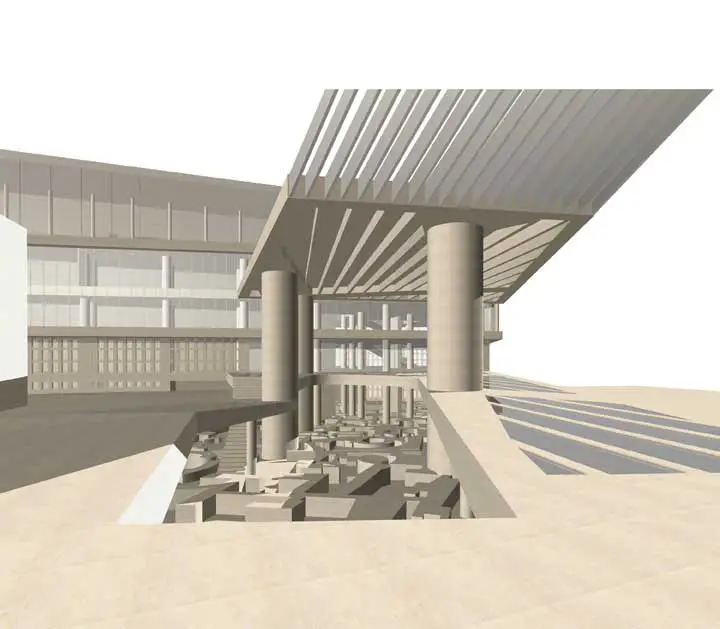
New Acropolis Museum images : Bernard Tschumi Architects
New Acropolis Museum Architecture
New Acropolis Museum, Athens, Greece
The site of the New Acropolis Museum is immediately below the Acropolis, three hundred meters from the Parthenon. It is filled with archaeological excavations and contains valuable ruins. The ruins must remain untouched but also be part of the museum visit. The task is daunting, since Athens is a place of regular earthquakes and new construction is subject to strict structural constraints. Moreover, the artifacts to be exhibited in the New Acropolis Museum are priceless and irreplaceable yet will be visited by tens of thousands of viewers every day.
The plan of the New Acropolis Museum must allow a chronological sequence that culminates in the famous frieze of the Parthenon Marbles. While direct visual contact with the original site of the Parthenon above should be established, glazing in a hot climate raises technical challenges. Lastly, nearly half of the frieze is currently at the British Museum in London, and its restitution is the object of major political struggles.
At the outset, it was decided to “play down” the architectural approach and to address the evident dramatic complexities of the collection and the site with minimalist simplicity. The aim was maximum sobriety. If architecture can be described as the materialization of concepts, the building is about the clarity of an exhibition route expressed through three materials-marble, concrete, and glass.
Within the unusual constraints of the New Acropolis Museum site, the project ought to appear effortless and almost undesigned: a base of pilotis above the ruins, a middle section containing the main galleries, and a glass top at the summit containing the Parthenon frieze. The goal of this orchestrated simplicity is to focus the viewers’ emotions and intellect on extraordinary works of art.
The base of the New Acropolis Museum design hovers over the existing archaeological excavations on pilotis. This level contains the entrance lobby as well as temporary exhibition spaces, retail space, and all supporting facilities.
The middle is a large, double-height, trapezoidal plate that accommodates all galleries from the Archaic period to the Roman Empire. A mezzanine level includes a bar and restaurant with views toward the Acropolis and a multimedia auditorium.
The top is made up of the rectangular Parthenon Gallery arranged around an indoor court. The glass enclosure of the New Acropolis Museum gallery provides ideal light for sculpture in direct view to and from the historical reference point of the Acropolis. The Parthenon Marbles will be displayed in the gallery so as to be visible from the Acropolis above. The design of the enclosure is conceived to protect both the sculptures and visitors against excessive heat and light, thanks to the most contemporary glass technology.
The orientation of the Marbles will be exactly as it was at the Parthenon centuries ago, and their setting will provide an unprecedented context for understanding the accomplishments of the Parthenon complex itself.
New Acropolis Museum Athens Building images / information from Bernard Tschumi
Location: Acropolis Museum, Athens, Greece
Architecture in Athens
Contemporary Greek Architectural Projects
Athens Architecture Designs – chronological list
Athens Architecture Walking Tours
Acropolis Museum Design
Design: Potiropoulos D+L Architects with Studio Daniel Libeskind
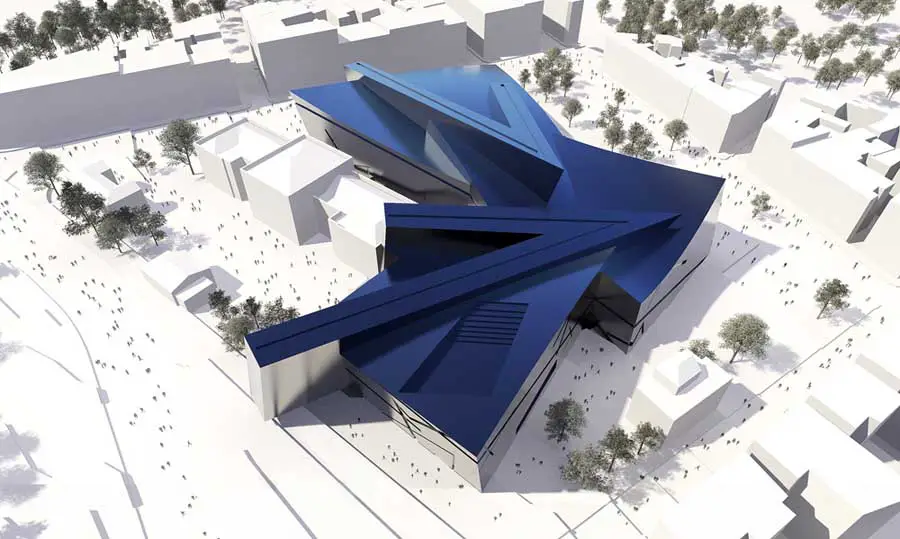
image from architects
Cosmote TV HQ and Studios
Design: LC Architects
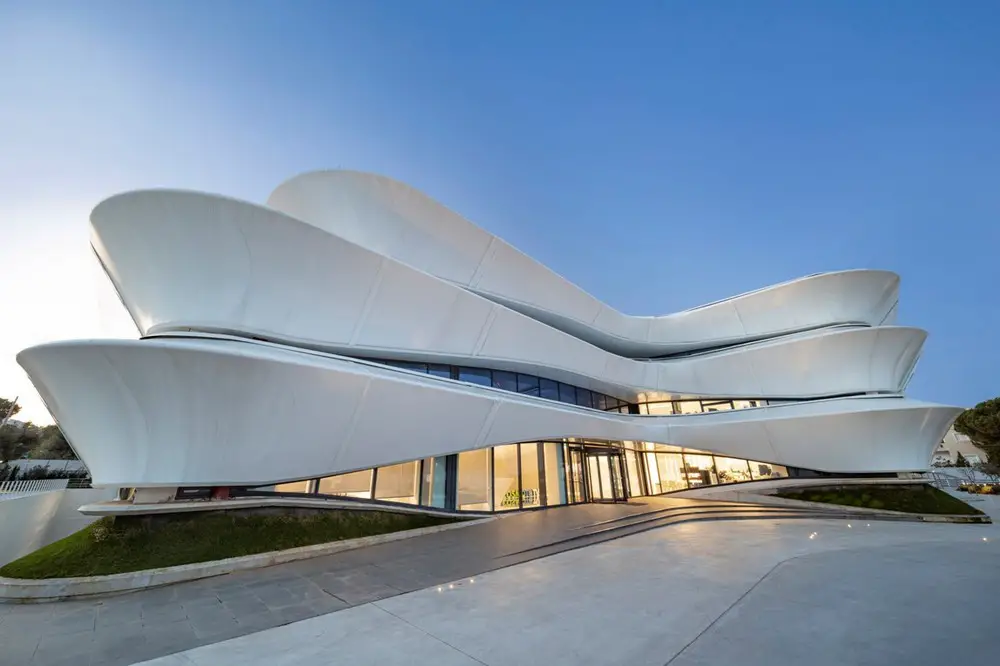
photo © Nikos Daniilidis
Cosmote TV HQ and Studios
Stavros Niarchos Foundation Cultural Center
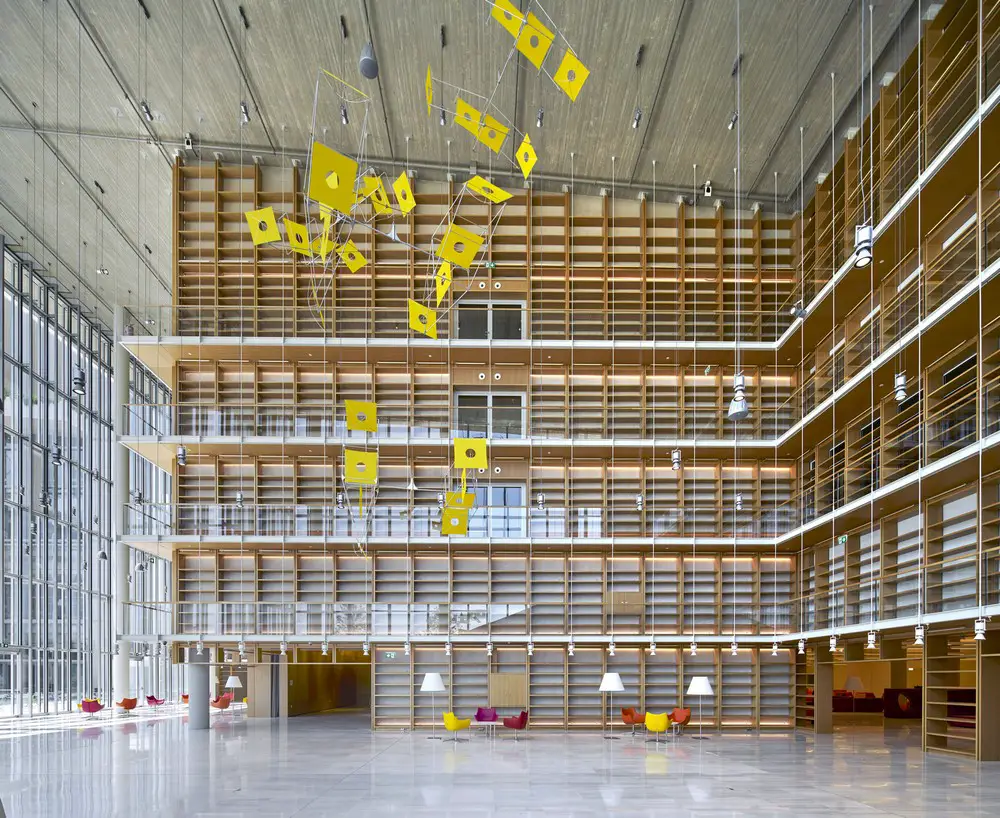
photo © Michel Denancé
Stavros Niarchos Foundation Cultural Center: SNFCC Athens Building
Comments for the Acropolis Museum Athens Building page welcome
