
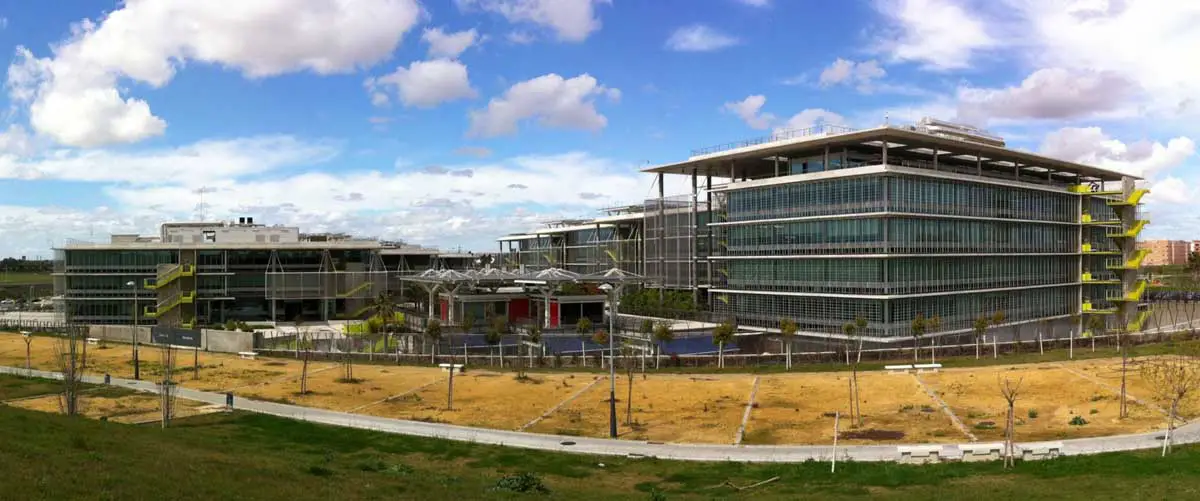
Campus Palmas Altas, Spanish Building by RSHP, Andalucía Design, New Seville Architecture
Campus Palmas Altas, Andalucía : Seville Development
CPA Seville – design by Rogers Stirk Harbour + Partners (RSHP) / Vidal y Asociados arquitectos
17 Dec 2009
Campus Palmas Altas
Location: Seville
Date built: 2009
Design: Rogers Stirk Harbour + Partners and Vidal y Asociados arquitectos
This scheme draws more on the traditions of Andalucía, with its small, intimate network of linked patios and less on the typical business park setting of wide, green, open space.
Campus Palmas Altas (CPA)
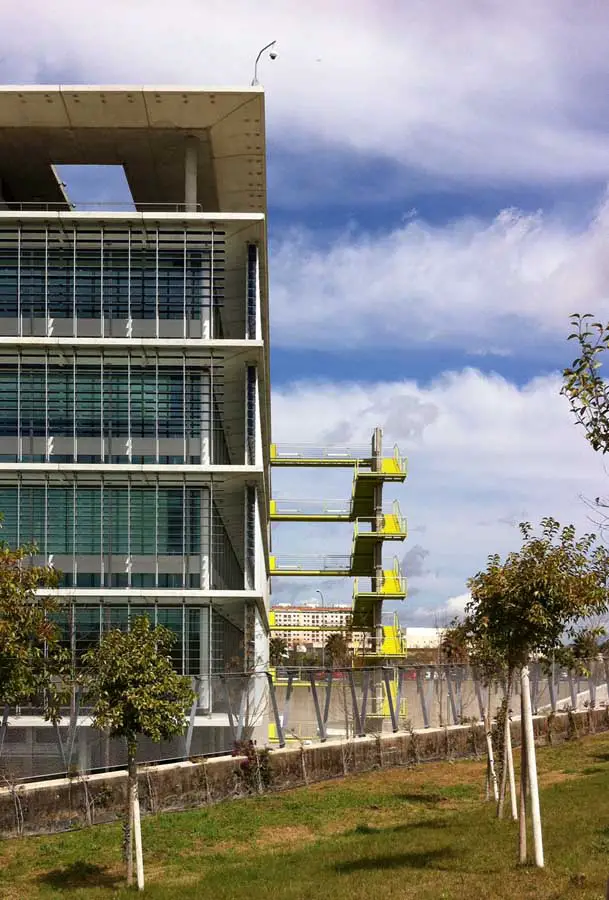
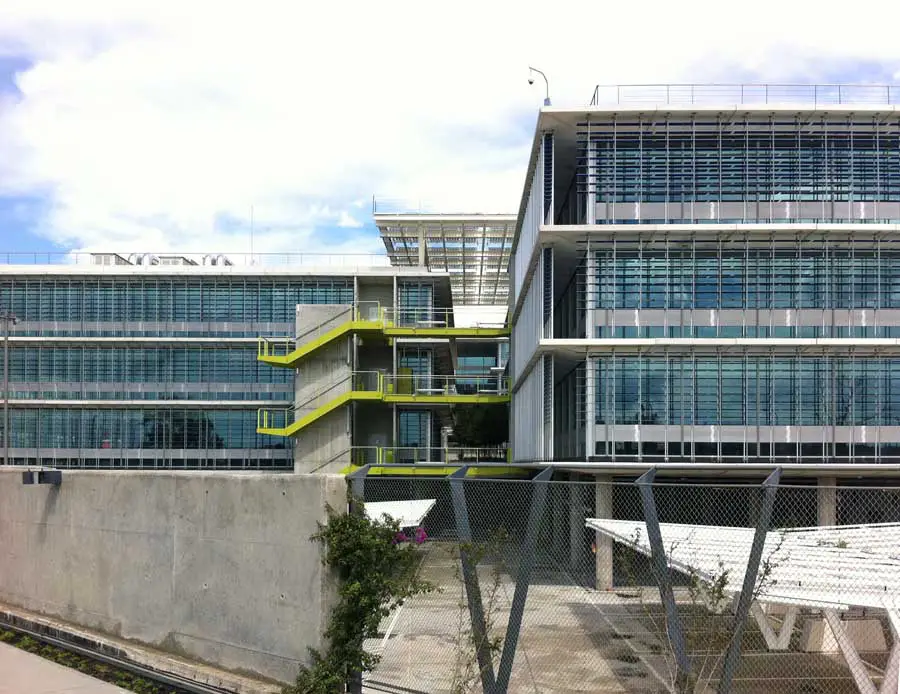
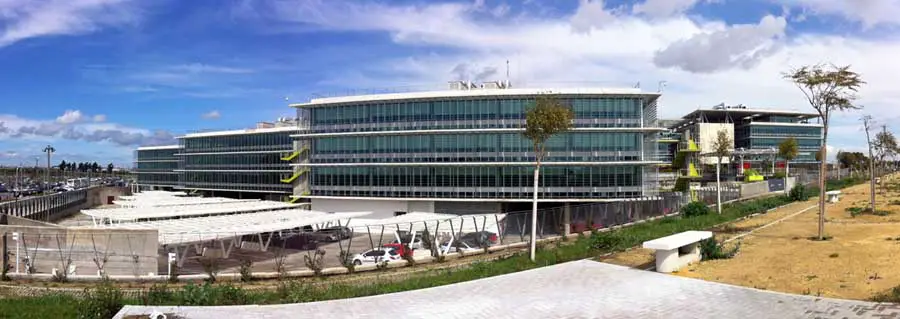
Building photos taken on 15 Mar 2011:
photographs © Gonzalo Navarro
Campus Palmas Atlas (CPA), the new headquarters of the Abengoa Group, was formally opened in September 2009 by His Royal Highness King Juan Carlos I. Abengoa is an international technology company whose primary activity focuses on sustainable development in the infrastructure, environment and energy sectors. The design – by Rogers Stirk Harbour + Partners and Vidal y Asociados arquitectos – creates a new model for the business park, one that is not only more compact and urban in character than conventional business parks, but also particularly suited to the extreme summertime conditions prevalent in the south of Spain.
Photos taken 15 Mar 2011:
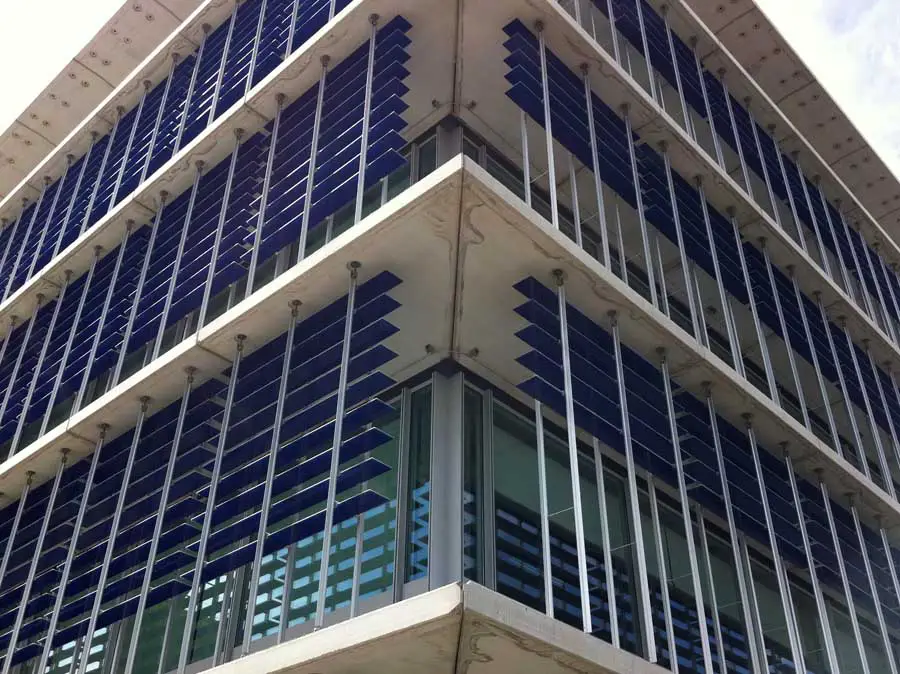
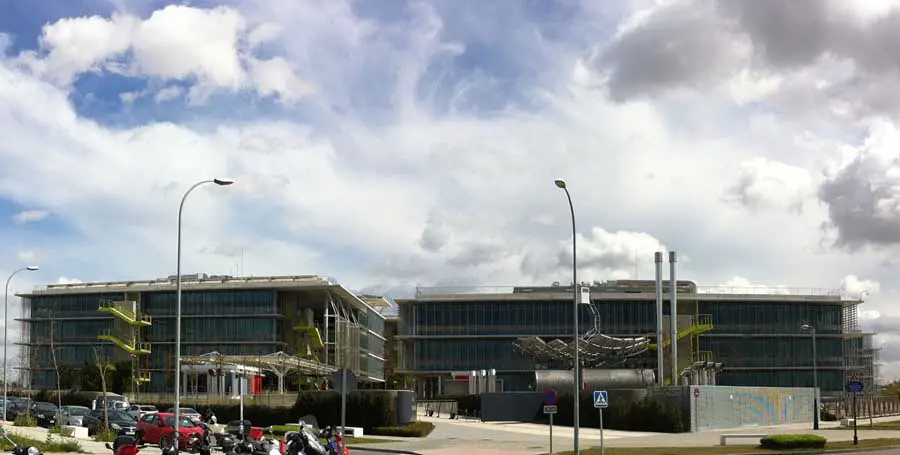
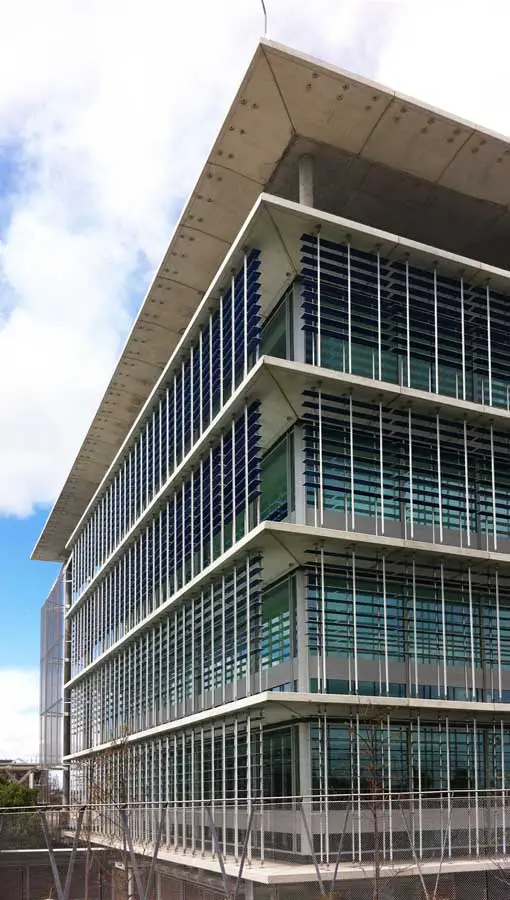
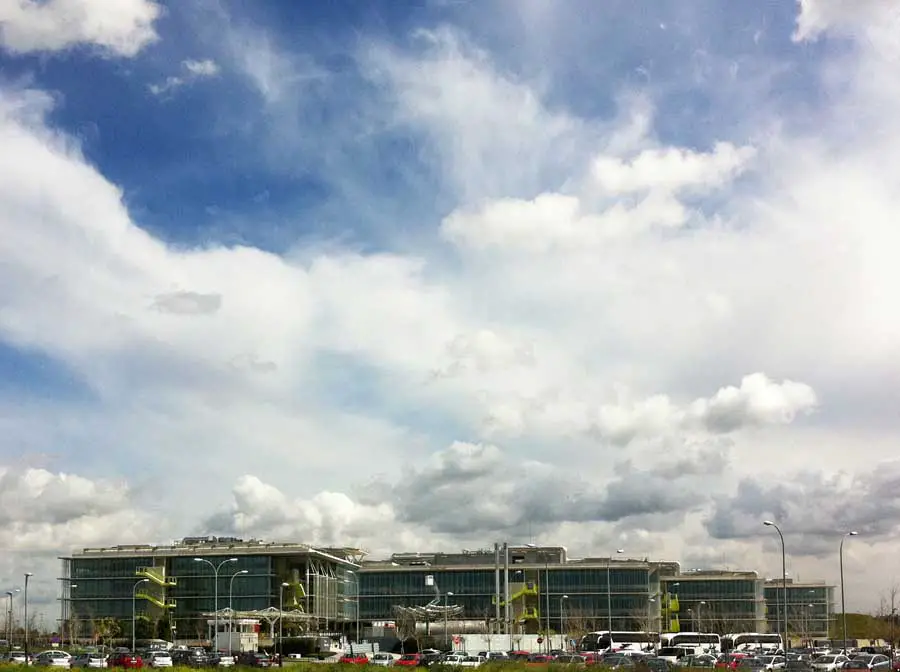
photographs © Gonzalo Navarro
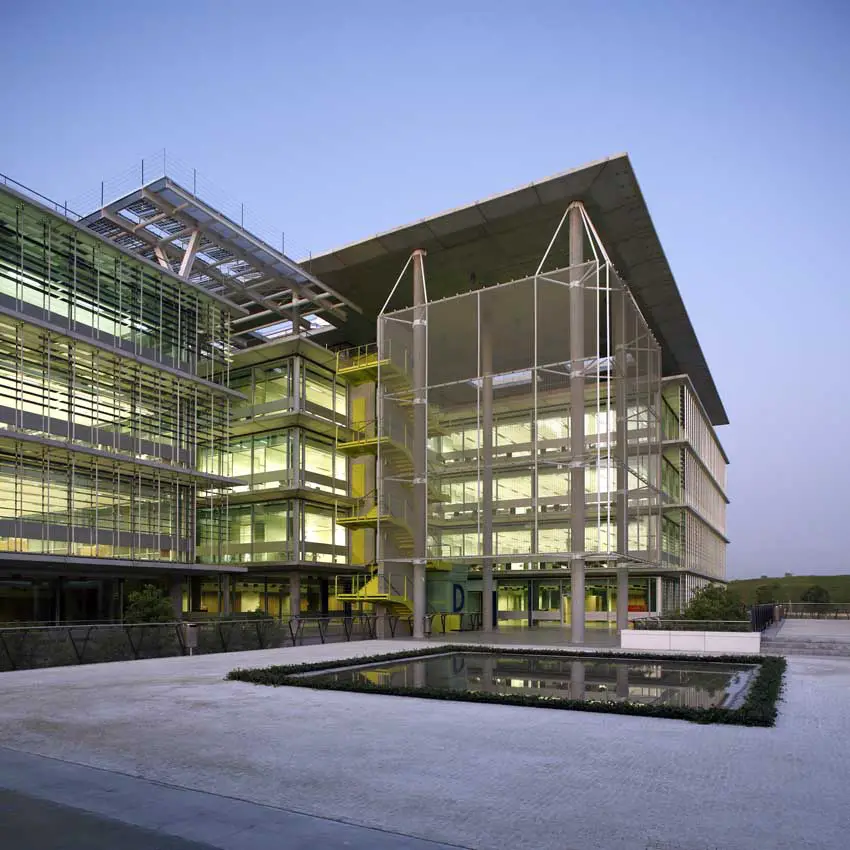
The scheme comprises seven buildings. Five of these form Abengoa’s HQ complex, incorporating research & development as well as administrative facilities. Abengoa’s objectives for the development were to bring the company together from three different buildings in Seville onto a single site and to use the move to unify and radically change working practices. In addition, the company was keen to maximise communication and encourage cross fertilisation between the various divisions of the Abengoa Group.
photographs © Mark Bentley
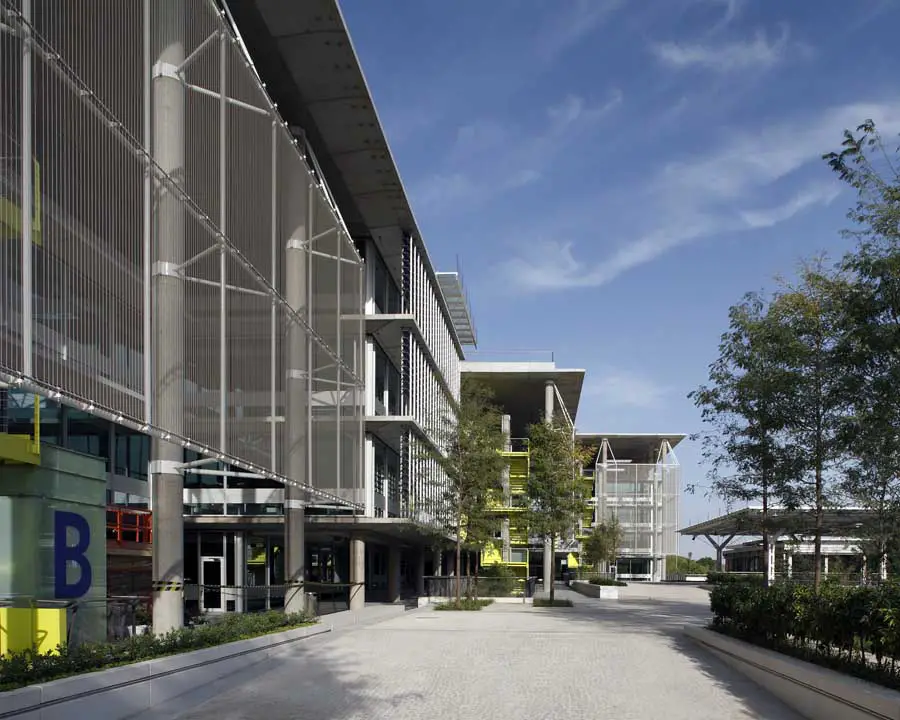
The remaining two buildings will offer high quality office accommodation to a range of other tenants which have synergies with Abengoa. In total, all these buildings provide approximately 47,000 sq m of office space across highly compact floorplates in selfcontained structures between 3-4 storeys in height.
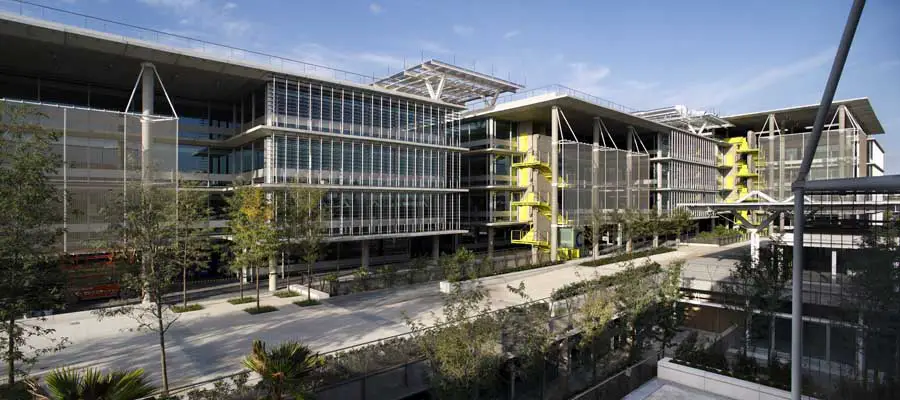
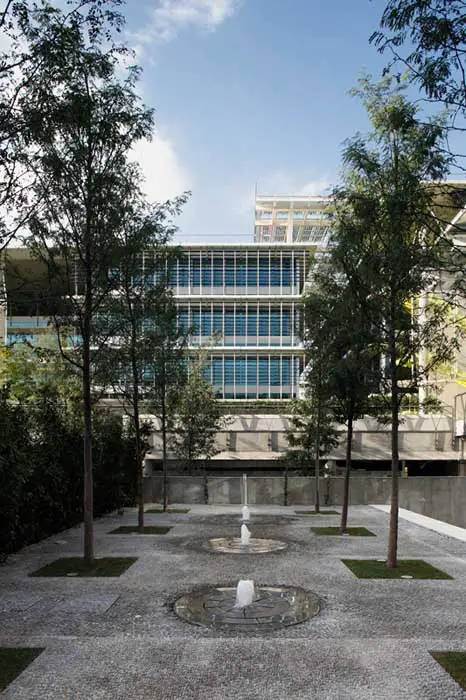
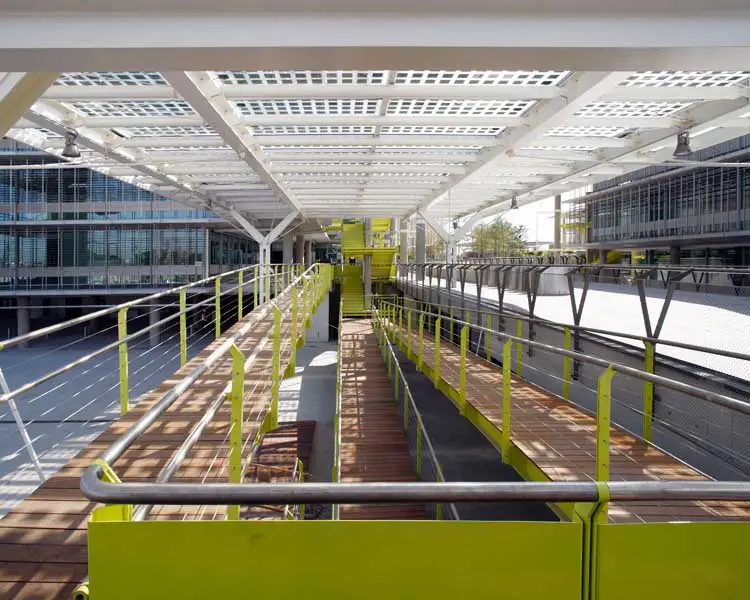
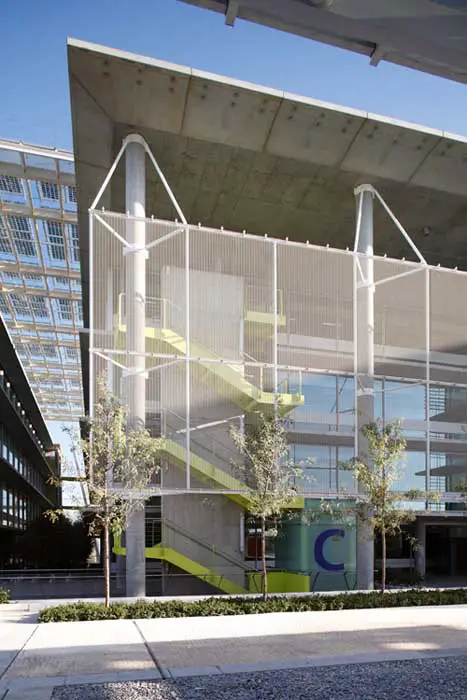
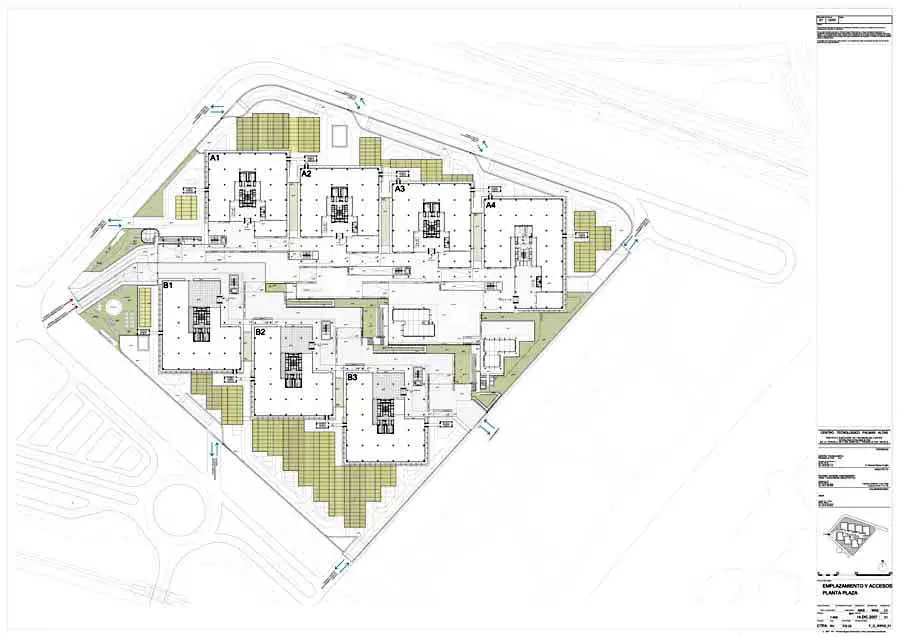
The buildings are arranged on either side of a central space which is made up of a sequence of interconnected plazas. The scale of these individual spaces reflects the intimacy of the patios prevalent in the south of Spain rather than the wide open parkland setting which has typically characterised the business park campus.

photographs © Mark Bentley
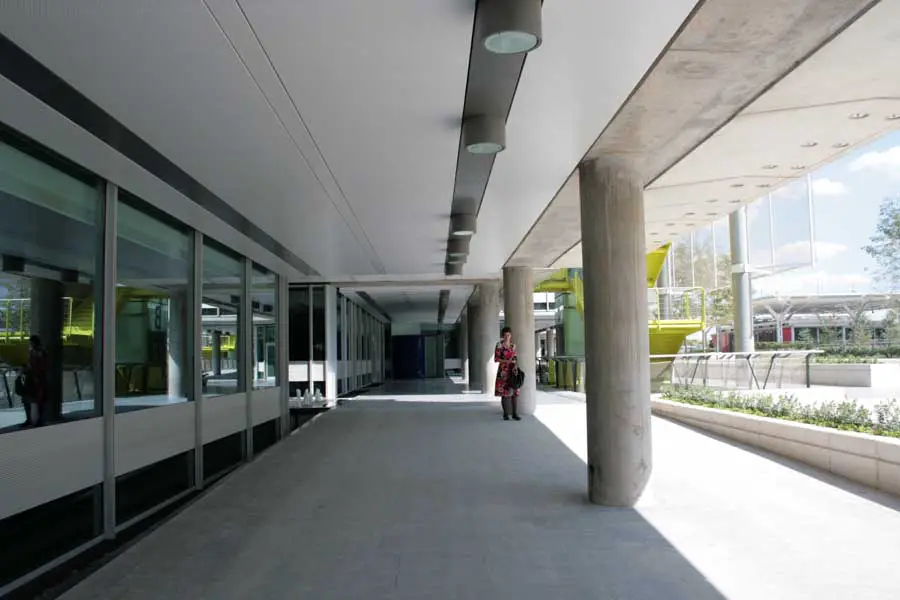
The central space unifies all seven buildings and – at the same time, because of the stepped arrangement – creates a sequence of discrete spaces each of which has slightly different characteristics. In this way, a variety of outdoor spaces ranging from patios to sunken courtyards and terraces, are created which – depending on the prevalent weather conditions – can be comfortably occupied by the buildings’ tenants virtually all year round. The organisation of these spaces aims to reduce the heat load on the building fabric and avoid the creation of ‘heat islands’. The visual mass is broken down by the landscape treatment of the spaces in between buildings.
Undercrofts give shaded walkways:
photograph by Simon Smithson, Rogers Stirk Harbour + Partners
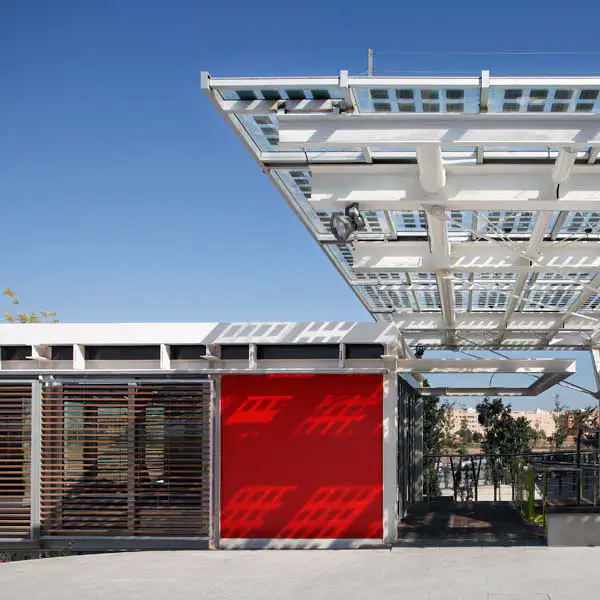
Colours have been chosen that reflect the colours found in traditional glazed tiles in the Andalucía region – principally the cobalt blue to the underside of the glass louvres (the upper face is white to reflect light), the yellowgreen to the external staircases, and the red panels to the pavilions. The structure of each building is formed from in situ concrete with pre-cast elements used for exposed edge cantilevers. The façades are of glass with a ‘floating’ horizontal transom of corrugated aluminium creating a small glazed panel at floor level. This aims to maximise light penetration; light is reflected off the floor surface, whilst reducing glare to the screen. Fixed glass louvres of varying densities (depending on orientation) shade the glazing.
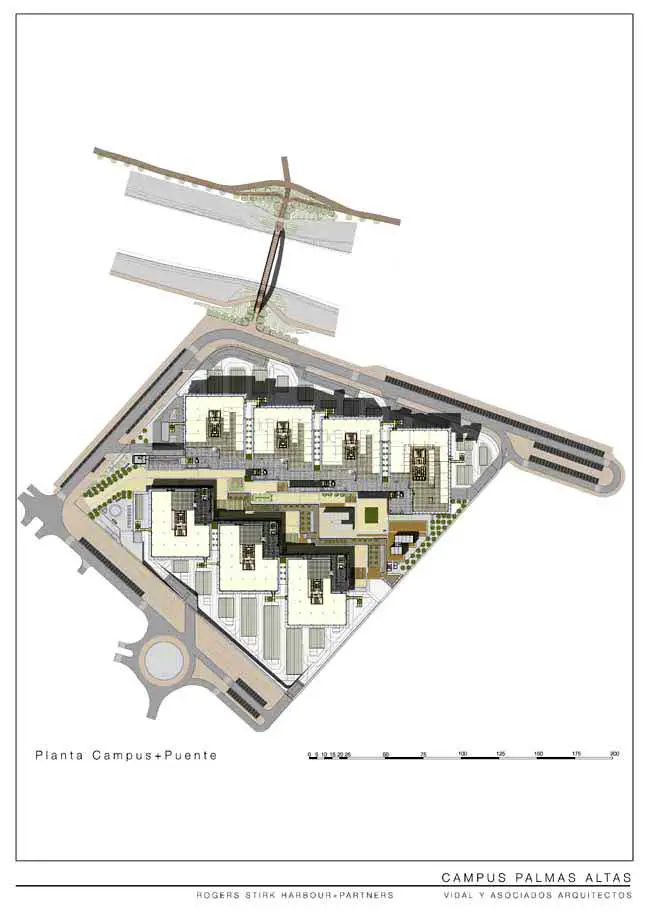
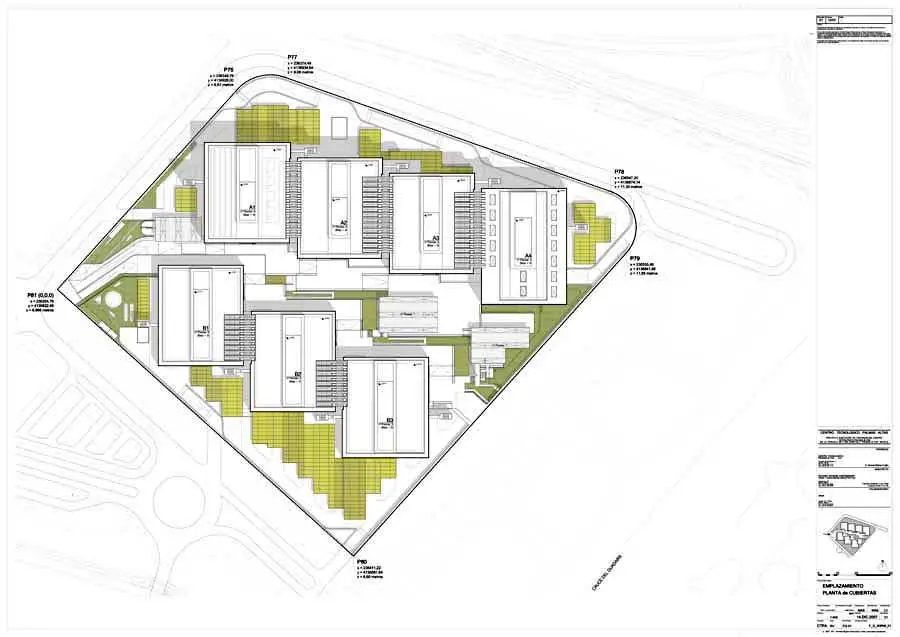
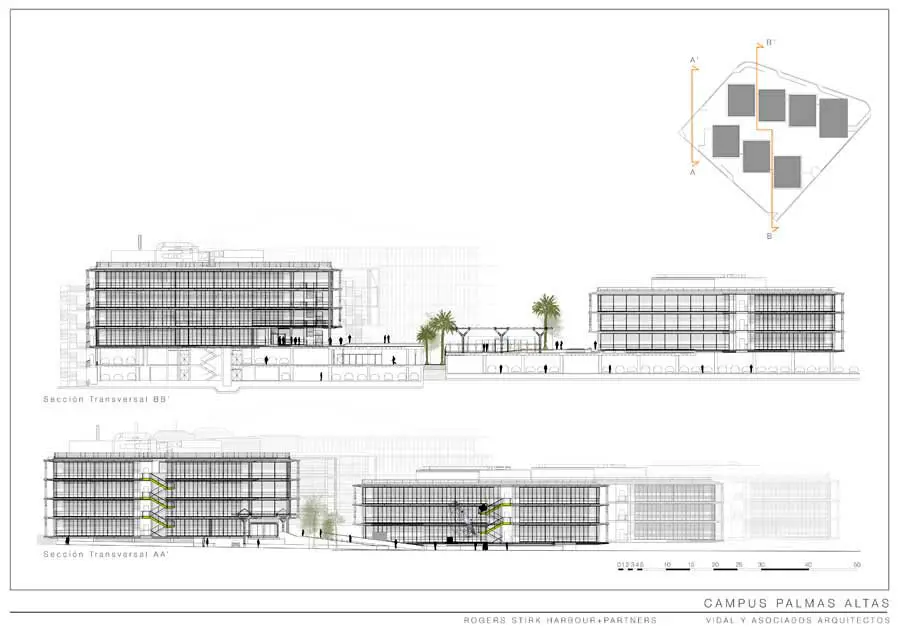
Energy-saving criteria are applied across the whole design – from the site layout and the orientation of the campus to the geometry of the buildings themselves, the design of the building envelope and the selection of materials. Measures include photovoltaic panels, a tri-generation plant, hydrogen batteries and chilled beams. The design of individual buildings and the linear arrangement of all the buildings maximises self shading, thereby reducing the amount of secondary shading required. It is hoped that the development will become a model for more sustainable office complexes in the future.
Campus Palmas Altas, Seville – Building Information
Place/Date: Sevilla, Spain 2005 – 09
Client: Abengoa
Cost: 132m euro
Area (including parking): 96,000m²
Architect: Rogers Stirk Harbour + Partners
Co-Architect: Vidal y Asociados arquitectos (VAa)
Services Engineer: Arup
Structural Engineer: Arup
Environmental Services Engineer: Arup
Landscape Architect: Maria Medina Muro in association with Estudio 28
Consultant to the Design Team: D-Fine
Project Manager: Bovis Lend Lease
Cost Consultant to the Client: Gleeds
Real Estate Consultant to the Client: Jones Lang LaSalle
Campus Palmas Altas Seville images / information from Rogers Stirk Harbour + Partners
Location: Campus Palmas Altas, Seville, Spain
Architecture in Spain
Spanish Architectural Designs – chronological list
Another Spanish Building by Richard Rogers:
Barajas Airport – New Area Terminal
Barajas Airport
Another Building by Richard Rogers:
Daimler Office & Retail Blocks, Berlin
Daimler Office Berlin
Campus Palmas Altas Photos : www.markbentleyphotography.com
Spanish Architecture – Selection
Hotel Mercer 5*, Seville, Southern Spain
Architects: Cruz y Ortiz Arquitectos
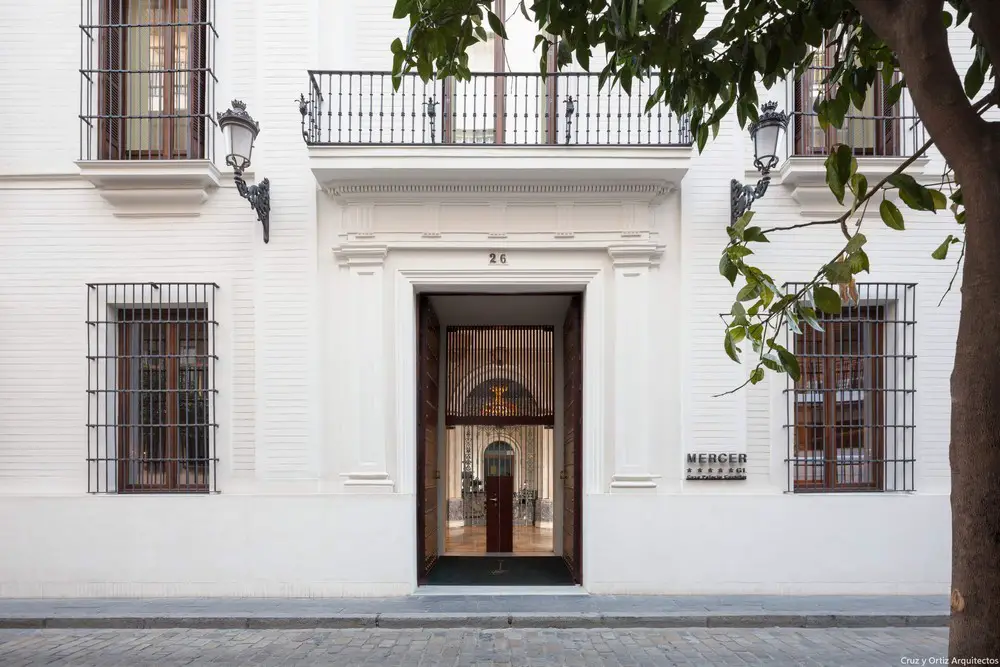
photo © Manolo Espaliú
Hotel Mercer 5*
The Desert House, Guadix, Granada, Andalusia, southern Spain
Design: OFIS arhitekti and AKT II
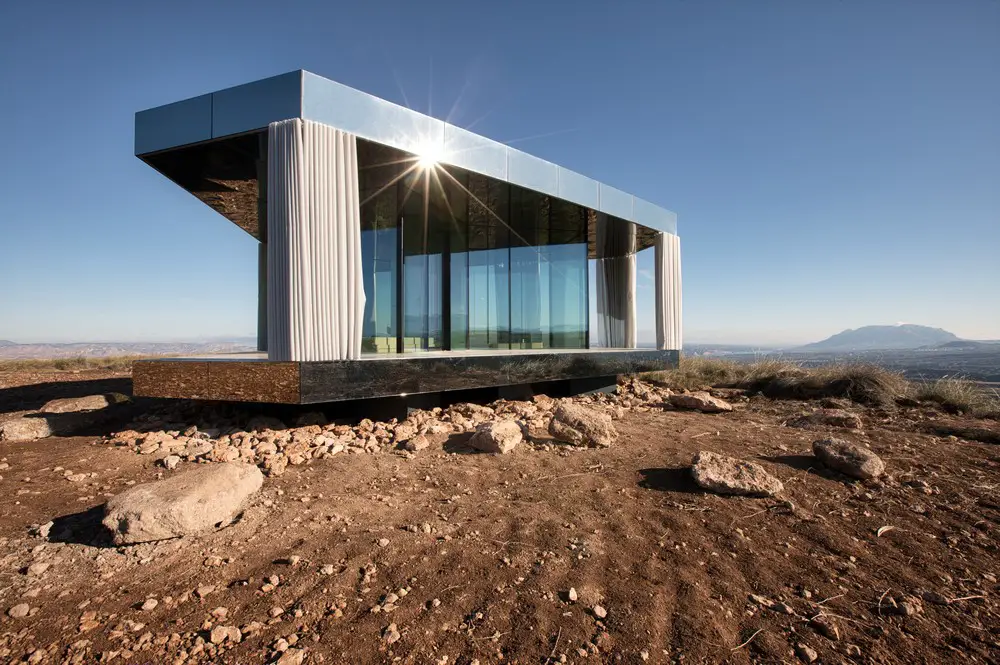
photo © Gonzalo Botet
The Desert House, Guadix
Seville University Library
Zaha Hadid Architects
Seville University Library
Spanish Architecture Practices
More Buildings by Richard Rogers
Comments / photos for the Campus Palmas Altas Spanish Architecture page welcome
Campus Palmas Altas
Building, Spain