
Ashmolean Museum Oxford building photos, Architecture design renewal, Galleries development
Ashmolean Museum, Oxford
Contemporary English Building Extension design by Rick Mather Architects, UK
post updated 31 March 2024
22 Jul 2010
Ashmolean Museum Shortlisted Prize
Ashmolean Museum Shortlisted for WAF Awards + for Stirling Prize 2010
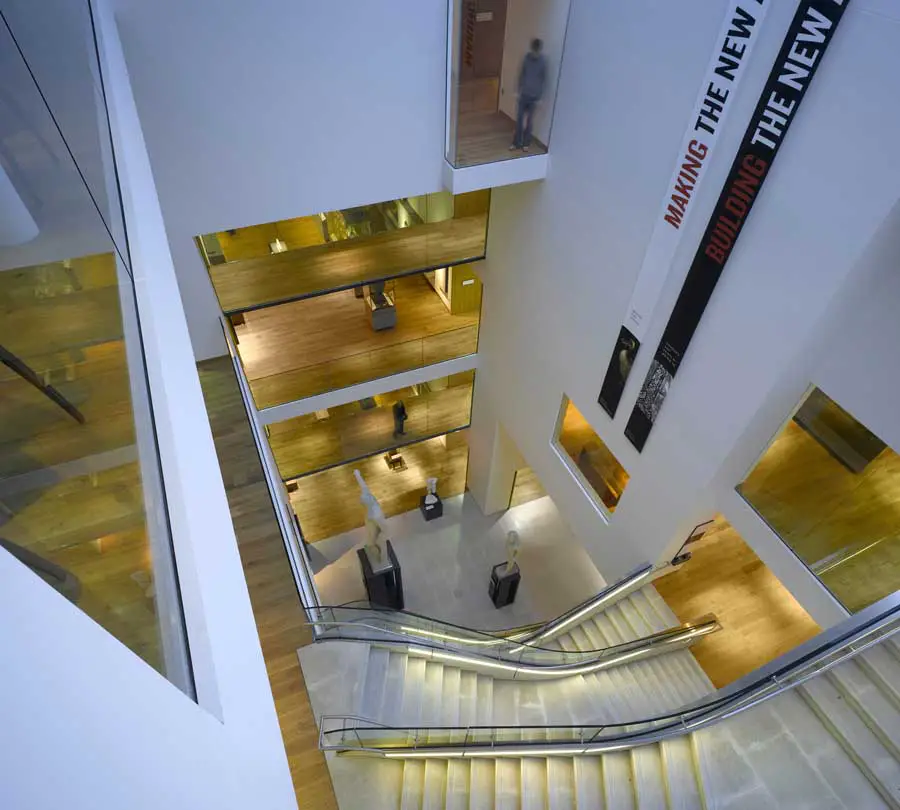
photo © Richard Bryant / Arcaid
28 Oct 2009
Ashmolean Museum Building Reopening
One of the world’s leading museums, the Ashmolean in Oxford, will reopen on 7 November 2009 having completed a multi-million pound redevelopment.
The Reopening of the Ashmolean: The Art from the Islamic World Gallery
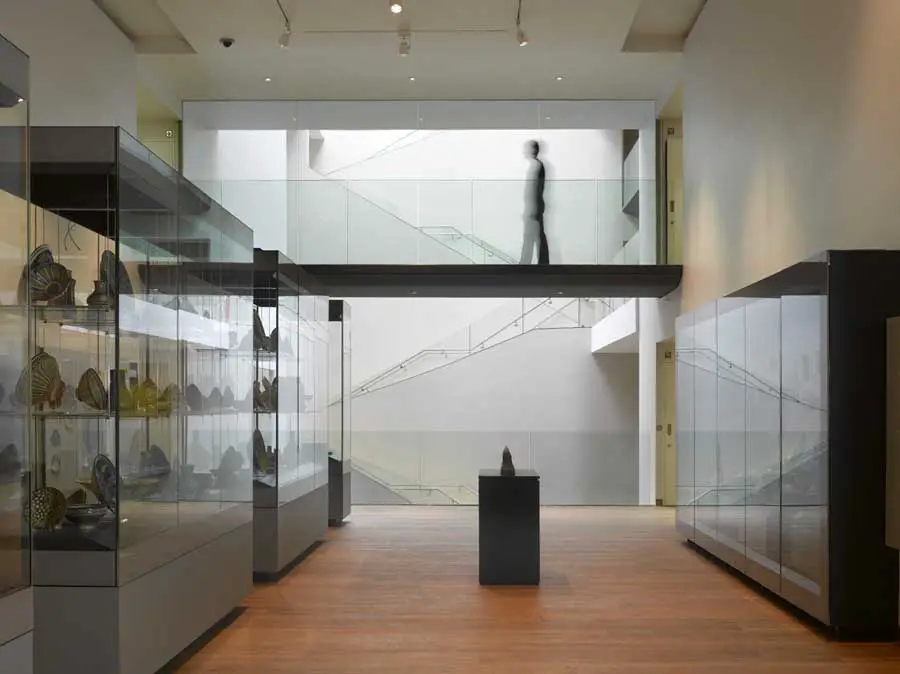
photo © Richard Bryant / Arcaid
The new building, designed by award-winning Rick Mather Architects, will provide the Ashmolean with 100% more display space. Located to the north of Charles Cockerell’s original Museum built in 1845, it comprises 39 new galleries, including 4 temporary exhibition galleries, a new education centre, state-of-the-art conservation studios, and Oxford’s first rooftop restaurant The Ashmolean Dining Room. In the Cockerell Building, the newly refurbished galleries of Western Art will reopen after 10 months of closure.
The project has been funded with a £15 million grant from the Heritage Lottery Fund (HLF). Additional major support has been received from the Linbury Trust, along with numerous trusts, foundations and individuals.
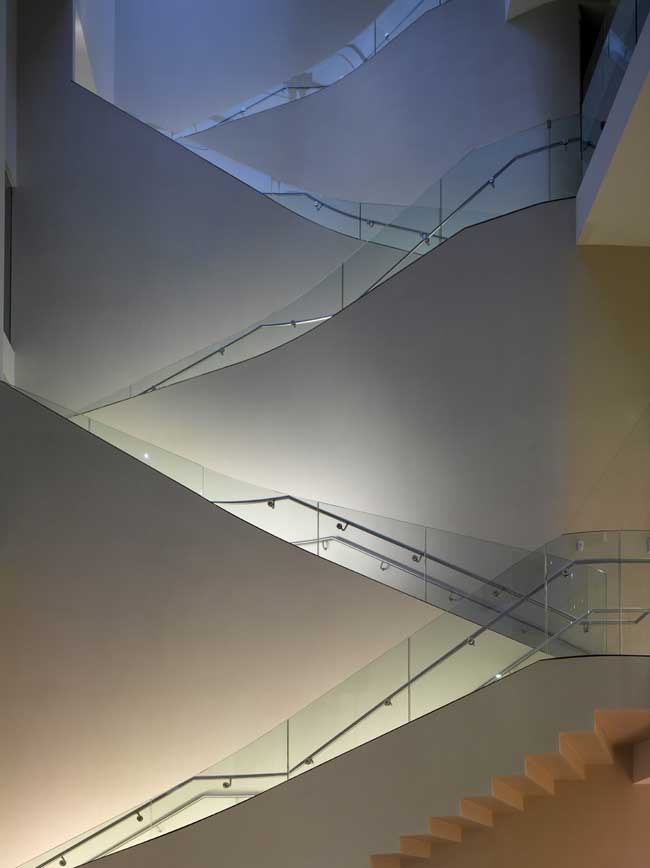
The Reopening of the Ashmolean Museum : The cascading staircase lit at dusk
photo © Richard Bryant / Arcaid
Christopher Brown, Director of the Ashmolean, said, “From the outset, our ambition has been to create not just an improved and expanded version of Britain’s oldest public museum, but something significantly different in kind: a new way of showcasing the Ashmolean’s remarkable collections, for the benefit of the widest possible audience”.
Dame Jenny Abramsky, Chair of the Heritage Lottery Fund, said: “The Ashmolean is like a dear old friend to the people of Oxfordshire – a familiar landmark in the heart of academia. Now fully refurbished, this wonderful building has maintained its original charm but also taken on a fresh, new energy and openness. At the Heritage Lottery Fund, we’re really passionate about ensuring our heritage is enjoyed and understood by everyone. The completion of this project is a huge step towards achieving that aim.”
The Ashmolean is a teaching and research department of the University of Oxford. It produces research and publications of the highest standard in the academic fields of art history, history, archaeology, numismatics and Oriental studies.
Professor Andrew Hamilton, Vice-Chancellor of the University of Oxford, said “The new Ashmolean is a powerful statement of the way in which Oxford’s dynamic future is being fuelled by the richness of its past. For generations the Ashmolean has provided an outstanding resource for teachers, students and researchers–as well as a remarkable treasure trove and source of inspiration for visitors of all ages. Today as a result, of the effort, commitment, and generosity of so many–and as part of the Campaign For Oxford– the special role of the Ashmolean has been secured for generations to come.”
The Reopening of the Ashmolean Museum : The Japan 1600-1850 gallery
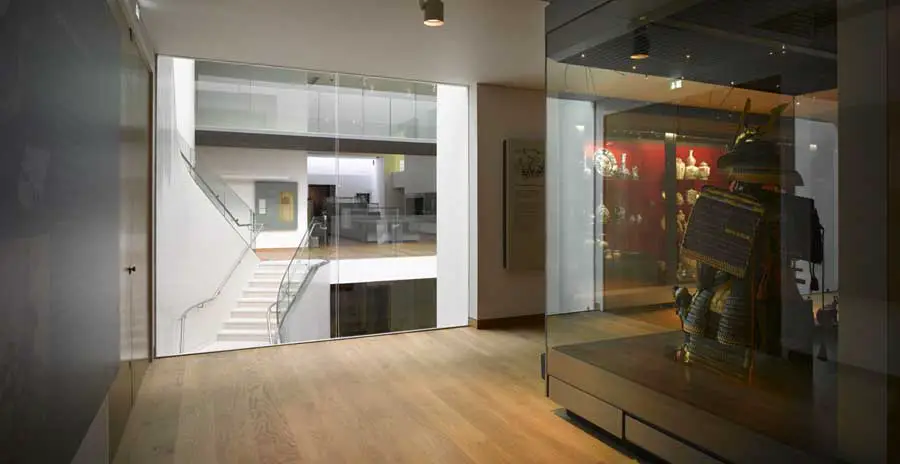
photo © Richard Bryant / Arcaid
Ashmolean Museum Oxford Collections Redisplay
Inside the new galleries, the Ashmolean presents a redisplay of the collections. The Museum’s curators have worked with leading design company Metaphor to create the innovative strategy Crossing Cultures Crossing Time, enabling visitors to discover how civilisations developed as part of an interrelated world culture. Objects’ stories will be told by tracing the journey of ideas and influences through time and across continents, transforming the way the Ashmolean’s rare and beautiful objects are understood.
Themed galleries on the lower ground floor explore the connections between objects and activities common to different cultures, such as money, reading and writing, and the representation of the human image. The floors above are arranged chronologically, charting the development of the ancient and modern worlds. Orientation galleries on each floor introduce the key themes, illuminating the many connections and comparisons which bring the past to life. Crossing Cultures Crossing Time will highlight the strengths of the Museum’s collections, and create a first-class educational environment seeking to awaken a lively interest in all visitors.
The Reopening of the Ashmolean Museum : View from the Cascading staircase
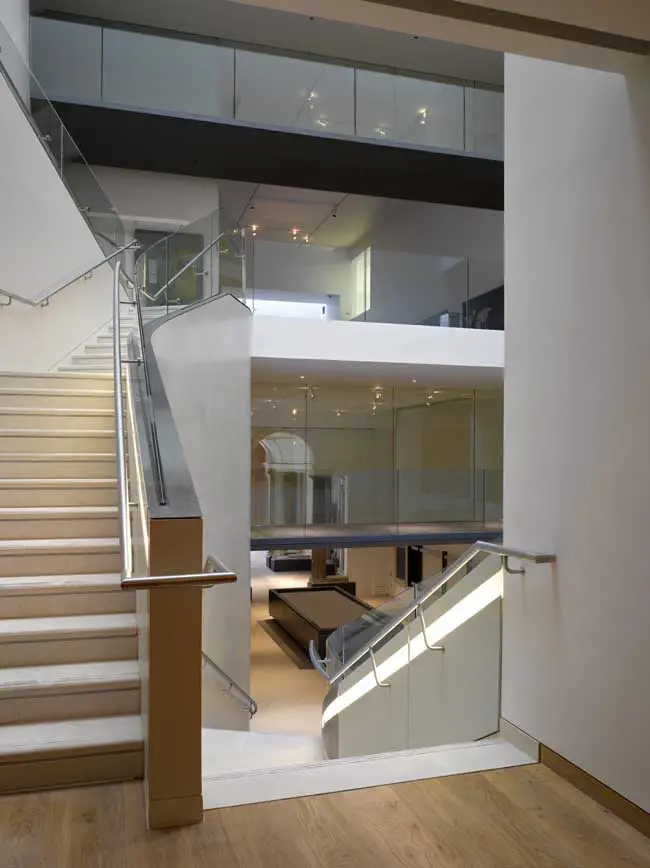
photo © Richard Bryant / Arcaid
Nicholas Barber, Chairman of the Ashmolean, said “Renowned for our collections, the Ashmolean has always held a strong position on the cultural map. But now, with a magnificent new building and inspiring displays, the Museum has been transformed into one of the world’s great cultural jewels.”
The Reopening of the Ashmolean Museum : View from the tribune looking across the Ancient World gallery
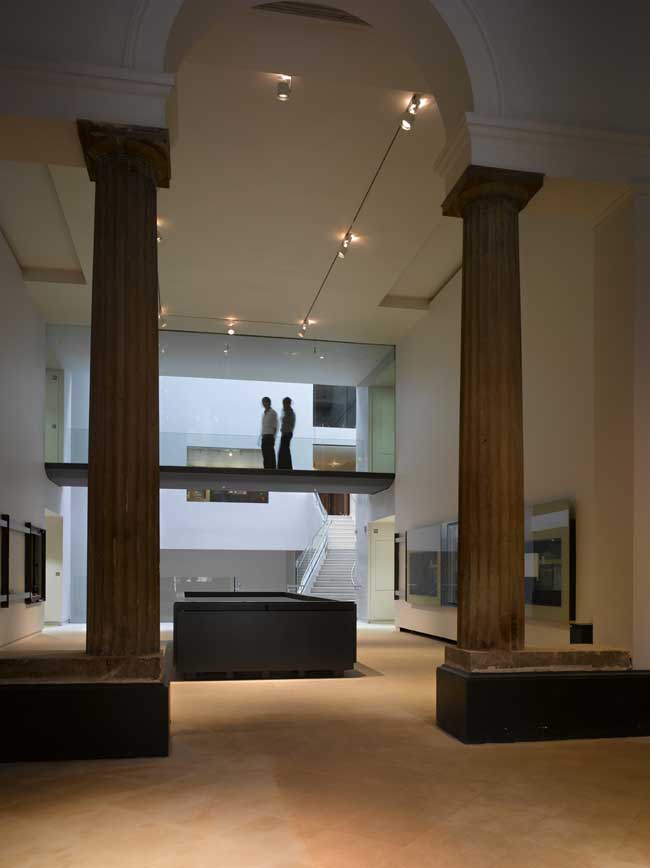
photo © Richard Bryant / Arcaid
Ashmolean Museum Building Oxford : Information from Rick Mather Architects
Admission to the Ashmolean Museum is free
Previously:
23 Apr 2009
Ashmolean Museum To Reopen In November After £61 Million Redevelopment
Ashmolean Museum Oxford Reopening Plans
One of the world’s leading museums, the Ashmolean in Oxford, will reopen in November 2009 following a major £61 million redevelopment, funded with a £15 million grant from the Heritage Lottery Fund (HLF). Additional major support has been given by the Linbury Trust, along with numerous trusts, foundations and individuals.
The award-winning architect Rick Mather has designed a new building to provide the Ashmolean with almost 100% more display space. Located to the north of Charles Cockerell’s original Museum built in 1845, it will comprise 39 new galleries, including four new temporary exhibition galleries, a new education centre, conservation studios, a walkthrough to the museum and the Cast Gallery, and Oxford’s first rooftop café.
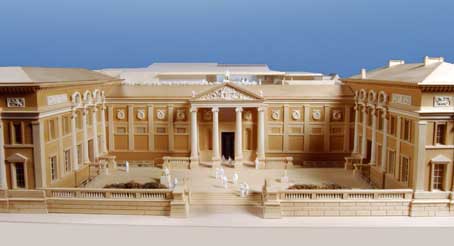
Entry – model image from the architects
Crossing Cultures Crossing Time
An innovative approach to displaying the collections, Crossing Cultures Crossing Time, will transform the way the Ashmolean’s rare and beautiful objects are understood by visitors. Each object’s story will be told by tracing the journey of ideas and influences through time and across continents, enabling visitors to discover how civilisations developed as part of an interrelated world culture.
Themed galleries will explore the connections between objects and activities common to different cultures, such as money, reading and writing, and the representation of the human image. Moreover, entire floors of galleries will be arranged chronologically, charting the development of the ancient and modern worlds. Crossing Cultures Crossing Time will highlight the strengths of the Museum’s collections, while focusing on educational needs and creating a welcoming learning environment.
British museum of art and archaeology
Founded in 1683, the Ashmolean is the most important museum of art and archaeology in the heart of Britain. The collections span the civilisations of east and west, charting the aspirations of mankind from the Neolithic era to the present day. Among its treasures are the world’s largest collection of Raphael drawings, the most important collection of pre-Dynastic Egyptian material in Europe, the only great Minoan collection in Britain, the greatest Anglo-Saxon collections beyond the British Museum, and the foremost collection of modern Chinese art in the Western world.
The Ashmolean is a teaching and research department of the University of Oxford, providing research and publications of the highest standard in the academic fields of art history, archaeology and history. The Museum has always placed significant emphasis on education, not just serving as a resource for scholars but seeking to awaken a lively interest in all our visitors. With improved displays and new facilities, the new Ashmolean building will enable us to fulfil this role far more effectively than ever before.
The Ashmolean, Beaumont Street, Oxford OX1 2PH
Previously:
Ashmolean Museum Oxford – Building Extension Tops Out
At the Ashmolean Museum in Oxford, Britain’s oldest and first public museum, a special topping out ceremony marked the completion of the external frame of the new extension.
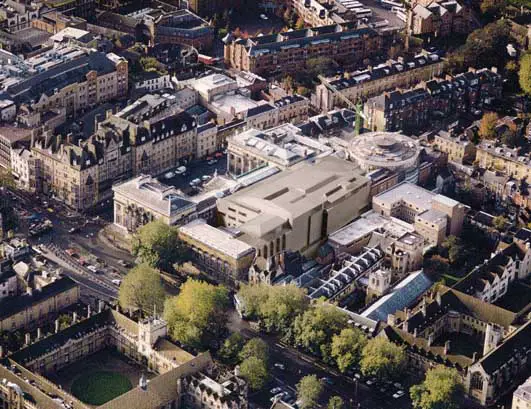
Aerial image from the architects
Ashmolean Museum Oxford Building Extension Topped Out
Due to open in 2009, the development will provide the museum with 100% more display space comprising 39 galleries. In addition to the new display space, a new entrance from St Giles, an Education Centre, Conservation studios and secure loading bay are also created. The new museum space is built to modern standards, using an environmentally aware and efficient servicing strategy.
Two atria connecting all six storeys are naturally lit with large windows and roof lights. Natural light is filtered vertically through the building to the lower ground level via inter-connecting, double-height galleries. At the top of the museum will be Oxford’s first city centre rooftop café with stunning views.
Established in 1683, the Ashmolean is the oldest museum in the country. Behind a distinguished façade by Cockerell lies a confused accretion of buildings that neither does justice to Cockerell nor develops the full potential of the Museum. Rick Mather Architects have been appointed to formulate a development strategy for the large scale complex. In collaboration with the staff a full appraisal of exhibits and facilities has been carried out and a strategy created to maximise the potential of the building and optimise the display of the collections.
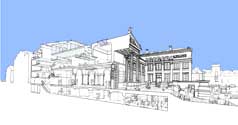
Sketch perspective from the architects
Extensive new galleries are created, linked by a new primary route, to unite the full collection both horizontally and vertically and allow the visitor quickly to comprehend, use and enjoy the whole of the museum. Value: £47m
Ashmolean Museum Oxford images / info from Rick Mather Architects 140308
Ashmolean Museum Extension Oxford architect : Rick Mather
Dynastic Egypt & Nubia Gallery
Design: Rick Mather Architects
Ashmolean Museum architect : CR Cockerell
Location: Ashmolean Museum, Oxford, England, UK
Oxford Architecture
Contemporary Architecture in Oxford
Oxford Architecture Designs – chronological list
Corpus Christi College Oxford also by Rick Mather Architects
Queen’s College Oxford Library also by Rick Mather Architects
Keble College Oxford Building also by Rick Mather Architects
Oxford Architecture Walking Tours
Comments / photos for the Ashmolean Museum Extension Building in Oxford, southern England, United Kingdom, page welcome.
