
Croydon Regeneration London, Image, Design Development, Architecture Competition News
Croydon Regeneration : Third City Vision
Third City Vision Building Proposals for South London, England – design by Will Alsop Architect
31 Oct 2008
Croydon Redevelopment
WILL ALSOP’S VISION FOR CROYDON MOVES TOWARDS IMPLEMENTATION
Design: Architect Will Alsop, SMC Alsop
A major international design competition launched by Croydon Council promises to realise Will Alsop’s ambitious plans for Croydon. The competition marks a significant milestone for the implementation of Will Alsop’s Third City Vision, presented in November 2007, after a series of consultations with the local community.
Plan by SMC Alsop 2007 – Park Lane is down-sized and Queen’s Gardens become larger, stretching across towards Park Hill:
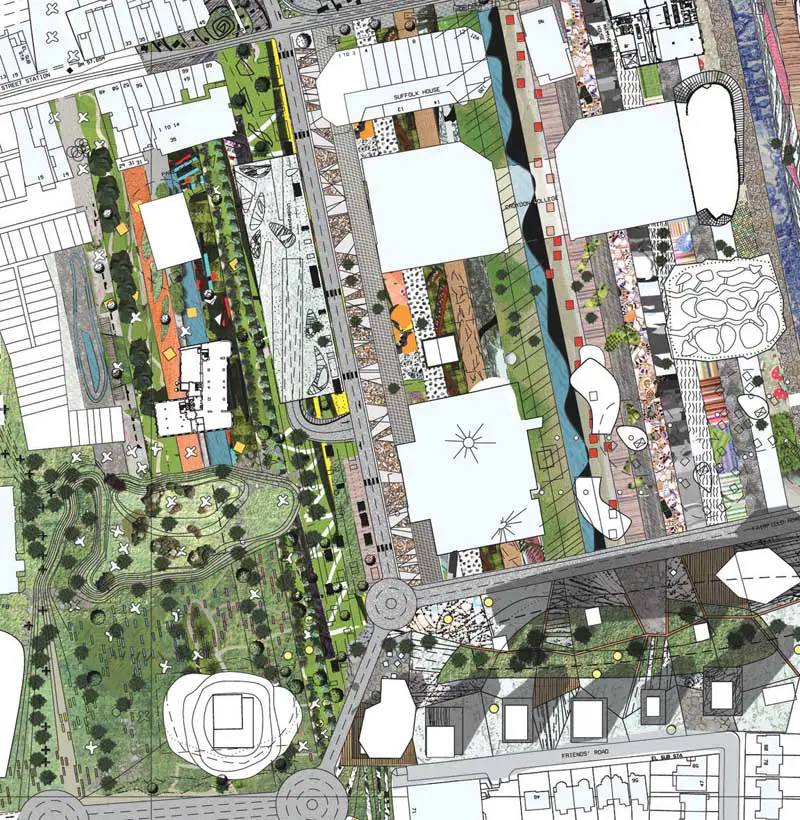
image by architects
The competition invites architects to respond to a key component of Alsop’s Vision – the re-development of Wellesley Road, a heavily trafficked dual carriageway which at present cuts through the heart of central Croydon making east/west access movement difficult and uncomfortable. Architects are asked to propose how they would inhabit the significant real estate that will become available along both sides of the one-kilometre long Wellesley Road when the road dramatically decreases in size from eight lanes in some places to a possible two.
The competition brief envisages that a mix of building types and forms, parks, meadows, squares and other aspects of public realm could exist to the east and west of the downsized road. Diversity is a key word – Will Alsop talks of a series of external ‘living rooms’, the furniture being relatively small-scale buildings sitting against the backdrop of the existing skyscrapers.
Alsop’s role in the implementation is to monitor the process and act as consultants to Croydon Council. Will Alsop sits on the competition judging panel along with representatives from London Borough of Croydon, CABE, Design For London, Transport for London and London School of Economics.
Proposed project area:
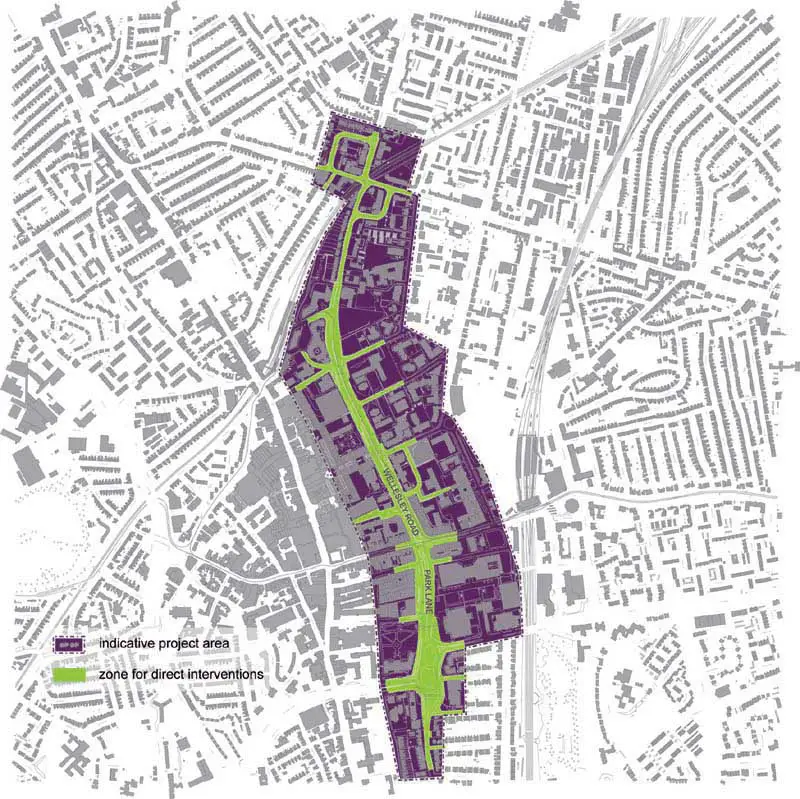
image by Croydon Council
Will Alsop said of the competition: “This is a very exciting competition which is extremely important because it will be at the root of the regeneration of Croydon City Centre”
The competition is open to practices of all sizes; Croydon Council is keen to engage with a range of creative architectural practices. The competition asks for financial stability (rather than a financial track record as such) to extend eligibility to young and innovative practices.
The deadline for Stage 1 submissions is 1 December 2008 and the Stage 2 brief will be presented to shortlisted practices 15-16 January 2009. The winning designs will be announced end of May 2009.
14 Nov 2007
London’s Third City – Alsop’s Ambitious Plans for Croydon Unveiled
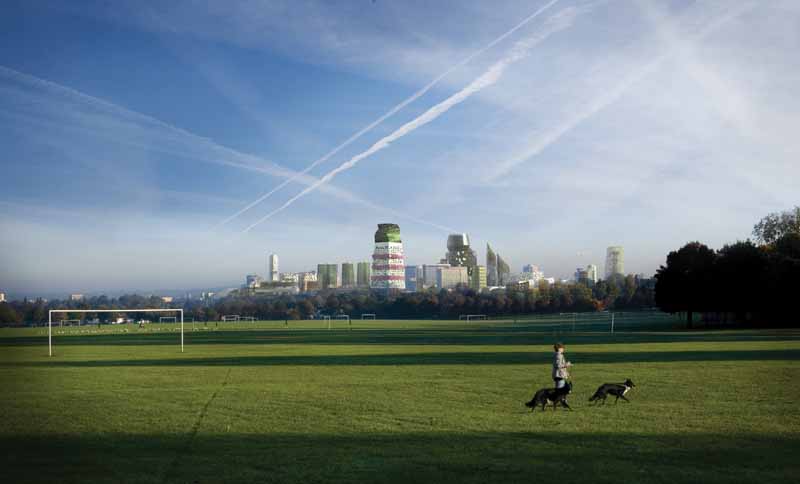
image by architects
November 13th, renowned architect Will Alsop unveiled his far reaching plans for the regeneration of Croydon, to a packed audience in the town’s Braithwaite Hall.
Commissioned by Croydon Council and developed following an extensive consultation exercise, Alsop’s vision addresses the major issues of both the built environment and the public realm, and how these affect the economic and cultural health of the town. His proposals offer a revitalised cityscape that realises the community’s aspirations and Croydon’s potential to become London’s third City.
The key elements of the vision are centred around bringing residential accommodation into the heart of the town centre where it is currently lacking, revitalising Croydon’s key retail offer which is central to Croydon’s success, and subsequently repositioning the commercial/office market in central Croydon. In addition, a key feature of Alsop’s proposal is to improve the quality of the public realm and alter the perception of Croydon’s town centre by introducing additional green spaces and integrating existing underused green spaces. The vision aims to capitalise on the existing swell of developer interest in Croydon’s town centre.
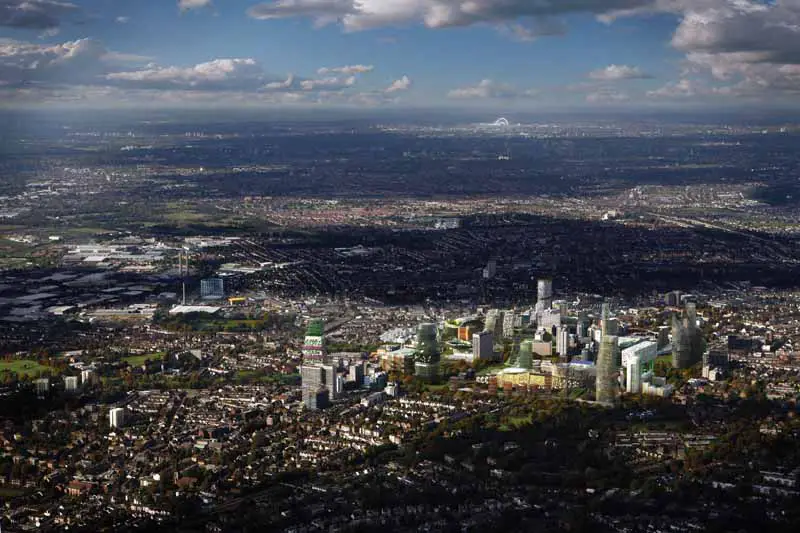
image by architects
Central to the Vision is breaking down the barriers to pedestrian movement currently created by the busy road and rail systems that dominate the town centre. Through a series of bold but considered rationalisations, significant land will become available, facilitating the introduction of new commercial, retail and residential development alongside a varied public realm of squares, parks and landscaping. Dramatically improving the quality of the environment for the pedestrian throughout the centre of the town is a crucial component of the proposals
As the town centre environment improves, so Croydon will be rejuvenated by the introduction of green spaces and water. In bringing the submerged River Wandle to the surface; in redeveloping the massive footprint of the Whitgift shopping centre; in the arrival of University status and the construction of its campus; and with the commitment of the town to the design and development of architecture of quality, Croydon will emerge as an influential, desirable and vibrant city.
Confronted by a town centre dissected by virtually impenetrable dual carriageways and railway tracks, a major challenge for the architect /masterplanner was how to meet realistic ongoing transport demands whilst also providing a safer, more accessible and pleasant town centre, within a viable economic and environmental framework.
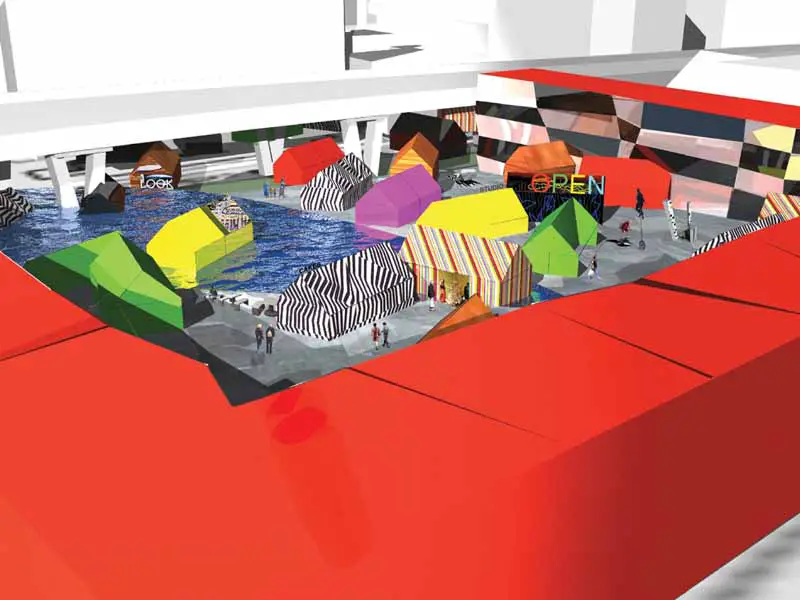
image by architects
Barriers in four definiteive areas that needed to be addressed were identified:
At the western edge of town Roman Way, a busy four-lane highway, separates Wandle Park from the rest of town, and gives St John the Baptist’s Church a dismal setting. It is proposed that the road is re-directed through an underpass here, so freeing up the land at ground level to become a landscaped green space with meadow and water. Instead of facing directly onto Roman Way and the entrance to a pedestrian subway, the church will have views across water and a tranquil green sweep.
At the Wellesley Road the through traffic that currently dominates the dual carriageway, bringing little but pollution to the town, will be diverted elsewhere, allowing local traffic to travel along a two way road in conjunction with trams and buses. A consequence of this re-planning will be the opportunity to develop significant amounts of real estate along the length of the Wellesley Road. These developments will step down in scale from the new and existing taller buildings which would otherwise line its edge. A mix of building types and forms will emerge, set in an equally varied public realm.
The slip roads running down from the Croydon flyover at Wandle Road, create an oppressive concrete wilderness around them, and were identified as a third barrier requiring attention. By altering the access points to the flyover, thereby dispensing with these slip roads, this land becomes useable for more than car-parking and can be developed into a range of small and young businesses, and a square of cafes, bars, galleries and shops that will animate this currently redundant area and provide a direct linkage with the South End area of town.
The railway tracks at the eastern edge form the fourth barrier that requires attention. The proposed series of generously sized new bridges that straddle the tracks will serve to re-connect this part of town, at present almost entirely separated. Much needed access to the beautiful and at present under-used Park Hill will also be gained.

image by architects
Two additional proposals relating to the town’s transport infrastructure include the regeneration of the area around West Croydon station (in anticipation of the arrival of the East London line in 2010) and a review of the current car parking provision in town generally. With over 8,500 parking places at present, a quarter of which are rarely used, a revised car parking strategy is proposed which includes an intelligent parking system, new underground parking and park-and-ride. It is envisaged that this would reduce the required car parking provision to around 4,500.
Reinforcing awareness of Croydon as a town well located between the urban activity of central London and the rural idyll of the countryside to the south, the Vision skilfully introduces into the town centre rich new public realm. Tree-lined walks, green spaces and landscaping in town create direct and easy links to the three parks which sit just outside the centre, at present inaccessible and under-used – Wandle Park, Duppas Hill and Park Hill.
Reinforcing the impact of new green space is the re-introduction of another vital component of city life – water. The river Wandle, which was once an important artery for both wildlife and industry in south London, has a source in Croydon. It is proposed that the Wandle, culverted and diverted underground in 1967, be exhumed at four key locations – at Old Town, in Wandle Park, as part of the proposed new square in front of the Exchange project at the Pumping Station and, lastly, as the centre piece of the proposed new development under and around the Croydon flyover. The reviving presence of water will once again be felt in town. Reintroducing the Wandle in Croydon ties in with the wider London aspirations for this once key river and will form part of the Wandle trail project.
With the transport barriers addressed and the town centre environment enlivened by green space and water, the town will be well placed to support the new development that will make Croydon a truly a thriving city – a third City for London.
One such development would centre around the Whitgift Centre, at present a single block, entirely impenetrable when closed at night. This would become instead a series of smaller scale retail blocks, criss-crossed by small roads giving priority to pedestrians and offering a rich mix of cafes, shops and bars. Above the retail blocks, the site also provides an ideal location for a series of houses, maisonettes and apartments, making this one of the town’s major new residential areas, with the population increasing over time from 4,000 to around 20,000. In addition Croydon will position itself as a University town with a campus at each end of town – one to the north of West Croydon station and one at Fairfield complimenting the Art College. This will result in an animated cross-flow students through town during the working day and evening.
Speaking of his Vision for Croydon Will Alsop said, “ Croydon needs to dare to dream – it should set its sights high. This project has demonstrated to us the tremendous potential of the town – and now Croydon has the masterplan to transform itself into London’s third City.”
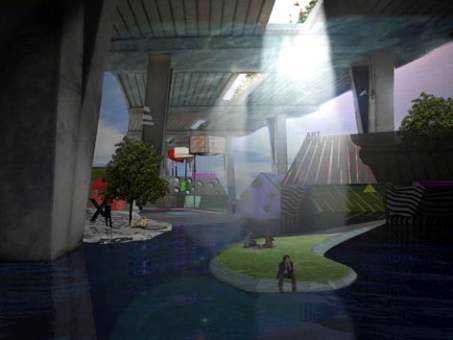
image by architects
SMC Alsop project team: Will Alsop, Amanda Marshall, Max Titchmarsh, George Wade, Tim Thornton, Kieran McGlone
Croydon Regeneration architect – Will Alsop
Location: Croydon, South London, England, UK
London Buildings
Contemporary London Architecture
London Architecture Links – chronological list
London Architecture Tours by e-architect
Croydon Regeneration architects : SMC Alsop
Renaissance Croydon
Design: Andrew Lett Architects
South End Public Realm Croydon
Design: HASSELL
Comments / photos for the Croydon Regeneration Building page welcome
