
Bibliotheca Alexandrina design images, Snøhetta Egypt building pictures, Architect competition project news
Bibliotheca Alexandrina Egypt : Egyptian Library Building
Alexandria Library : Contemporary Egyptian Architecture by Snøhetta Architects, Norway / HAMZA ASSOCIATES, Cairo
post updated 12 February 2024
Alexandria Library, Egypt
Date built: 2002
Design: Snøhetta Architects with Hamza Associates, Cairo
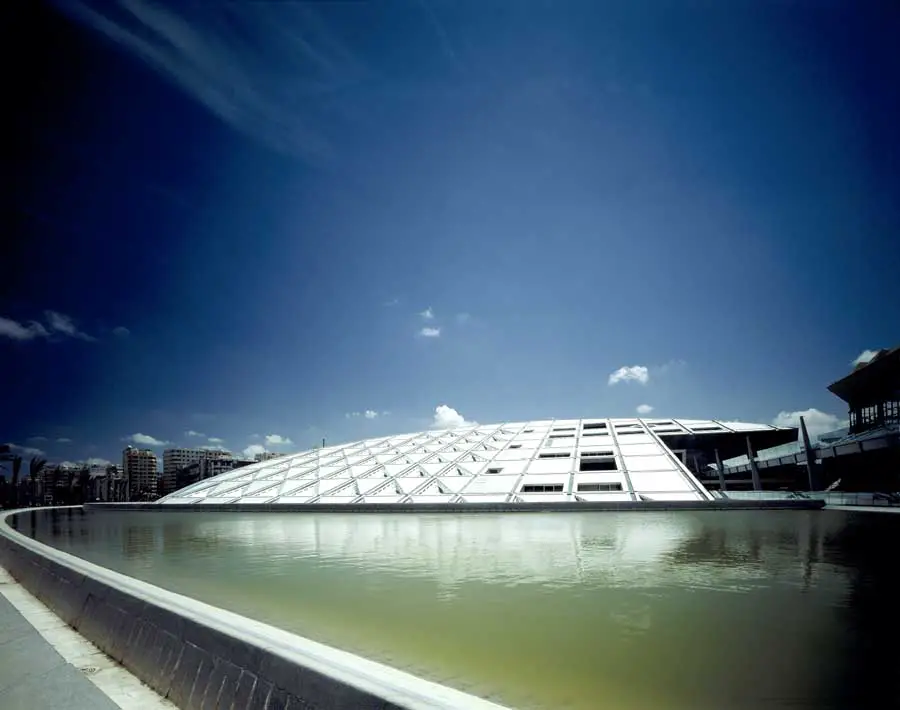
$212m Research Library connected to the University
Open competition, 1st prize
for UNESCO, Arab Republic of Egypt
80,000 sqm
8 Aug 2008
Bibliotheca Alexandrina
BIBLIOTHECA ALEXANDRINA
After more than 10 years of design, planning and construction, the Bibliotheca Alexandrina was completed with a formal opening in the fall of 2002. Conceived as a revival of the ancient library in the city founded by Alexander the Great some 2300 years ago and lost to civilization centuries later, the new Alexandria Library has been invested with a contemporary design that will allow it to contribute meaningfully to students, researchers and the public well into the future.
The new building is the result of an international architectural competition in 1989 organized by the International Union of Architects, Unesco, and the Government of Egypt. The design submitted by SNØHETTA, an international group of architects based in Norway, was awarded First Prize among 524 entries from 52 countries.
The Snøhetta Hamza Consortium was formed in 1991 between the architectural practice SNØHETTA of Oslo, Norway and the architectural and engineering firm HAMZA ASSOCIATES of Cairo, Egypt to ensure its successful realization.
BIBLIOTHECA ALEXANDRINA Provides Room for up to 8 Million Volumes of Books. The 85,000 square meter Bibliotheca has been heralded as a significant milestone in architectural, engineering, information science and cultural heritage. The new library is built on a magnificent site alongside Alexandria’s ancient harbor in the historic center of the city. The 11-story library can contain up to 4 million volumes of books, a figure that can be expanded up to 8 million in the future by the use of compact storage.
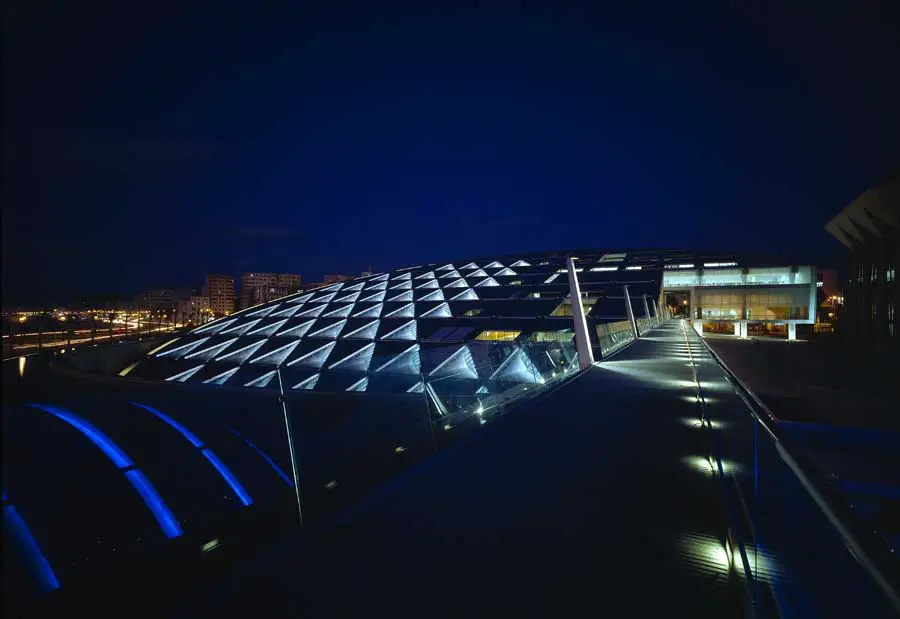
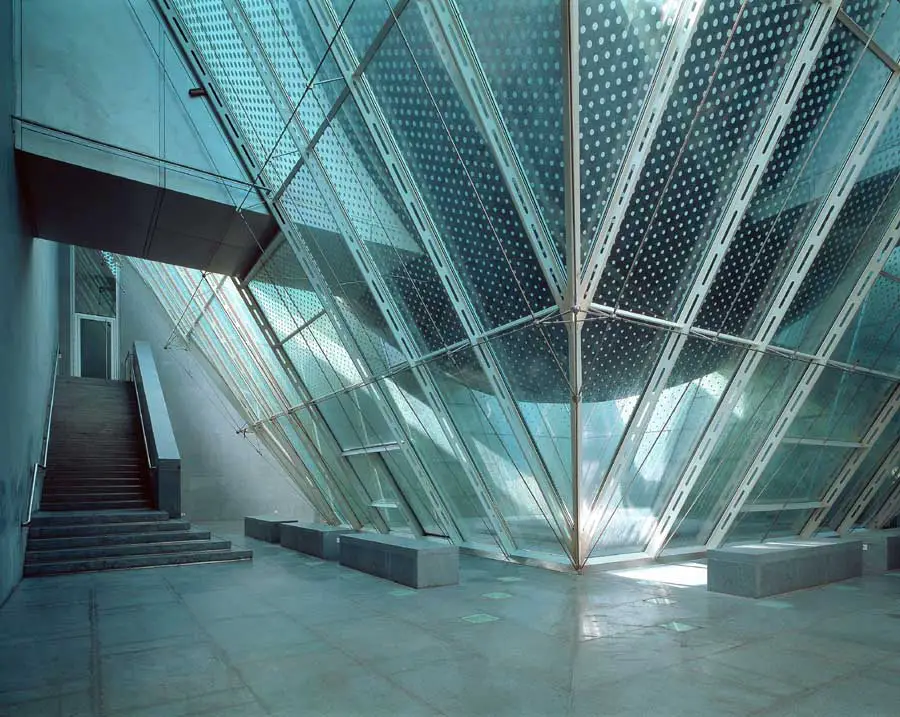
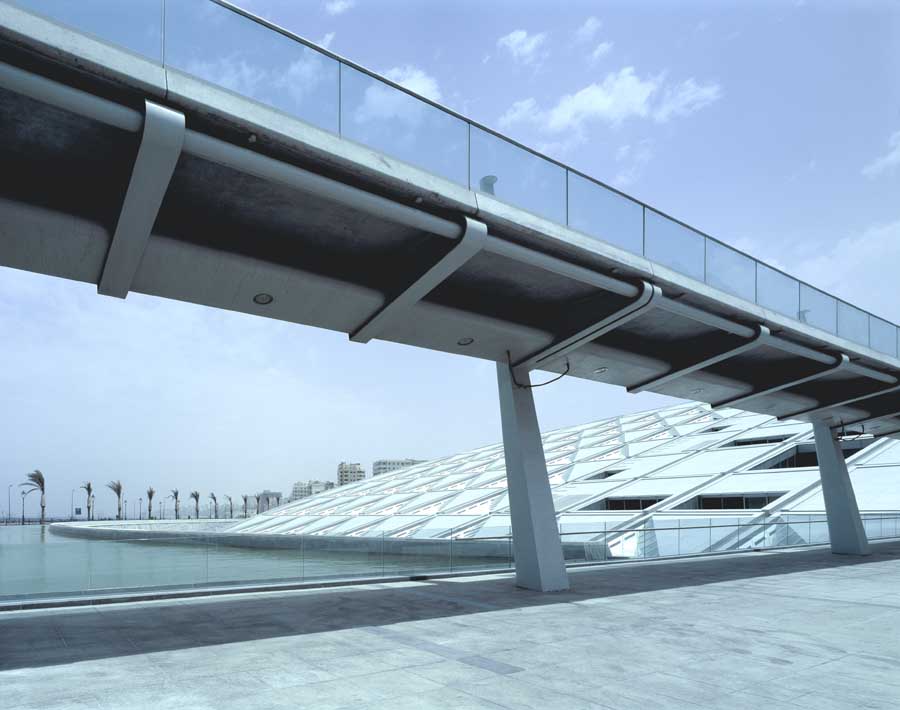
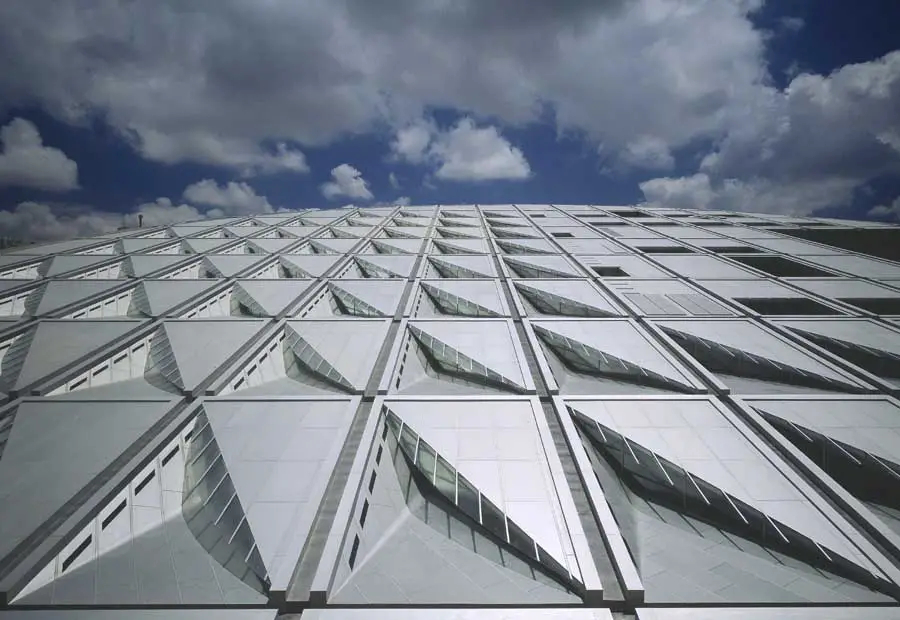
BIBLIOTHECA ALEXANDRINA introduces Unique, New Library Concept. The 20,000 m2 open reading room for 2000 readers, the largest of its kind, worldwide, occupies more than half of the library volume and is stepped over seven terraces. Indirectly lit by vertical, north facing skylights in the roof, the spacious room will not be exposed to direct sunlight that is harmful to books and manuscripts.
The terraced reading room design reduces book retrieval time considerably, compared to traditional library planning employed in many recently completed projects. Reading areas and stacks are arranged at close proximity at the same level, the stacks being placed at each terrace level, underneath the next higher terrace.
This way, the readers who are sitting at the terrace edge, enjoy maximum exposure to natural light and grand views of the space while being in close proximity to the associated book storage area. This concept is repeated throughout the room and creates a large amphitheater with a large variety of evenly lit reading facilities. The building is further augmented by up-to-date digital information facilities and planned to accept a wide range of changing technologies in the future.
BIBLIOTHECA ALEXANDRINA Provides More than a Library. In addition to the library facilities, the Bibliotheca also contains other cultural and educational functions including a planetarium, several museums, a school for information science, and conservation facilities. A Young Person’s Library is available for younger students and visitors. Added to this a new conference center is linked to an existing auditorium on the site, making the Bibliotheca a centerpiece for both learning and debate.
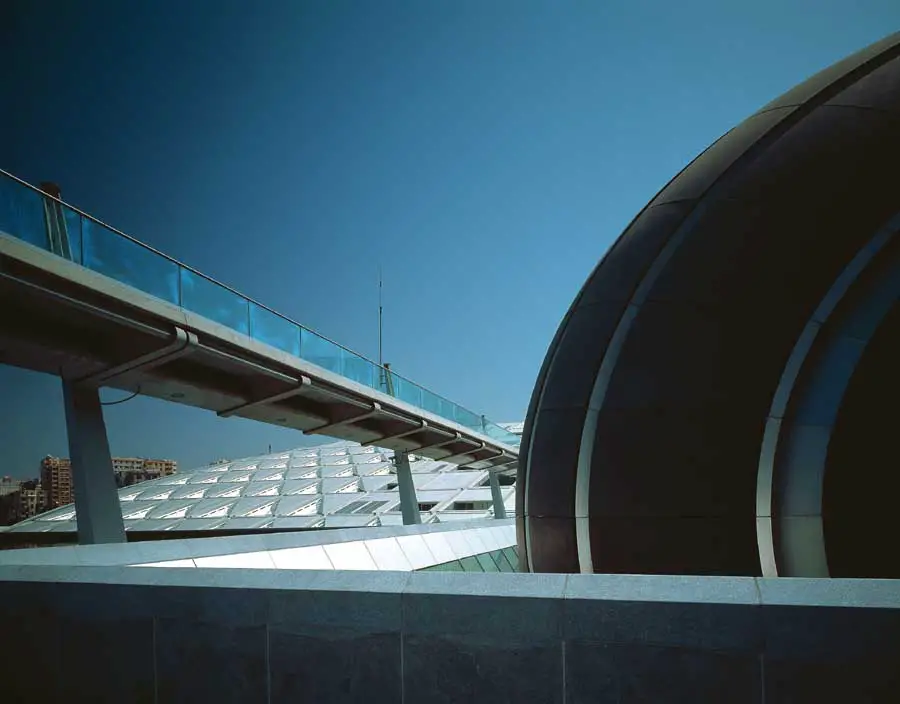
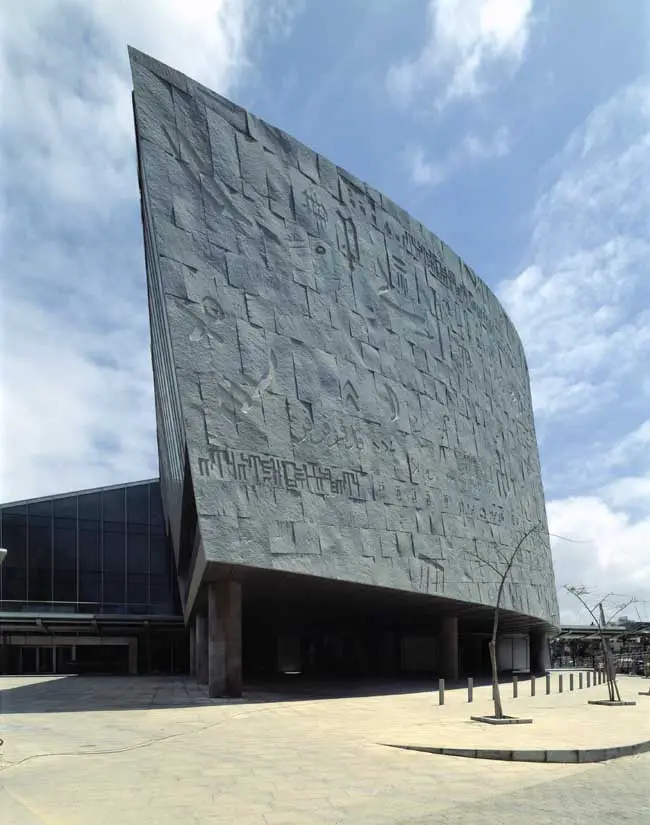
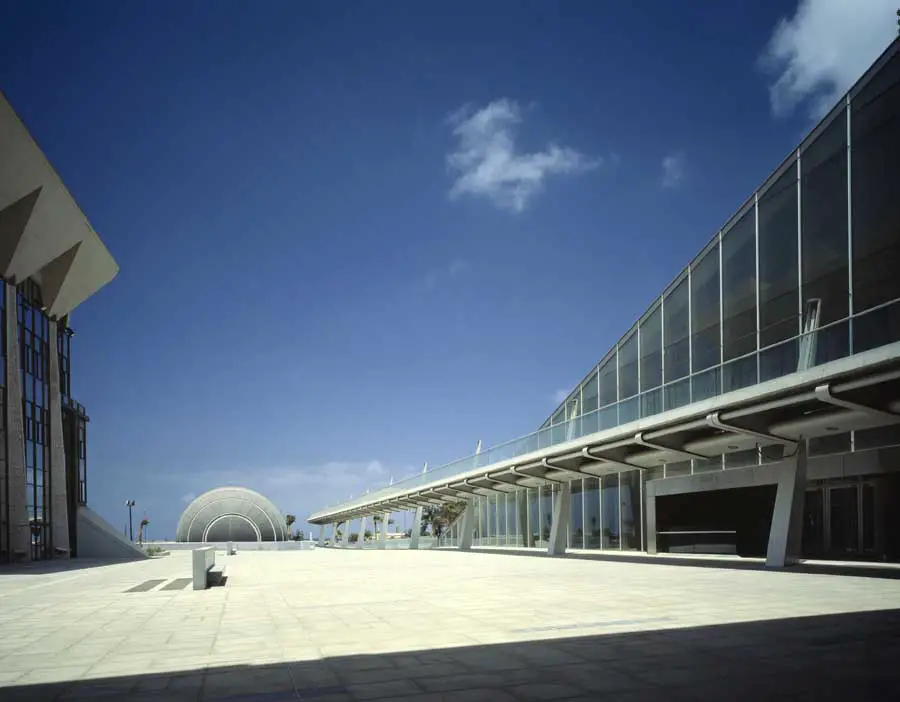
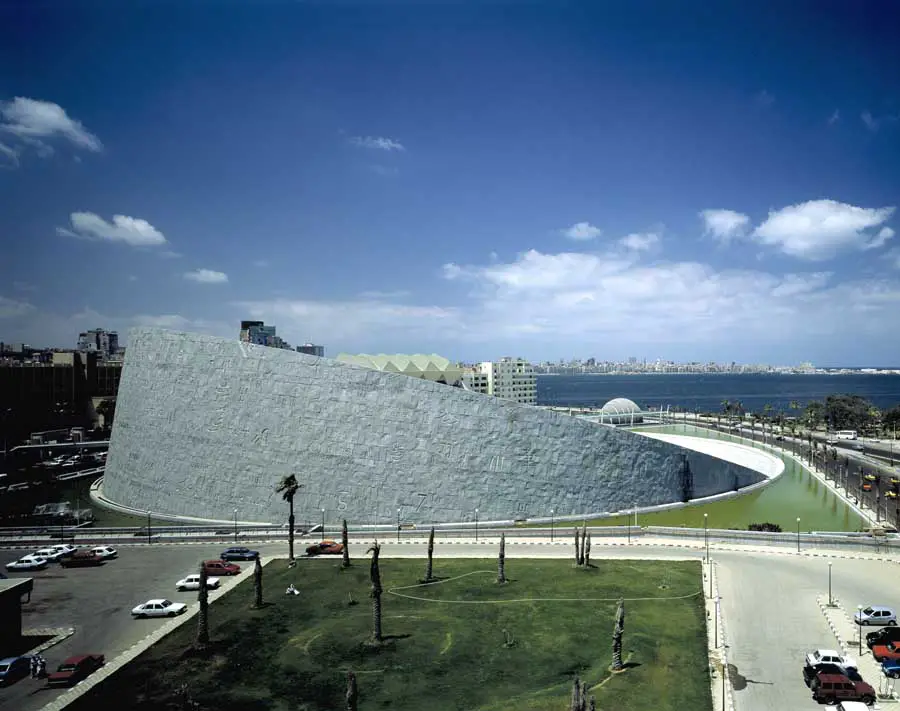
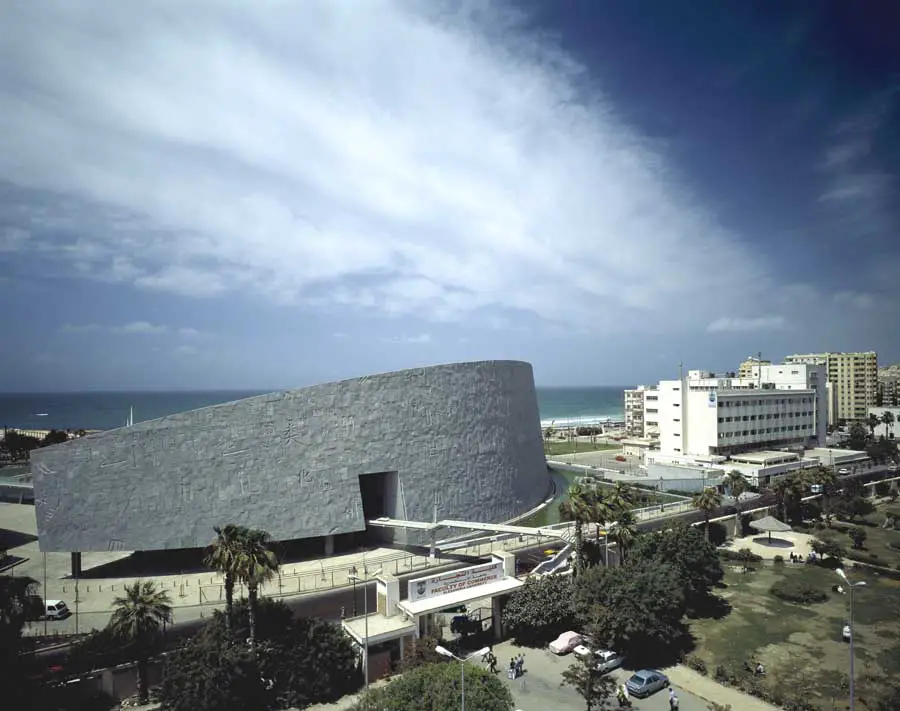
BIBLIOTHECA ALEXANDRINA’s Striking Contemporary Design Features Characterized by its circular, tilting form, the building spans 160 meters in diameter and reaches up to 32 meters in height, while also diving some 12 meters into the ground. An open plaza and reflecting pool surrounds the building, and a footbridge links the city to the nearby University of Alexandria. The design of the new library is both timeless and bold.
Its vast circular form alongside the circular Alexandrian harbor recalls the cyclical nature of knowledge, fluid throughout time. It’s glistening, tilting roof recalls the ancient Alexandrian lighthouse and provides the city with a new symbol for learning and culture. As it descends into the earth and reaches upward to the sky the library manifests within its apparent movement a frozen moment in time. Synchronous with this movement stands a grand stone edifice of historic proportions.
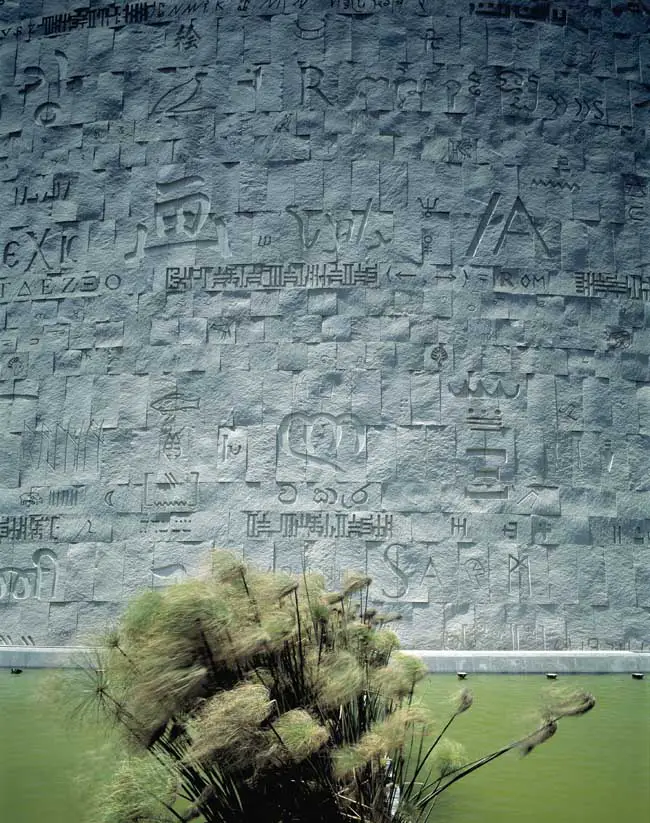
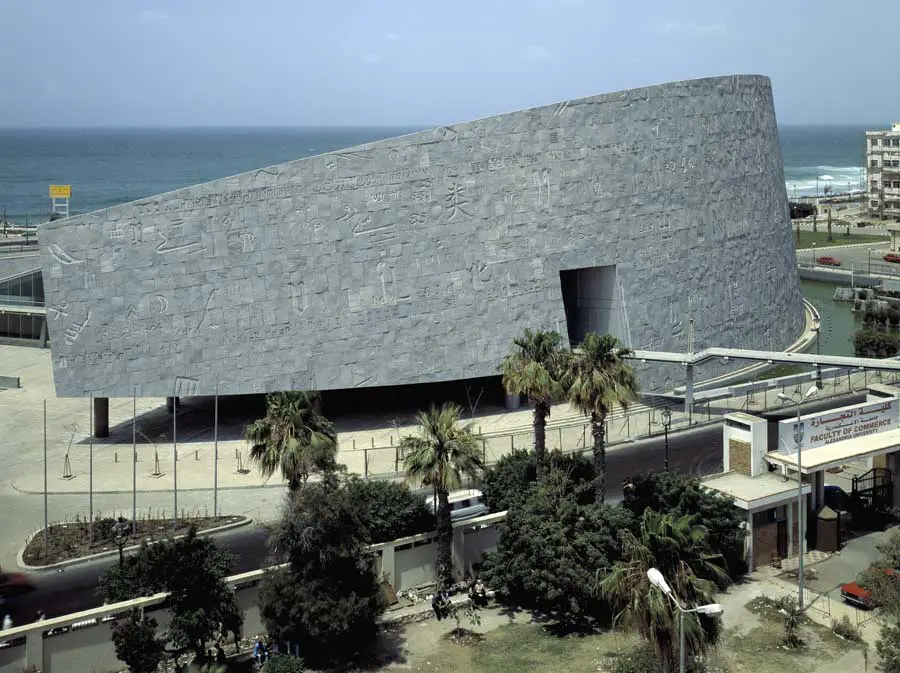
The 6000 m2 wall is carved with alphabetic inscriptions from throughout the world in a careful display of the library’s basic proviso, language. The new library’s design has employed the most up-to-date engineering solutions and includes one of the world’s most distinguished foundation and structural designs. Its interiors are carefully designed for the comfort of the user during all seasons. State of the art solutions have been employed to mitigate the effects of natural disasters such as earthquake and fire.
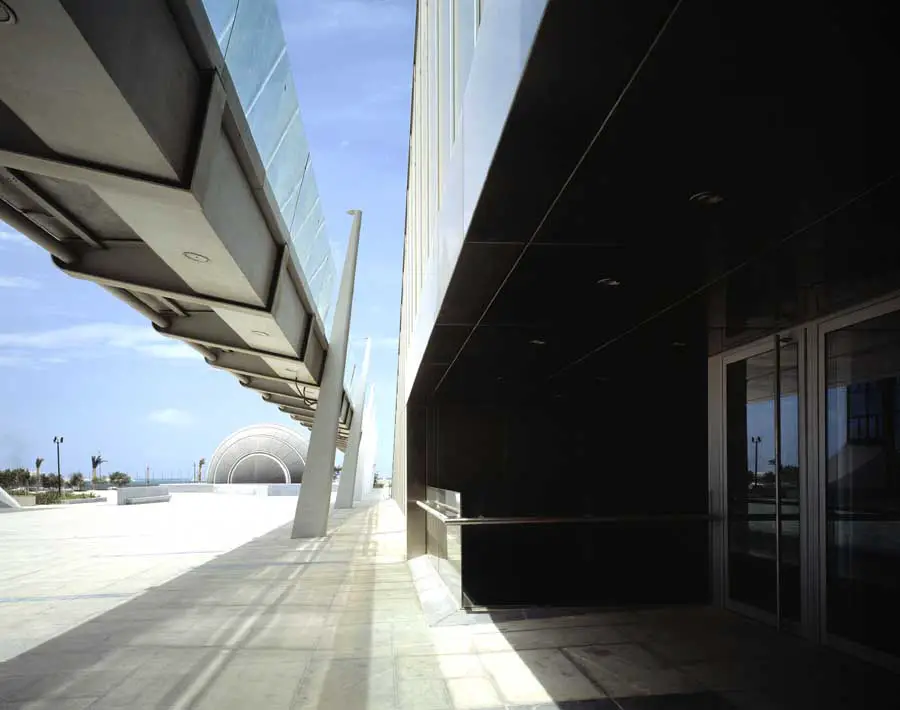
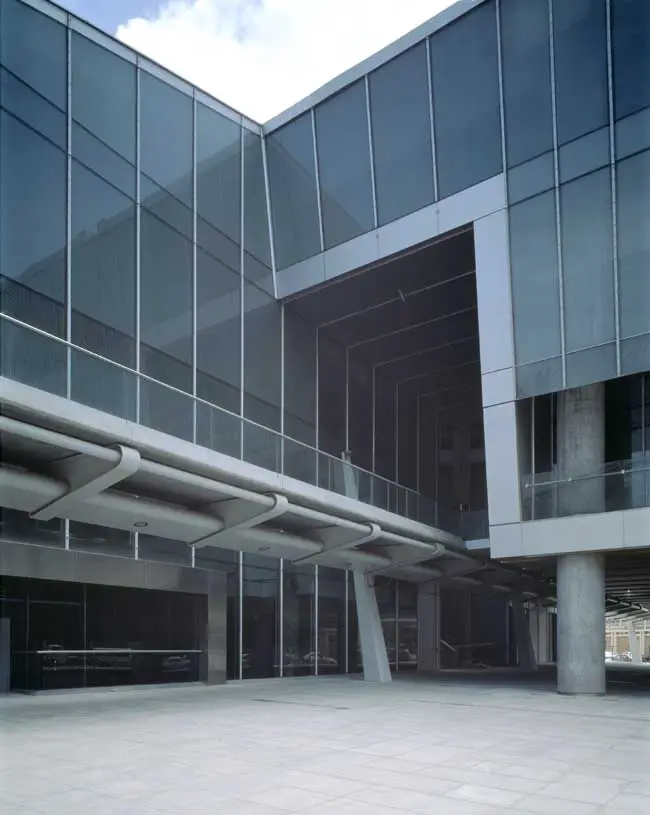
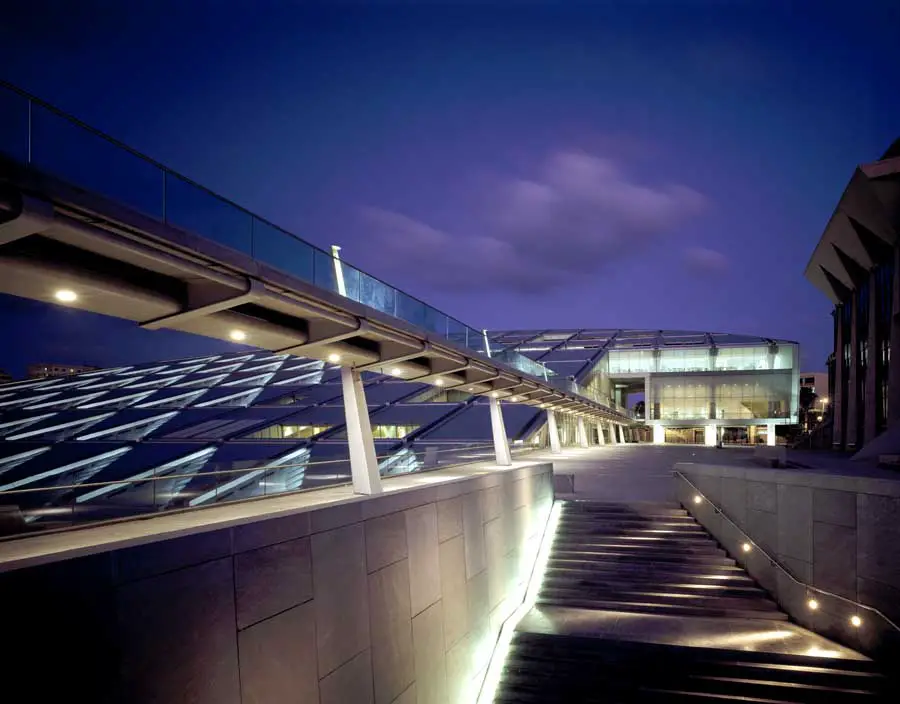
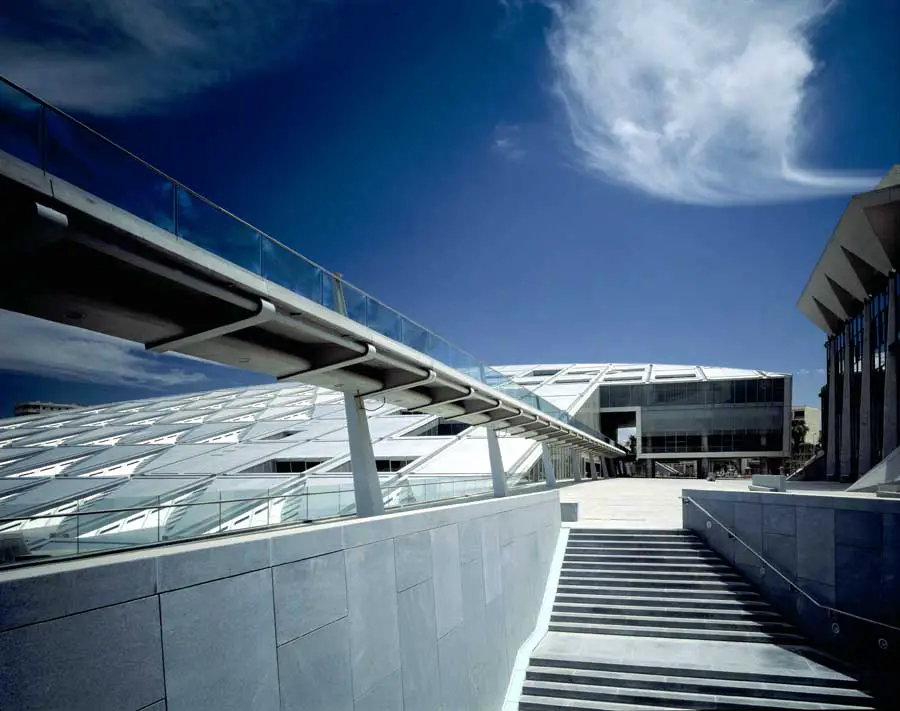
BIBLIOTHECA ALEXANDRINA’s Future Impact on the City of Alexandria. The Bibliotheca Alexandrina has been the catalyst for future developments in the historic city center. Signs are already underway, the Corniche road is undergoing a complete renovation and areas adjacent to the project are undergoing remodeling. The Bibliotheca is intended to revitalize the city and the region as a new center for learning and culture, a place of both pilgrimage and long-term viability.
ARCHITECTURE AND ENGINEERING
An open international competition was held in 1989 and the Norwegian registered company Snøhetta received First Prize. In 1991, the Snøhetta Hamza Consortium was established between Snøhetta of Norway and Hamza Associates of Egypt to ensure the project’s successful realization.
The principal designers of the project are the Snøhetta Hamza Consortium:
Craig Dykers, Christoph Kapeller, and Kjetil Thorsen of Snøhetta; Oslo, Norway Mamdouh Hamza, Ahmed Rashid and Moshhour Ghoneim of Hamza Associates; Cairo, Egypt
Construction Supervision on-site for the Snøhetta Hamza Consortium led by:
for Hamza Associates, Mamdouh Hamza; Resident Engineer
for Snøhetta, Christoph Kapeller; Project Architect
PROJECT SCOPE
The principal objective of reviving the Bibliotheca Alexandrina is to establish a comprehensive new research library of a unique collection as a resource for development in the region. The project will be completed in 2001 and formally open in 2002.
It is approximately 85,000 gross square meters and is located on a site of approximately 45,000 square meters. The building is composed of 11 floors where the library functions alone are 55,000 m2 and include both a main library and young persons library.
The building is designed to contain 5 million volumes without renovation and ultimately can contain up to 8 million volumes, audio-visual media, maps, and rare manuscripts and books. The building is designed to accommodate contemporary and anticipated data facilities along with OPAC and Internet access.
In addition, the project is further composed of related cultural functions such as a museum and planetarium, an international information school and administrative and support functions. An existing conference center on the site and new conference center functions in the new library together will augment the basic facilities. Additional to the building are outdoor plaza areas and public furnishings.
LOCATION
The site is located alongside the ancient, or eastern harbor of Alexandria in Egypt in the area of the ancient “Royal Quarter”, where the ancient library is thought to have been located. The site is directly adjacent to the Faculty of Commerce and Arts of the University of Alexandria.
BASIC FEATURES
Alongside the ancient circular harbor, the library’s circular form unites the building with its historically rich location in Alexandria. As the library rises from the surface of its site it merges with the horizon, joining earth with sky.
It does not simply sit upon the earth; it is a part of the earth, within and upon it. As a frozen moment in time, it evokes past, present and future. The rough-hewn granite wall, both geologic and alphabetic, resembles the cliffs alongside the Nile.
In clear opposition to this, the sleek incline of the highly technical and contemporary metallic roof gives the impression of an early morning sunrise, when sky and earth merge upon the horizon. Exposed within is a vast reading room, captured by mass and light. Intimacy, reflection and infinity define this ever-changing space.
A nearby planetarium rises from an open plaza and reflecting pool, it is reminiscent of the earth as seen for the first time rising from the surface of the moon. A footbridge pierces the plaza connecting the library to the university campus across the street. Inevitably the library becomes a humane place for contemplation and debate.
The ancient library of Alexandria has a notorious history related to its disappearance. It is said to have fallen victim to fire, earthquakes, floods and neglect. In this sense the new library must surpass its predecessor in its engineering viability.
The new library of Alexandria has been designed to have an extended lifespan. Its engineering principles are made to withstand all manner of environmental conditions. The foundation system is unique in the world and will withstand the forces of earth movement and water infiltration from the nearby Mediterranean.
The slender and efficient concrete structure of the interior supports a unique roof design that is exceptional in the fact that it has no movement joints across its nearly 16,000 square meter area. The mechanical and ventilation system in the building are designed to provide the highest level of comfort for all visitors without neglecting the needs of protection in the event of fire. JULY 26, 2001
HISTORICAL DIMENSIONS
The following text is intended as a guide or general reference and should not be considered as an absolute historical treatise. The history of the life and fate of the ancient library remains a well-contested subject.
The ancient library and Mouseion was begun in the 3rd Century BC by Ptolemy I and served the city and the school of Alexandria. It is believed to have contained anywhere from 200,000 to 700,000 scrolls. The library served well-known classical scholars such as Archimedes, Euclid, Heropholus, Erastothenes, Hypatia, Callimachus, Aristarchus, Heron and Theocritus, among others.
It is not clear if the library was the largest in the world at the time however it was clearly considered the most important based upon its influential collection of both scholars and scrolls. The Septuagint, the earliest Greek translation of the Old Testament from the original Hebrew, is among the many important publications of the ancient library.
The original appearance, size and extent of the building or buildings of the ancient library remain unknown. It is likely that the architectural style of the building or buildings was Greek and was probably located somewhere in the area of the new library.
Several places have been proposed as the location for the ancient Library and Mouseion including an area near the intersection of the Greek Soma and Canopic streets west of the current library site; today known as Nabi Daniel and Horreya Avenue as well as the more likely location in an area nearby the Faculty of Arts at the University of Alexandria in the vicinity of the new library.
The disappearance of the ancient library remains a mystery and no specific date can positively be attributed to the complete disappearance of the ancient institutions, however damage from earthquakes, neglect and a residual fire from Julius Caesar’s misdirected warships in 47 BC are all potential causes.
During the course of nearly 2000 years the ancient library has maintained mythological status as an institution of world culture. In 1974 the President of the University of Alexandria, Dr. Mohamed Lotfi Dowidar first suggested reviving the Alexandria Library. The Egyptian Ministry of Higher Education adopted this idea and later the General Organization of the Alexandria Library (GOAL) was developed to implement the project.
ARCHAEOLOGY OF THE SITE
Archeological excavations were carried out on the site prior to construction to a depth of approximately 6 meters starting in 1994 by a team of international, mainly Polish, experts. No remnants of the existing library were specifically found. However, two precious Greco-Roman mosaic floors were uncovered, probably residential, and will be incorporated into the museum area of the building. Additionally several sophisticated Roman design drainage channels were uncovered pointing to the existence of well-designed classical structures on the site.

ALEXANDRIA
The city of Alexandria was founded in 331 BC by Alexander the Great in the location of the Pharonic village of Rhakotis and several other nearby villages. Alexandria remained the capital of Egypt for over 1000 years. By 200 BC Alexandria was home to 1.1 million inhabitants and was the largest, wealthiest and most modern city in the classical world until Rome reached a peak in about 80 BC and Constantinople after 315 AD.
The events that most characterize the ancient city are tied to the romantic and political intrigues of Julius Caesar, Marc Antony and the last of the Ptolemaic Cleopatras. The alliance made by Marc Antony and Cleopatra ended in the tragic suicide that also ended the Ptolemaic-Roman alliance.
The city was home to several well-known edifices including the ancient lighthouse Pharos built in 279 BC by Ptolemy II and the Greek architect Sostratus that was one of the seven wonders of the ancient world. The Pharos is believed to have exceeded 125 meters in height. Its remnants have recently been excavated near where it stood at the western end of the ancient eastern harbor across from the new library site.
The Pharonic obelisks known as Cleopatra’s Needles stood at the entrance of a temple honoring Marc Antony at the central edge of the eastern harbor, having been placed there 20 years after Cleopatra’s death. These obelisks have been relocated to New York and London.
The city dwindled in population with the decline of Rome and after invasion by Persians, Christian Crusaders, and Arabs, among others. In 641 the Amr Ibn al-As invaded Alexandria and moved the capital of Egypt to the area of modern Cairo and Alexandria fell into ruins. There were only 4000 persons living in Alexandria when Napoleon Bonaparte arrived in 1798.
In 1820 the Ottoman Mohammed Ali, founder of modern Alexandria, opened a new canal reconnecting the city to the Nile. The city returned to prosperity as a trading center, and was occupied by both the French and the British during the 19th -20th centuries.
During the 20 th Century various contemporary authors including Costantine Cavafy, EM Forster, and Lawrence Durrell popularized the city. Contemporary Alexandria has a population of approximately 4.5 million people. Today the University of Alexandria has a population of nearly 70,000 students and the Faculty of Commerce is directly adjacent to the Library.
Bibliotheca Alexandrina / Alexandria Library, Egypt photos / information from Snøhetta Architects
Location: Alexandria Library, Egypt, North Africa
Alexandria Building
Another Alexandria Building on e-architect:
Smouha and Mowassat Hospitals
Keppie Design
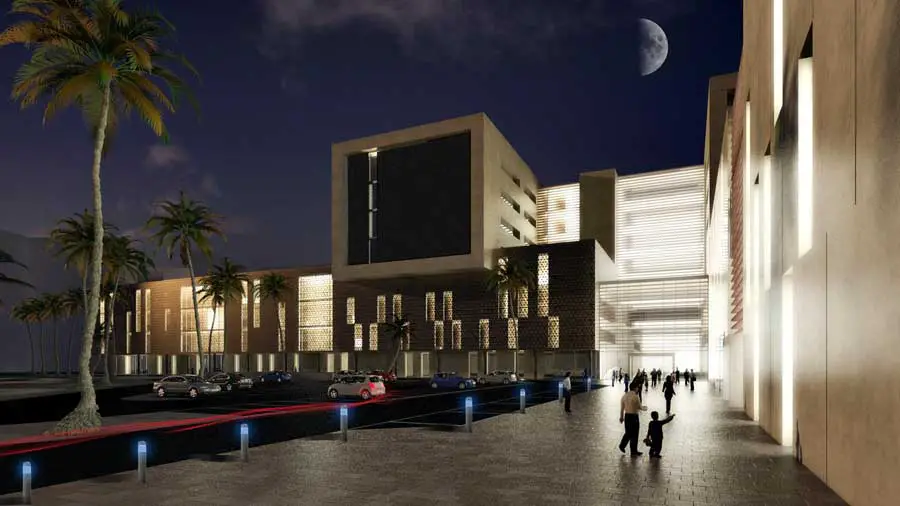
image from architects
Alexandria Hospitals
A series of facilities for the Smouha and Mowassat Hospitals in Egypt’s second largest city, Alexandria.
Egypt Architecture
Contemporary Northeast Africa Architectural Projects
Egyptian Architecture Designs – chronological list
Zooba GEM, Kafr Nassar, Giza Governorate
Architecture: AE Superlab
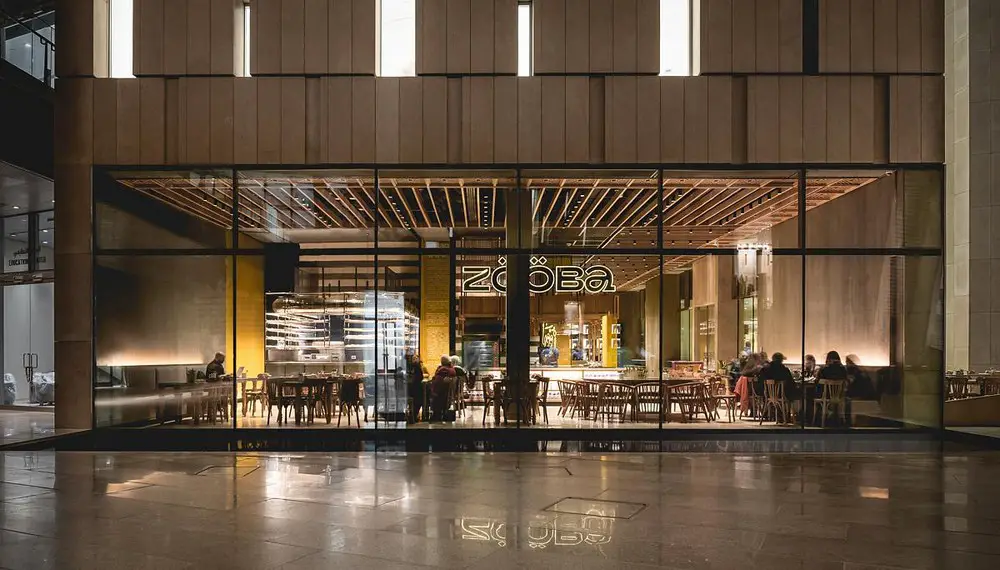
photo : AE Superlab
Zooba – Grand Egyptian Museum, Giza Governorate
The Sphinx Cairo Building
Architecture: Fran Silvestre Arquitectos
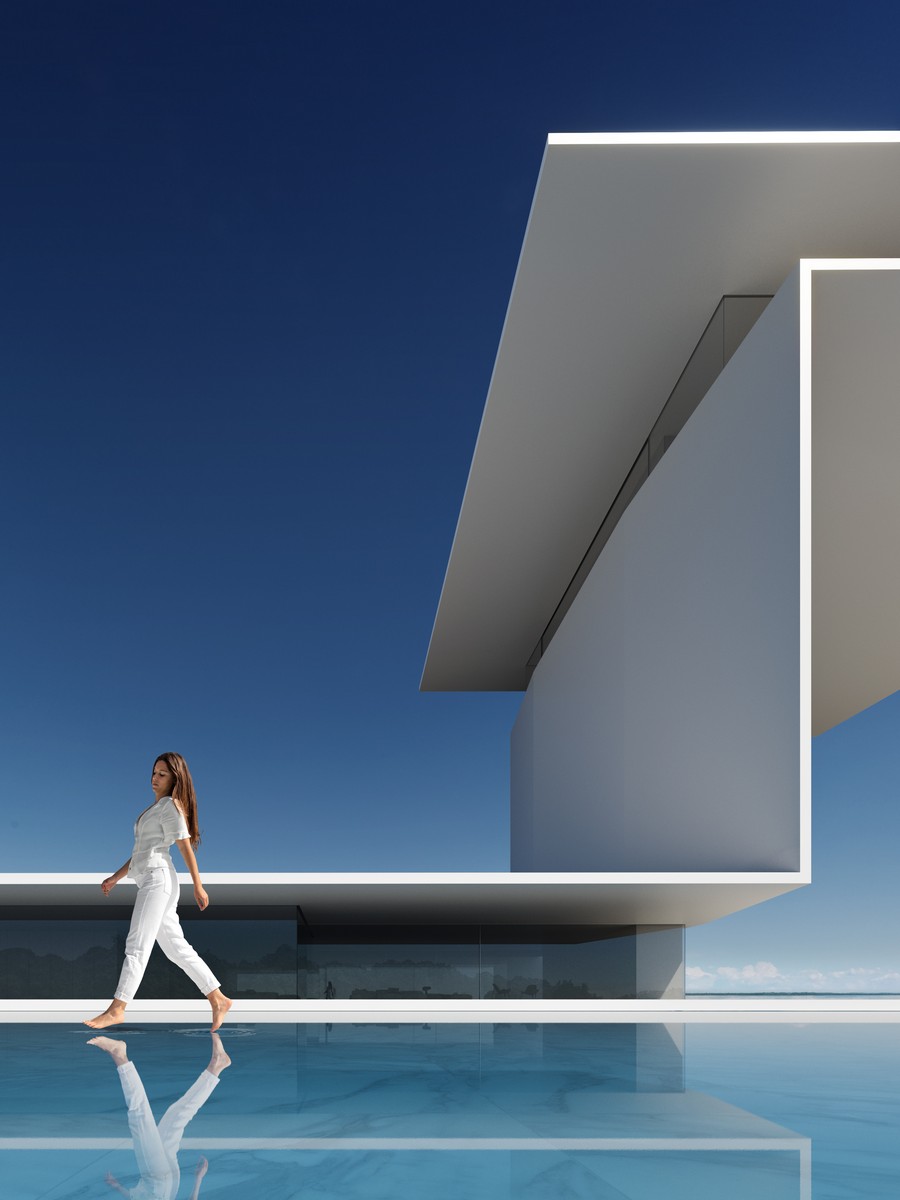
image courtesy of architecture office
The Sphinx Cairo Building
Cairo Expo City Competition
Zaha Hadid Architects
Cairo Expo City
Stone Towers, Cairo
Zaha Hadid Architects
Stone Towers Cairo
Grand Egyptian Museum in Cairo
Middle East Architecture Design
Contemporary Middle East Building Designs – recent architectural selection from e-architect below:
Grand Egyptian Museum Cairo : Entry
African architecture:
Comments / photos for the Bibliotheca Alexandrina Architecture design by Snøhetta Architects page welcome.
