
GRAFT Architects, LA Design Studio, Building, USA, Californian Practice, Projects, Photo
GRAFT Architecture Office
Berlin / Los Angeles: Contemporary American + German Architecture Studio News
11 Feb 2019
GRAFT Architecture News
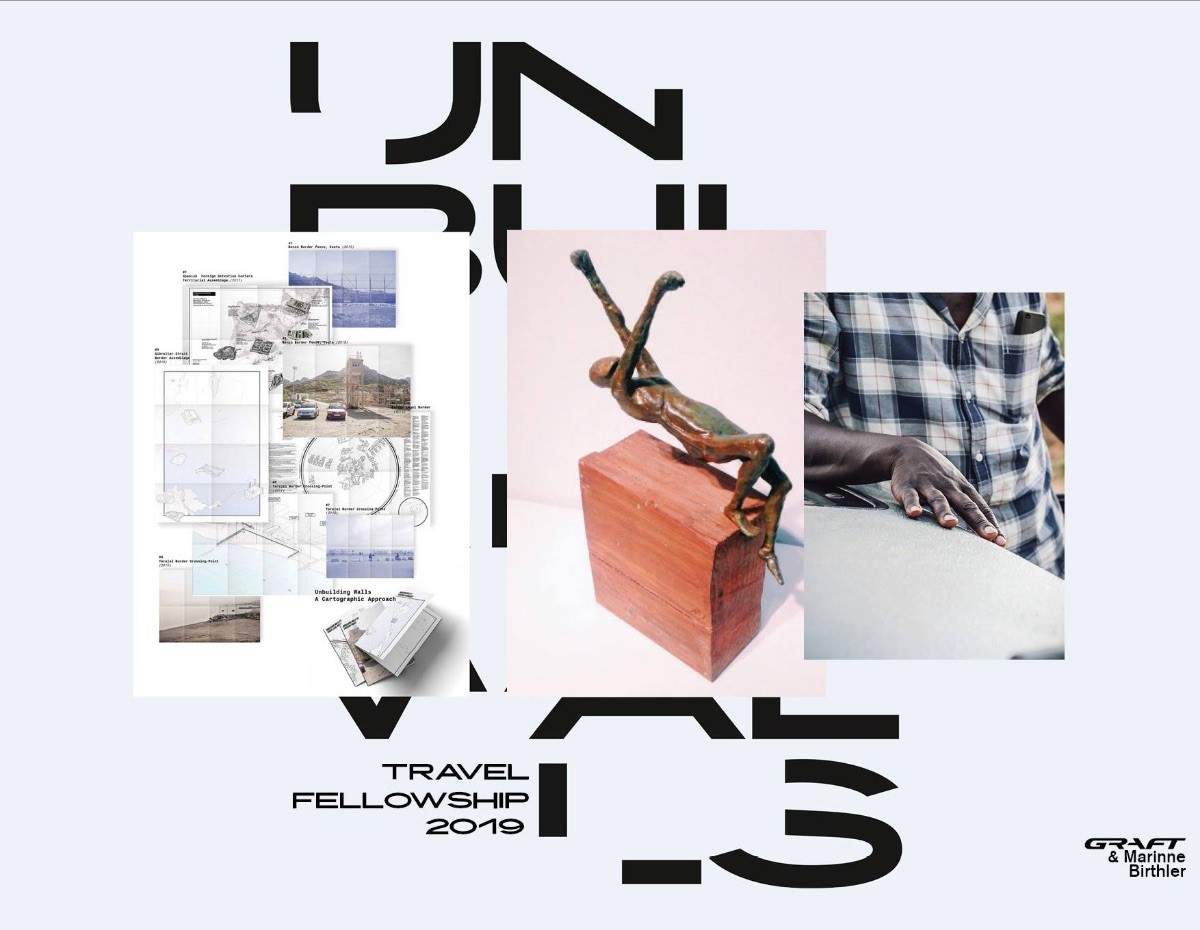
GRAFT – UNBUILDING WALLS Travel Fellowship 2019 Winners
Jury members Marianne Birthler together with Lars Krueckeberg, Wolfram Putz and Thomas Willemeit from GRAFT, chose two winners from numerous applications from over ten countries for this first UNBUILDING WALLS Travel Fellowship.
Antonio Giráldez López (Spain) and Brooke Adams (USA) were awarded with 3,000 € each.
The prize supports an educational or project excursion, on-site research and the implementation of the results. Follow the process at #UnbuildingWalls.
The results will be presented in November 2019.
image courtesy of architects
MORE THAN WALLS
In his project “More Than Walls” Antonio Giráldez López is cartographying the territorial assemblages of the European Border in the strait of Gibraltar. The contemporary border cannot be understood only as a singular architectural system, but an interconnected assemblage of elements of different nature: surveillance systems, drones, buildings, vehicles, walls, and even human matter. All together they form an apparatus disseminated on a broader territory than the perimeter line that used to represent the geopolitical boundaries of any sovereignty.
UNBUILDING HERE
What causes people divided by political views, religion, socioeconomic realities, etc. to become friends? Adams artistically captures stories where walls of divide have been overcome while focusing on people of various races, education levels and locations throughout the U.S. She will partner with local non-profit organizations (NGO) already unbuilding walls. This could be related to increasing acceptance of immigrants in a community, peace and reconciliation between religions, changing negative perceptions of people experiencing homelessness. The results will be displayed at a photography exhibition.
Curators of the German Pavilion and Jury of the Unbuilding Walls Travel Fellowship 2019:
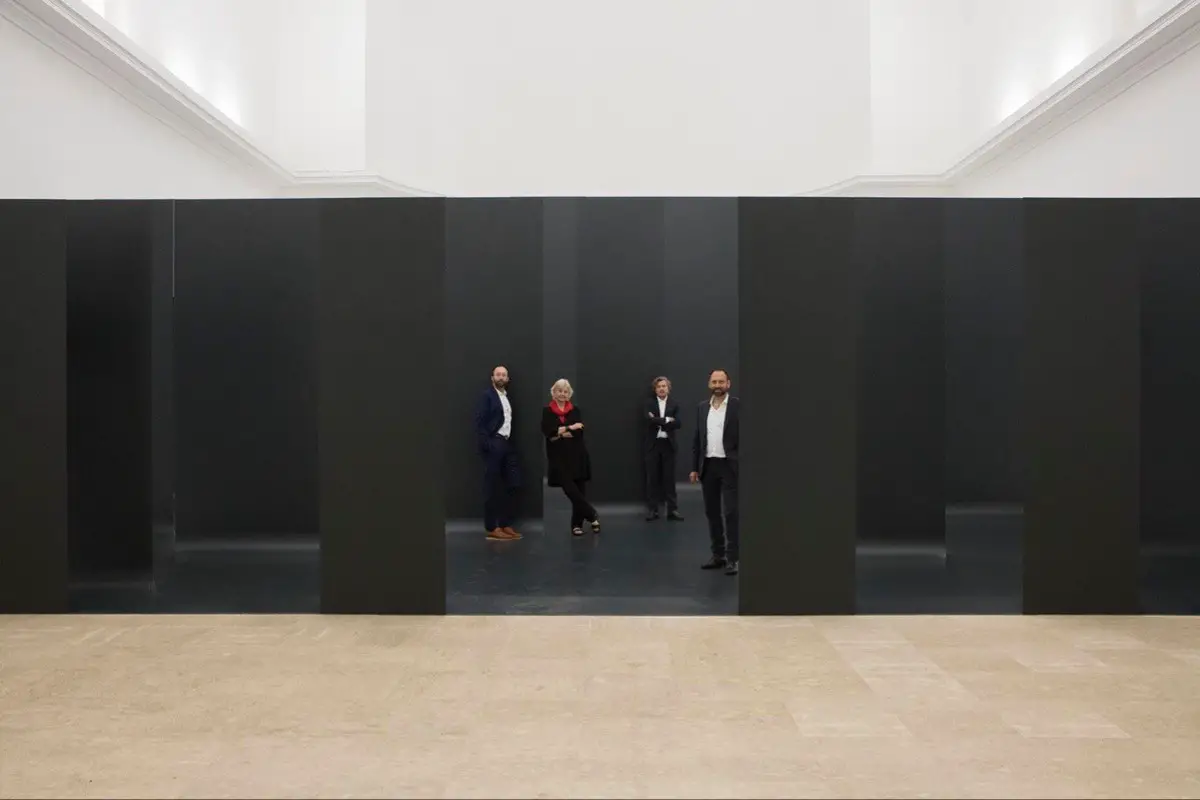
photo : Jan Bitter
Following on from the UNBUILDING WALLS exhibition at the 16th Architecture Biennale in Venice, the curators have announced the awarding of two UNBUILDING WALLS Travel Fellowships with a value of 3000 € each. The prize money supports an educational or project excursion, on-site research and the implementation of the results in concrete projects. Projects should examine the respective physical as well as mental barriers and ways to overcome them. They can focus on urban and architectural questions as well as social and political aspects.
Inspired by the exhibition UNBUILDING WALLS, projects may examine current debates on nations, protectionism and border demarcation as well as other barriers not necessarily related to nationalist perspectives. They might be concerned with social segregation and other “walls in the mind” and should incorporate and integrate social and sociological components as part of an overall holistic approach.
5 Feb 2018
German Pavilion at the Architecture Biennale in Venice 2018
In cooperation with Marianne Birthler, Graft Architects are curating the German Pavilion in 2018 under the title UNBUILDING WALLS, on behalf of the Federal Ministry for the Environment, Nature Conservation, Building and Nuclear Safety.
On February 5, the Berlin Wall has disappeared exactly as long as it existed.
UNBUILDING WALLS
The exhibition “UNBUILDING WALLS” responds to current debates on nations, protectionism and division. As the world grows together, walls are increasingly being discussed and built that divide people from one another. Walls can denote division, power and exclusion, but also protection.
In 2018, Germany will be reunified for 28 years – exactly as long as the Berlin Wall (1961-1989) existed. In the German Pavilion, GRAFT and Marianne Birthler take this parallel as an opportunity to explore the effects of division and the process of healing as a dynamic spatial phenomenon. With reference to the central theme of the Architecture Biennale “Freespace” devised by Grafton Architects, special focus will be given to outstanding examples of urban and architectural design that address aspects of division and integration.
The inner German wall, whose existence and deconstruction became a symbol for the failure of dialogue and its overcoming, serves as a starting point and background for the current international debate on exclusion and division.
The curators of the German Pavilion at Architecture Biennale 2018: GRAFT founding partners Lars Krückeberg, Wolfram Putz and Thomas Willemeit together with Marianne Birthler.
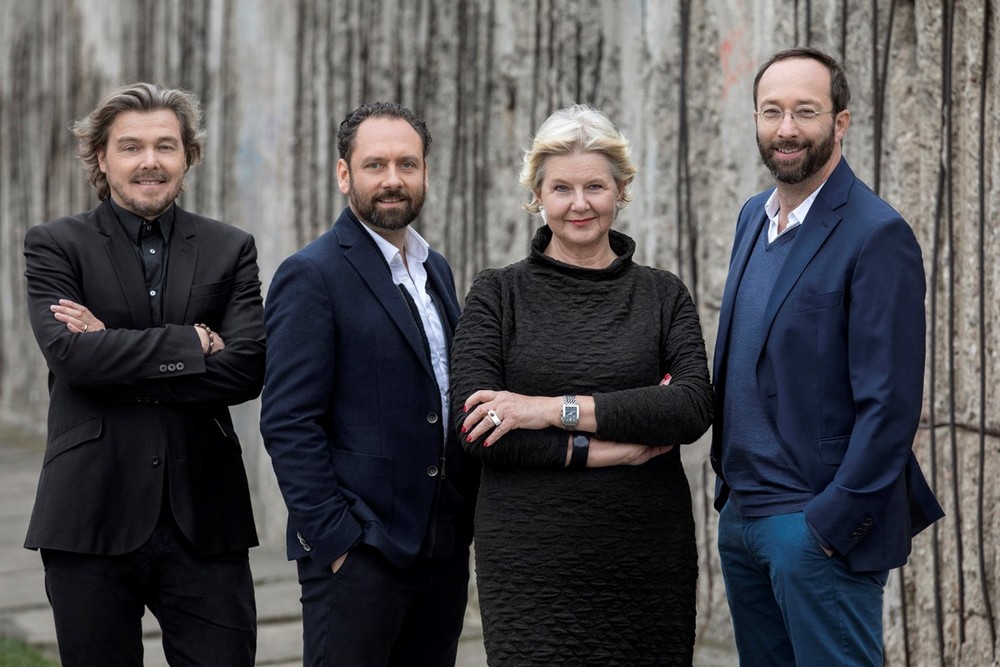
photo : Pablo Castagnola
About GRAFT
GRAFT was founded in 1998 in Los Angeles by Lars Krückeberg, Wolfram Putz and Thomas Willemeit. With additional studios in Berlin and Beijing, the hybrid office works around the globe in the fields of architecture, urban development, design and communications and is known for its experimental and multi-disciplinary design approach. Since its founding, the office has undertaken self-initiated projects alongside design commissions, including the SOLARKIOSK and its work as a founding partner of the Make It Right Foundation and with Heimat2. In 2014, GRAFT’s partners founded GRAFT Brandlab together with Linda Stannieder, a communications agency working at the intersection of architecture, design and branding. GRAFT comprises an interdisciplinary team of 150 employees.
4 Mar 2017
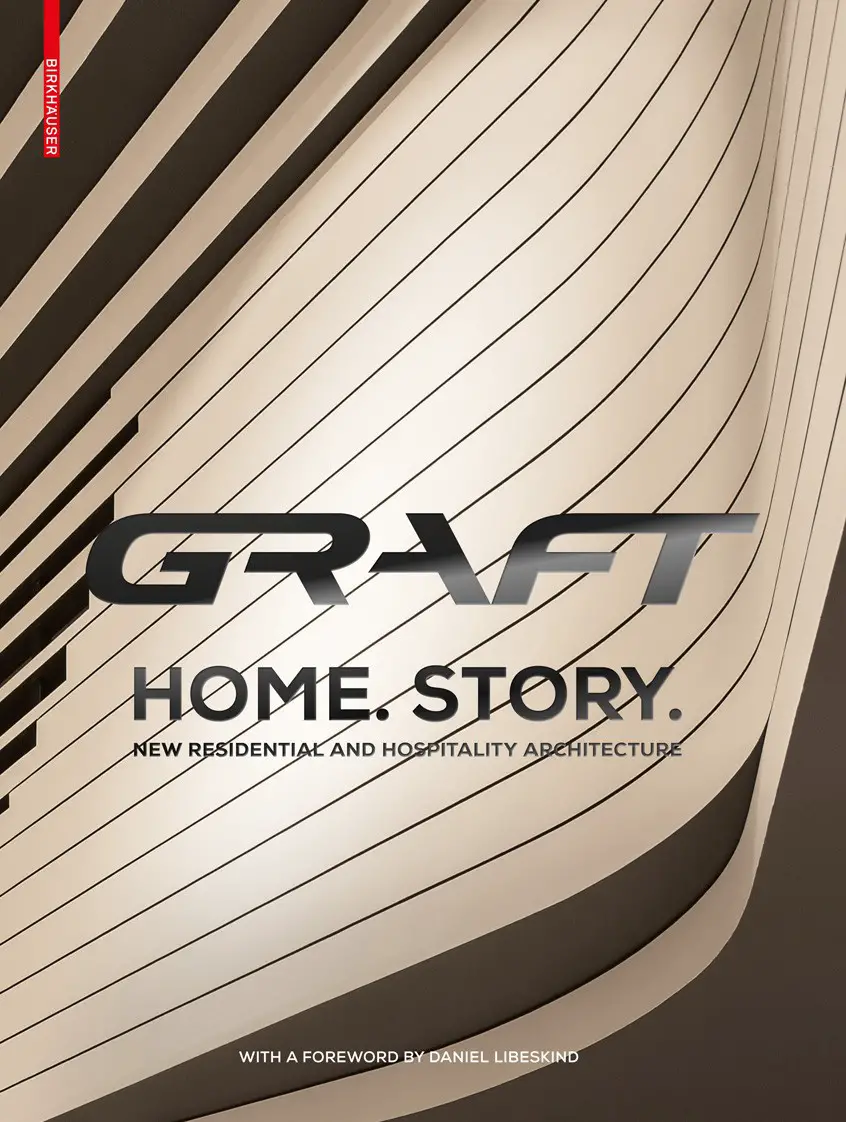
New Publication: GRAFT – Home. Story. New Residential and Hospitality Architecture
GRAFT – Home. Story. New Residential and Hospitality Architecture
On creating a home
Basel, March 2017 – Covering over 500 pages, Birkhäuser’s new book GRAFT – Home. Story. offers a broad insight into GRAFT’s highly diverse “four walls”, showcasing permanent and temporary dwellings from detached houses to tower blocks and ultimately mansions and luxury hotels. GRAFT’s architecture reveals a sense of insatiable curiosity and eagerness to experiment – all the while foregrounding the unique aspects of each project and thus also the development of highly disparate spatial concepts.
“GRAFT uses architecture as a dynamic way forward and as an exploration of creativity, rather than creating finished products.” (Daniel Libeskind, foreword). The word “home” by no means denotes a lifeless shell offering its inhabitants protection but rather a true “home” that consistently reflects their needs and identities.
GRAFT adopts this personal disposition for its concepts and designs, and the firm’s architecture is accordingly varied – alongside amorphous and futuristic mansions in Kuala Lumpur, Home. Story. also documents clearly structured, sustainable buildings in Berlin or glassy tower blocks in Las Vegas. And both the innards and the exteriors of the buildings are addressed – for example, Home. Story. also presents furniture and fittings such as door handles designed by GRAFT.
Home. Story. does much more than simply document the sophisticated residential building projects undertaken by GRAFT. With a collection of illustrations, the book also tells the story and development of an architectural practice that is not content being tied town to a specific style but is rather in a constant state of evolution.
GRAFT was founded by Lars Krückeberg, Wolfram Putz and Thomas Willemeit in Los Angeles in 1998 and now employs over 100 creative people in Berlin, Los Angeles and Beijing. The global architectural practice acts as an interdisciplinary “hybrid office” in the fields of architecture, design and art.
GRAFT Home. Story.
New Residential and Hospitality Architecture
With a foreword by Daniel Libeskind
2017
Hardcover, 512 pages, 350 illustrations (colour)
Language English
ISBN 978-3-0356-1162-5
Verlag Birkhäuser, Basel
Contact
Eric Merkel-Sobotta
Director Communications
Telephone +49 (0)30-260 05 304
[email protected]
Press agency:
mai public relations GmbH
Julia Wolter
Cordula Vielhauer
Telephone +49 (0)30-66 40 40 551
[email protected]
Birkhäuser is one of the world’s leading publishers for architecture, design and landscape design. Founded in Basel in 1879, the company releases more than 75 new titles every year – “must-haves” for professionals in the field. Birkhäuser is home to renowned authors and architects such as Alvar Aalto, Le Corbusier, Andrea Deplazes, Herzog & de Meuron and Peter Zumthor. Birkhäuser has been a De Gruyter company since 2012. www.birkhauser.com
GRAFT – Key Projects
Buildings + Projects
Currently completed Projects
The Emperor, Hotel, Beijing, China 2008
DC Shoes Store, Los Angeles, USA 2008
Brand Restaurant Monte Carlo Casino, Las Vegas, USA 2008
Erics Paris Salon, Wellness Salon, Beijing, China 2007
Opticon, Eyewear Store, Hamburg, Germany 2007
Kinderzahnarzt Praxis Dr. Mokabberi, Berlin, Germany 2007
Kanera 1E, Sink, Product Design, Germany 2007
Current Projects
W Hotel NY, New York, USA 2009
Haus Koch, Berlin, Germany2009
Hines Apartments “Eastside”, Unter den Linden, Berlin, Germany 2009
Pink – Make It Right, New Orleans, USA tbc
Roppongi Hills, Residential Midrise, Tokyo 2009
Loft, Hamburg, Germany 2008
Dental Clinic, Düsseldorf, Germany 2008
Kanera 1D, 1H, Sink, Product Design, Germany 2008
City West, Urban Planning, Berlin, Germany, design 2008
Monument for the Unity of Germany, Germany, design 2008
Hotel Iveria, Hotel, Tbilisi, Georgia, design 2007
Sakanela Urban Landscape, Tbilisi, Georgia, design 2007
Dalian Daily, residential + office towers, Dalian, China, design 2006
City Center, Pool Landscape, Las Vegas, USA, design 2007
Bird Island, Kuala Lumpur, Malaysia, design 2007
Church Wünsdorf, Germany, design 2006
Internationales Kindercamp Sans Souci, Liebenberg bei Berlin, Germany, design 2006
GRAFT Architecture Practice Information
Graft architecture studio based in Los Angeles, California, USA
Also, an office is located in Berlin, Germany
Partners:
GRAFT
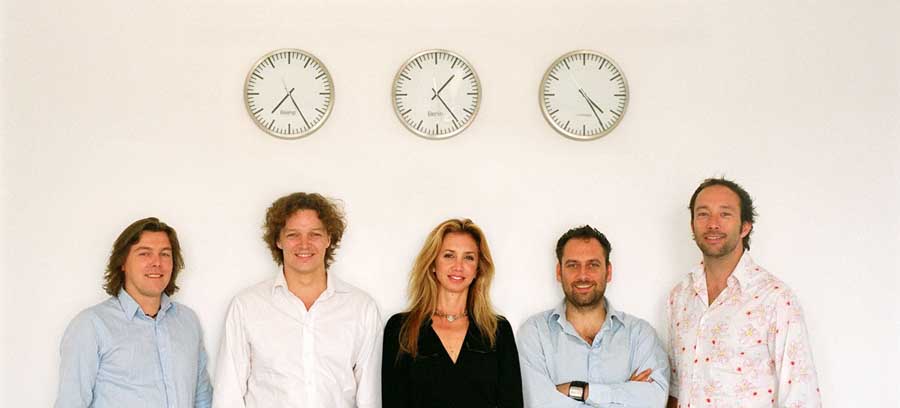
This firm was established in 1998 in Los Angeles, California by Lars Krückeberg and Wolfram Putz. The firm was joined by Thomas Willemeit in 2001 and opened an office in Berlin, Germany the same year. In 2005 Gregor Hoheisel, who had been partner in Los Angeles in 2000 to 2001, became Partner in GRAFT Beijing, which was founded the same year. In 2007 Alejandra Lillo became partner for Graft LA.
GRAFT – Partners
Lars Krückeberg
Education
2006- BDA, Bund Deutscher Architekten
2002- AIA Germany, Chamber of Architects, Berlin, Germany
1998 Co-Founder of Graft
1997-98 Southern Californian Institute of Architecture, Los Angeles, USA
1993-96 Technische Universität Braunschweig, Braunschweig, Germany
1993 German Institute for History of Art, Florence, Italy
1992-93 Universitá degli Studi di Firenze, Florence, Italy
1989-92 Technische Universität Braunschweig, Braunschweig, Germany
Wolfram Putz
Education
2006- BDA, Bund Deutscher Architekten
2002- AIA Germany, Chamber of Architects, Berlin, Germany
1998 Co-Founder of Graft
1996-98 Southern Californian Institute of Architecture, Los Angeles, USA
1993-95 Technische Universität Braunschweig, Braunschweig, Germany
1992-93 University of Utah, Salt Lake City, USA
1988-92 Technische Universität Braunschweig, Braunschweig, Germany
Thomas Willemeit
Education
2006- BDA, Bund Deutscher Architekten
2002- AIA Germany, Chamber of Architects, Berlin, Germany
1998 Co-Founder of Graft
1988-97 Technische Universität Braunschweig, Braunschweig, Germany
1995 Summer Academy Vienna, Austria, masterclass Dagmar Richter
1991-92 Bauhaus Dessau, masterclass in architecture and urban planning
Lars Krueckeberg, Wolfram Putz and Thomas Willemeit are Partners in Graft with offices in Berlin, Los Angeles and Beijing
GRAFT Architects Awards & Prizes
2008
“40 under 40”, Winner, The European Centre for Architecture Art Design and Urban Studies
2007
Interior Design Awards, Best of Year Finalist: Erics Salon, Beijing
Rigips Trophy 2007, 1st Place, Category Innovation: Graftworld
Bardesign of the Year 2007, Mixology Awards, Bar Convent Berlin: Hotel Q, Berlin
HD Awards, Best Unbuilt Project: Samana Luxury Resort
2006
ICIF – Iakov Chernikov International Prize for Young Architects Nominee
ADAM Silber Award 2006, Award der ausgezeichneten Messeauftritte, Category XL: Mercedes Benz&Maybach Trade Fair Booth AMI 2006
World Hotel Award 2006, Category True Stylish: HotelQ
Interior Design Awards, Best of Year Finalist: HEWI Modular Wall
Interior Design Awards, Best of Year Finalist: Moonraker
Gold Key Award Finalist: STACK
AIA LA Restaurant Design Award, People´s Choice Award: STACK
AIA L.A.Restaurant Design Award Finalist: STACK
Contractworld Award, Category “Hotel/Restaurant” Shortlist: STACK
Boutique Design Award: “Best dramatic space” and “Best restaurant”: STACK
“Golden Winner” Design Award Januar 2006, Exhibitor Magazine: SciFi
20th Annual Exhibit Design Award GOLD MEDAL: Sci-Fi
Hospitality Design Restaurant Award, Fine Dining Finalist: STACK
2005
Recognition Award 2005, AIA, Los Angeles: FIX – Restaurant, Las Vegas
“Wave of the Future Award 2005”
“Hospitality Design Award 2005”: Hotel Q, Berlin
“Travel and Leisure Award 2005”: Hotel Q, Berlin
Contract World Award 2005, Best of Category: Hotel Q, Berlin
ArTravel Award 2005, Winner: Hotel Q, Berlin
2004
Hans Schaefers Preis 2004, Auszeichnung: Hotel Q, Berlin
Honor Award, AIA, Los Angeles: Hotel Q, Berlin
Contract World Award 2004, 2nd Prize: Neue Sentimental Marina del Rey, CA
2003
Femb Award, 2nd Prize – Best Office 2002: Zeal Pictures Office in Berlin, Germany
European Design Award: Zeal Pictures Office in Berlin, Germany
1999
Lenne Preis, 1st Prize: Marx-Engels-Forum in Berlin, Germany
Design Competition for the ‘central public space’ in Berlin, Germany
1998
Genetic Bastards, with Roger Kurath
International Baunnetz Competition, 3rd Prize
GRAFT Architects Exhibitions
2007
– Pink Houses, Art Installation, MIR, New Orleans
– GRAFTWORLD, Aedes Gallery, Berlin
– GRAFTWORLD, Zumthobel Light Forum, Dornbirn
2006
– NEW BLOOD: Next Gen, A+D Architecture & Design Museum, Los Angeles, USA
2004
– “Caboom”, Los Angeles, USA
2003
– “Form & Function”, Guggenheim Gallery Chapman University, Los Angeles, USA
– “Design Berlin, New Projects for a changing City”, Vitra Design Museum, Berlin
– “Electric Bamboo”, MAK Center for Art and Architecture, Los Angeles
2002
– “Between Heaven and Earth”, Talinn, Estonia
– “The Controlled Space”, Artist’s Space, New York
– “Baldwin Hills Art Project”, Baldwin Hills High School, Los Angeles
2001
– “The Controlled Space”, ZKM, Karlsruhe, Germany
– “Surveyed Space”, Travelling Exhibition in Vienna, Berlin, Rotterdam, New York, Los Angeles
– “SITE Santa Fe”, Fourth International Biennial, Santa Fe , New Mexico
2000
– “SEEING” Exhibition for the Los Angeles County Museum of Modern Art
– “Taste is the Lack of Appetite”, Lecture-Tour through nine german Universities
1998
– “designale”, nomadic furniture, design competition in Munich, special mention and exhibition
– ”Next LA”, Bergamot Station, Santa Monica
– ”Tools 2000”, UCLA
GRAFT : New Orleans Houses – context
New Orleans Houses, Lower Ninth Ward, New Orleans, Louisiana, USA
Pink Houses
Wuensdorf Kirche, Berlin, Germany
GRAFT Berlin : German church project
Location: Los Angeles, California, USA + Berlin, Germany
GRAFT Architects Practice Information
GRAFT Berlin studio based in Berlin, Germany
GRAFT – Statement
There is an increasing tendency towards a flight into the ivory tower of architecture, as the discipline gets confronted with the phenomena of global market and mass-culture. The reactionary lethargy of a retreat from the struggle with society leaves no significant position in the field of cultural production for the protagonists of the discipline.
Architecture is perhaps the last field, which refuses to confront itself with that dilemma, even though the star system starts to be introduced into its realm with the faces of Frank Gehry, Richard Meier, and Rem Koolhaas on the front pages of popular magazines. The urge to create one’s personal style, in order to become a successful trademark leads to a specialization into certain fields including the danger of failure.
Today’s architects are facing the problem that a specifically styled tool, however adorable per se, might not be appropriate for every task given. An adequate style and method for one operation can be unsuccessful in another. In the coherency of architectural thinking, methodology, function, and formal language lies an advantage and a danger at the same time: there is no doubt about the strength of a pure style, but one cannot deny the inevitable limitations of a fixed ideology either.
This ideological enclosure can not be opened up through the replacement of one system of beliefs through another or a combination of others, but only through the introduction of methodology instead of ideology – the destruction of exclusive borders through the introduction of inclusive structures for the production of the border-less.
In that sense the term style has to be reevaluated and redefined, the concept of style will have to be reformulated. Used as an internally coherent tool to homogenize the cultural production of a region or period, the term has to accept its role as an internally conflicted methodology for the production of a heterogeneous pool of results. Architects have to embrace the concept of style, instead of rejecting it.
Every creation involves one or more styles. To make a good building a single style is usually chosen.
But a movie like Casablanca is not satisfied with that. It uses a multiplicity of archetypes and styles, resulting in the effect that each viewer can see something different that the others have missed. Casablanca is a cult movie because all the archetypes are there, because each actor repeats a part played on other occasions, and because human beings live not a “real” life but life as stereotypically portrayed in previous films. Should architecture not try to follow a similar path through the simultaneous dissipation and embracing of its interiority? Casablanca became a cult movie because it is not one movie. It is “movies”. And this is the reason it works, in defiance of any aesthetic theory. For it stages the powers of Narration in its natural state, before art intervenes to tame it.
We can see an architecture of new combinations, the grafting of different cultures and styles. The English word graft includes a variety of meanings and multiple readings. It has a particular meaning in the terminology of botany, the grafting of one shoot onto a genetically different host. The positive properties of two genetically different cultures are combined in the new biological hybrid. With botany as a point of departure we can look at graft as a phenomenon in human culture and examine its implications for Architecture. We can look at a wide variety of archetypes from different sources without prejudice – high culture, low culture, philosophy, banality, architecture, movies, literature, sports, etc. – and analyze their similarities and differences.
Based on extensive and all-inclusive research a pool of resources is being created that opens the possibilities for different ways of communication between the elements – Adjacency, Juxtaposition, Overlapping, Hybridization, Fusion. This creation of relationships between singular elements will be called ‘graft’. It refuses to accept the exclusive limitations of artificial borders between disciplines and elements and opens new possibilities for the creation of all-embracing products. Unexpected and surprising misunderstandings, global transfer of architectonic beauty, robust crossbreeds – architecture derived out of circumstances, which can only be created through the grafting of different realities.
GRAFT : main page
photo from architect
Buildings / photos for the GRAFT Architecture page welcome
Website: graftlab.com
